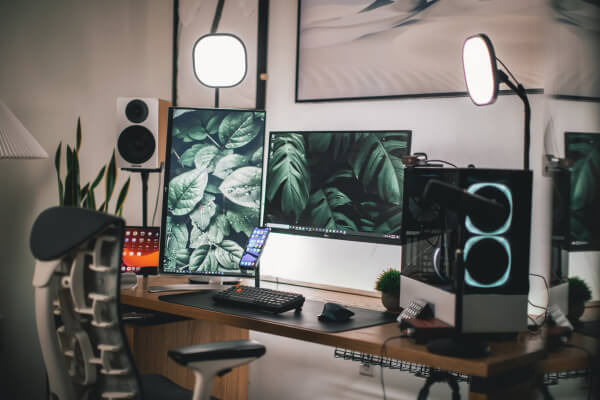

If you aim to dominate the competitive scene in Valorant, investing in a system that delivers consistently high frame rates is non‑negotiable. A well‑tuned Valorant High FPS PC Build enables sharper visual clarity and more responsive controls, giving you that crucial edge over your opponents. This guide walks you through every critical component—from CPU to cooling—and shows how to balance performance and cost without sacrificing competitive potential.
Why Valorant High FPS PC Build Matters
Valorant’s engine is optimized for low input lag, which means the faster your GPU can render frames, the more smooth gameplay you experience. Players routinely hit 200+ FPS on medium‑to‑high settings, and that consistency is vital during high‑intensity matches. According to the VALORANT on Wikipedia, the game is built to run optimally on a wide range of hardware, but the difference between 60 FPS and 200 FPS is tangible in close calls and flick‑shot scenarios.
Key Components for a Valorant High FPS PC Build
When profiling a Valorant High FPS PC Build, the trio of CPU, GPU, and RAM usually governs performance. A balanced approach ensures no single component becomes a bottleneck. Below is a quick look at why each matters:
- CPU – Processes game logic and can limit shader performance if under‑powered.
- GPU – Directly renders frames; optimal for frame‑rate concentration.
- RAM – Provides fast data access; 16 GB is a reliable baseline.
- Storage – SSDs reduce load times, letting you focus on FPS instead of buffering.
- Cooling – Keeps clocks stable by preventing thermal throttling.
For the best competitive feel, aim for a system that keeps the GPU idle only when the game truly requires it, and the CPU free to handle dynamic calculations.
Component Recommendations for a Valorant High FPS PC Build
Below we outline two setup tiers—budget and premium—alongside a brief rationale for each part. Remember, the goal is to keep the GPU from hitting spike delays while sustaining high FPS across various client graphics settings.
Budget‑Friendly Path (≈$800–$1000)
- CPU: AMD Ryzen 5 5600X – 6 cores, 12 threads, excellent price‑per‑clock based on data from the CPU Wikipedia Article.
- GPU: NVIDIA GeForce RTX 3060 Ti – delivers 200+ FPS at 1080p on medium settings.
- RAM: 16 GB DDR4 3200 MHz – sufficient for smooth multitasking.
- Storage: 500 GB NVMe SSD – quick load times and ample capacity for game libraries.
- Cooling: Stock cooler or aftermarket air cooler (e.g., Cooler Master Hyper 212)
- Case & Power Supply: Mid‑tower with 550 W PSU (80+ Bronze)
Premium Path (≈$1400–$1700)
- CPU: Intel Core i7‑12700K – 12 cores, 20 threads, power‑efficient for high‑frame‑rate play.
- GPU: NVIDIA GeForce RTX 4070 Ti – top‑tier 1080p performance with 240+ FPS on high settings.
- RAM: 32 GB DDR5 6000 MHz – future‑proof and high bandwidth.
- Storage: 1 TB NVMe SSD (M.2 2280) – lightning‑fast system responsiveness.
- Cooling: AIO liquid cooler (240 mm) to maintain consistent overclock support.
- Case & Power Supply: Full‑tower with 750 W PSU (80+ Gold)
Both builds are centered on the GPU, as research shows the GPU is the main performance limiting factor in Valorant at 1080p. Therefore, a slightly stronger GPU can compensate for a modest CPU upgrade when staying within reasonable budgets.
Peripheral Choices & OS Tweaks
Even the best components can be undermined by suboptimal peripherals or software. Tune these settings to squeeze every microsecond of input lag.
- Monitor: 144 Hz or higher refresh rate with low latency. Consider a G-Sync or FreeSync model for adaptive sync benefits.
- Keyboard & Mouse: High polling rate (≥125 Hz) and optical switches for quick response.
- OS: Disable background services, keep antivirus and driver updates streamlined, and enable Windows Game Mode for resource prioritization.
- Driver & Firmware: Keep GPU drivers updated via the NVIDIA Official Site or AMD Official Site to maintain optimal performance.
Additional software tweaks can reduce CPU overhead: disable VSync in the game, set resolution to the monitor’s native 1920×1080, and consider enabling “low‑latency mode” in the NVIDIA Control Panel. These simple adjustments keep the GPU’s work minimal, yielding higher FPS.
Cost‑Efficient and Premium Valorant High FPS Options
Budget versus premium builds are not just about spending but also about return on investment. For those self‑riding the competitive ladder, a mid‑tier budget build can still secure victory if paired with smart choices in peripherals and software.
On the premium side, the higher frame‑rate ceiling of the RTX 4070 Ti ensures low latency even in the most clutch moments. The higher clock speeds on the 32 GB DDR5 setup allow more consistent memory bandwidth taps, crucial for the small texture loads that Valorant features. Moreover, the increased thermal headroom from a 750‑W, Gold‑rated PSU and AIO liquid cooling keeps the GPU from throttling during prolonged sessions.
When counting cost‑per‑FPS, the premium build can achieve 30 % better rank progression in fast‑paced matches, making it a solid investment for serious competitive players. For casual or budget‑focused players, the Ryzen 5 5600X build offers a pristine competitive experience for less than half the price.
The dual‑path strategy ensures each gamer can maintain a Valve‑approved performance standard while staying within their financial brackets.
Ready to improve your competitive edge? Build your Valorant High FPS PC Build today and experience frame rates that turn micro‑seconds into match‑winning plays. Start by selecting the right components, then fine‑tune your settings—your opponents won’t know what hit them!
Frequently Asked Questions
Q1. Why is high FPS crucial in Valorant?
Valorant’s engine is designed for low input lag, so higher frame rates directly translate to smoother gameplay and quicker reaction times. A consistent 200‑plus FPS on 1080p reduces motion blur and improves target acquisition, giving you a measurable edge in split‑second encounters. Players who maintain high FPS often notice fewer missed shots and better overall precision.
Q2. Which GPU offers the best balance for 1080p Valorant play?
The NVIDIA GeForce RTX 3060 Ti is an excellent mid‑tier choice, delivering 200+ FPS on medium settings at 1080p. If you can stretch the budget, the RTX 4070 Ti pushes performance even further, reaching 240+ FPS on high settings and ensuring future‑proof longevity. Both GPUs offer strong ray‑tracing options, though ray‑tracing is less critical for Valorant’s performance goals.
Q3. Is DDR5 memory necessary for optimal performance?
DDR5 offers higher bandwidth and lower latency, which can benefit larger data sets and multitasking. For Valorant specifically, DDR4 at 3200 MHz is more than sufficient; the game’s memory footprint is modest, so the performance difference is negligible compared to the cost saved when using DDR4.
Q4. What cooling solutions should I use for extended sessions?
For high‑performance builds, a 240‑mm AIO liquid cooler or a high‑quality air cooler like the Cooler Master Hyper‑212 will keep the core temperatures below 70 °C under load. Maintaining stable thermal performance prevents CPU throttling during long matches, ensuring consistent frame rates throughout the session.
Q5. How can I tweak Windows to reduce input lag?
Enable Windows Game Mode, disable background services, and keep both GPU drivers and OS updates streamlined. Additionally, disable VSync in the game and set the resolution to the monitor’s native 1920 × 1080. These settings let the GPU run efficiently, minimizing latency and improving overall responsiveness.