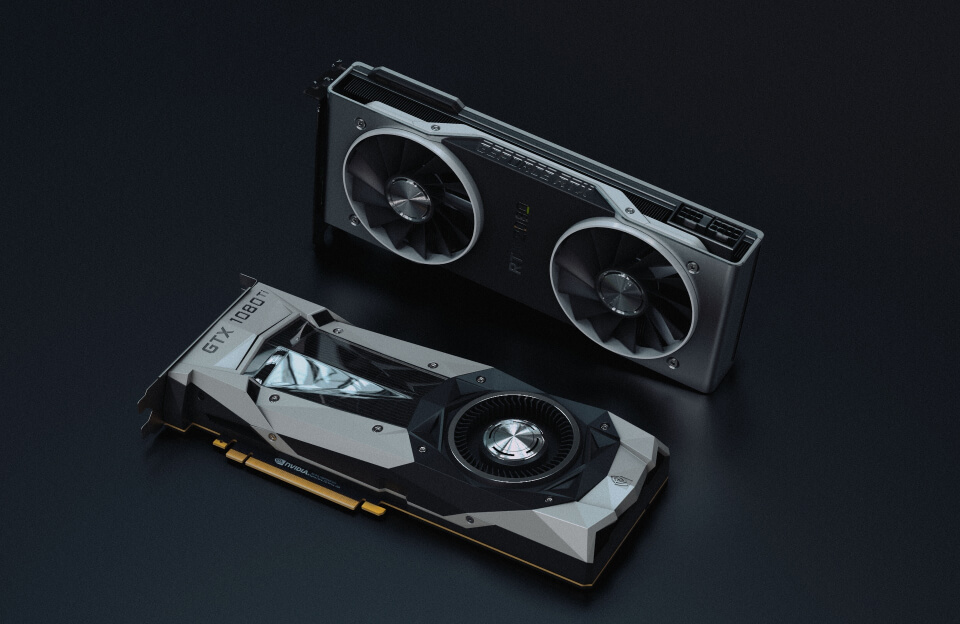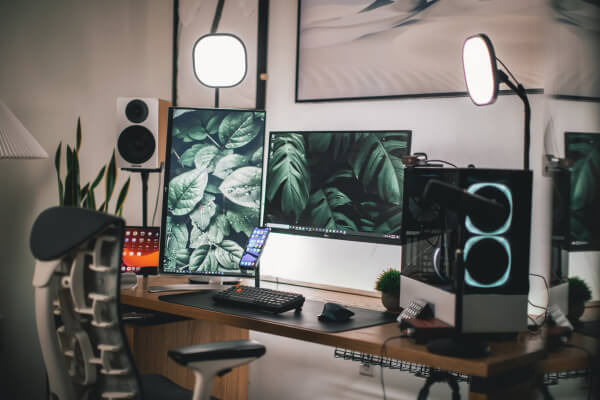
Whether you’re grinding through the latest open‑world adventure or competing in fast‑paced esports titles, a smooth, high frame‑rate experience is essential for competitive advantage and immersive gameplay. Nested in a vast ecosystem of hardware and software, a “Gaming PC Frame Rate Boost” can open the door to consistent 60–240 FPS, reduced input lag, and a noticeably fluid world. In this guide, we break down practical steps—blending system tweaks, component choices, and game‑specific settings—to achieve the ultimate performance sweet spot on your rig.
Gaming PC Frame Rate Boost: Optimize Your Graphics Settings
First, understand that most video games expose a suite of graphics options, from resolution to shader detail, that directly influence frame output. Striking the right balance between visual fidelity and speed is the simplest way to lift FPS without a costly hardware upgrade. Start with the following checklist:
- Resolution – Set your display resolution to match the monitor’s native size; experimenting with a lower resolution can give significant FPS gains, especially on demanding titles.
- Texture Detail – Lowering texture quality reduces VRAM usage, freeing resources for the renderer.
- Anti-Aliasing – Techniques like MSAA are heavy hitters; switch to FXAA, SMAA, or simply disable AA for the best boost.
- Shadow Quality – Shadows are a major GPU drain; reducing shadow resolution or turning them off often provides the biggest jump in frame rate.
- Effects and Post‑Processing – Disable bloom, motion blur, depth of field, and other post‑processing passes when hunting for speed.
- Ray Tracing and DLSS – Modern games from NVIDIA frequently support DLSS; enable DLSS or DLSS 2.0 to keep ray tracing on while maintaining high FPS.
- In‑Game Settings – Many titles allow a “Performance” preset that automatically tweaks multiple settings for speed.
Using these baseline adjustments can secure a 20–30 % increase in frame output. However, deeper performance hinges on your system’s internal architecture.
Gaming PC Frame Rate Boost: Identify CPU vs GPU Bottlenecks
Your processor’s capability to feed the GPU and your graphics card’s ability to render frames determine the ultimate frame rate ceiling. A well‑matched pair eliminates skewed utilization. Here’s how to spot the bottleneck:
- Open your game’s built‑in FPS counter and check CPU and GPU usage.
- If the GPU usage hovers below 30 % while the CPU spikes at 90 %, your CPU is the main limiter.
- Conversely, if CPU usage is around 30 % and GPU around 95 %, the GPU is the bottleneck.
- For CPU‑bound situations, upgrade to a higher core count or increase clock speed; for GPU bound, either upgrade the GPU or lower in‑game settings.
- Utilizing overclocking can slightly push both components past their stock limits but approach thermal and stability limits cautious.
Balancing these two components ensures that neither one is underutilized, freeing up the other for peak performance. This is critical for any true Gaming PC Frame Rate Boost experience.
Gaming PC Frame Rate Boost: Maximize GPU Performance
The GPU is the linchpin of modern gaming; optimizing it yields tangible FPS gains. Follow these steps:
- Update to the latest graphics driver from the manufacturer’s site; drivers often contain FPS optimizations.
- Enable GPU scaling options to adapt to the chosen resolution.
- Use GPU utilities such as AMD Radeon Software or GeForce Experience to overclock or set power limits.
- Optimize VRAM usage by ensuring that texture packs and graphics packs remain within the GPU’s memory capacity.
- Configure display settings for the monitor’s refresh rate. Running at a higher refresh rate, e.g., 144 Hz instead of 60 Hz, requires >2x the GPU power, so ensure the GPU can sustain the target FPS.
- Configure G-Sync or FreeSync if your monitor supports it to match GPU output to panel response, eliminating tearing and micro‑stutters.
- Consider enabling NoVSync to remove vertical sync overhead when you’re already using adaptive sync.
- For ray‑traced enthusiasts, enable DLSS 3.0 or engine‑specific ray‑trace optimizations; DLSS can keep ray‑tracing on at a high frame rate thanks to AI‑driven upscaling.
Fine‑tuning these GPU knobs provides a substantial step up in frame rates while preserving or even enhancing visual quality.
Gaming PC Frame Rate Boost: Software Tweaks & Maintenance
A pristine operating system and modern API usage also influence performance. Here are key practices:
- Keep Windows up to date; the latest service pack includes the DirectX improvements.
- Disable background tasks and hibernation, especially when gaming; use the Game Mode feature to prioritize resources.
- Defragment storage or, for more speed, convert SSDs to NVMe drives—NVMe’s PCIe lanes deliver faster loading.
- Maintain adequate airflow; case fans and thermal paste can affect GPU throttling.
- Regularly clear Windows temporary files and use TEMP & CLEAN manager tools to keep the system lean.
- Use performance‑monitoring tools such as PerfMon to watch CPU/GPU pipeline usage during sessions.
- Update your display drivers; monitors often have firmware updates that improve color performance and reduce latency.
- Install the latest BIOS and motherboard firmware to ensure chipset compatibility and maximum power delivery to CPU and GPU.
Consistent maintenance, coupled with the right settings, transforms your build into a lean, high‑speaking machine—an essential component for a reliable Gaming PC Frame Rate Boost.
Gaming PC Frame Rate Boost: Final Steps & Future‑Proofing
Achieving a Gaming PC Frame Rate Boost is an iterative journey. Consider the following before investing in a title launch:
- Benchmarks – Use free tools like 3DMark to compare mid‑launch builds.
- Cross‑lecture – Look at CPU‑intensive vs GPU‑intensive titles. Invest in the component that unlocks the highest gain for your favorite games.
- Upgradability – Select a motherboard and PSU that support PCIe 4.0/5.0 and higher wattage to stay ahead.
- Thermal Considerations – Lower FSR (FidelityFX Super Resolution) on AMD GPUs is a cost‑effective strategy to keep temp & noise low while retaining quality.
With these checks, your system will evolve with game releases, always staying two steps ahead. Want to watch your gaming experience transform? Start with these proven steps, then visit your favorite forums or Reddit subgroups to join community discussions.