
If you’re chasing buttery‑smooth frame rates and want every modern title to run at ultra settings, the first step is to plan a systematic upgrade of your gaming PC. Upgrading a gaming PC can seem daunting, but focusing on the components that deliver the biggest performance gains—while staying within your budget—makes the process manageable and rewarding. In this guide we’ll walk through the key upgrades, explain how each part impacts ultra graphics performance, and give you a clear action plan to transform your rig into a true next‑gen gaming machine.
Assess Your Current Build and Set Realistic Goals
Before you buy any new parts, start with a quick audit of your existing system. Identify the CPU, GPU, RAM, storage, power supply, and cooling solution. Use free tools like CPU‑Z or HWiNFO to capture benchmark numbers. Compare those results with the recommended specifications for the games you play at ultra settings. This baseline helps you prioritize upgrades that will have the highest impact on gaming performance.
Upgrade the Graphics Card First
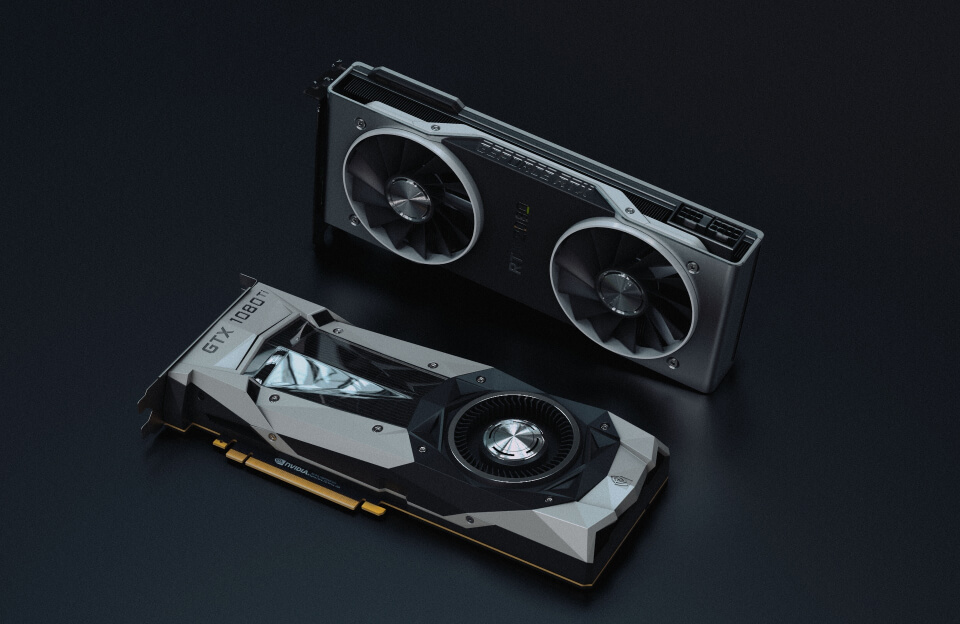
The GPU is the heart of ultra graphics settings. Modern titles rely heavily on shader cores, ray‑tracing units, and high memory bandwidth to render detailed textures, realistic lighting, and high frame rates at 1440p or 4K resolutions. If your current card is older than the Nvidia RTX 30‑series or AMD Radeon RX 6000‑series, it’s time for a replacement.
When choosing a new GPU, consider:
- VRAM capacity: 8 GB is the minimum for 1440p ultra; aim for 12 GB or more for 4K.
- Ray‑tracing support: Enables realistic reflections and shadows.
- Power draw: Ensure your PSU can handle the new card’s TDP.
For a balanced upgrade, the Nvidia RTX 4070 Ti or AMD Radeon RX 7900 XT provide excellent performance‑per‑dollar ratios while staying under typical 750 W PSU limits. For an ultimate experience, the RTX 4090 or RX 7900 XTX push frame rates beyond 120 fps at 4K, but they demand a robust power supply and cooling.
Boost CPU Power and Enable Overclocking
While the GPU does the heavy lifting, the CPU must keep up, especially in CPU‑bound titles like strategy games or large open‑world simulations. Upgrading a gaming PC often means moving to a newer generation processor with more cores and higher clock speeds.
Key considerations:
- Core count: Minimum 6 cores for modern games; 8‑12 cores future‑proofs your rig.
- Single‑thread performance: Important for games that don’t scale well across cores.
- Motherboard compatibility: Check the socket and BIOS version before buying.
If you’re comfortable with advanced tweaking, mild overclocking can squeeze an extra 5‑15 % performance out of your CPU without major hardware changes. Pair this with a quality aftermarket cooler—either a high‑end air cooler like the Noctua NH-D15 or a 240 mm AIO liquid cooler—to maintain temperatures under load.
Expand RAM and Accelerate Storage
Running games at ultra settings often means larger texture packs and more simultaneous assets. Ensure you have at least 16 GB of DDR4 or DDR5 RAM; 32 GB becomes a safety net for future releases. Faster RAM (higher MHz and lower CAS latency) can improve frame pacing, especially on AMD platforms that benefit from faster memory.
Equally important is storage speed. SSDs dramatically reduce load times, and NVMe M.2 drives provide the highest sequential read/write rates, feeding the GPU with data quickly enough to keep ultra settings smooth.
Consider the following upgrade path:
- RAM: 2 × 16 GB DDR5‑5600 kit (or DDR4‑3600 if on an older board).
- Primary storage: 1 TB NVMe SSD for OS and games (NVMe technology).
- Secondary storage: Optional 2 TB SATA SSD for media and less demanding titles.
These additions ensure that even texture‑heavy titles like “Cyberpunk 2077” load swiftly and maintain stable frame rates at ultra settings.
Power Supply and Cooling: The Unsung Heroes
A high‑performance GPU and CPU demand reliable power. Upgrading a gaming PC without addressing the PSU can lead to instability, crashes, or hardware damage. Aim for a unit with an 80 PLUS Gold rating and enough wattage headroom. As a rule of thumb, add 150 W to the total calculated draw to accommodate future upgrades.
Effective cooling is equally critical. An oversized case with good airflow, combined with strategically placed intake and exhaust fans, prevents thermal throttling that would otherwise negate the benefits of your upgrades. For extreme builds, consider a custom loop or larger radiators (360 mm) to keep temperatures sub‑70 °C under sustained 4K gaming.
Fine‑Tune In‑Game Settings and Drivers
After hardware upgrades, the final step is software optimization. Install the latest graphics drivers from the manufacturer—Nvidia’s GeForce Experience or AMD’s Radeon Software—and enable features like DLSS (Deep Learning Super Sampling) or FidelityFX Super Resolution to boost frame rates while preserving visual fidelity.
Adjust in‑game settings to balance performance:
- Resolution: 1440p for a smooth balance; 4K if your GPU can sustain >60 fps.
- Ray tracing: Enable with DLSS/FidelityFX to offset performance loss.
- Texture quality: Set to Ultra; the extra VRAM will handle it.
- Shadow detail: Medium‑high; shadows are often GPU‑heavy.
Use benchmarking tools like 3DMark to validate that your upgrades deliver the expected gains across a range of titles.
Conclusion: Transform Your Rig and Play at Ultra Settings Today
Upgrading a gaming PC for ultra settings boils down to three core pillars: a powerful GPU, a capable CPU (with optional overclocking), and fast memory and storage, all supported by a robust power supply and cooling solution. By following the steps outlined above, you’ll not only achieve crisp, buttery‑smooth visuals in today’s biggest releases, but you’ll also future‑proof your system for the next wave of demanding games.
Ready to take the plunge? Start by checking your current component specs, choose the upgrade path that fits your budget, and order the parts from a reputable retailer. Remember, the difference between “good” and “ultra” is often just a single, well‑chosen component. Upgrade now and experience gaming at its most immersive level!
Frequently Asked Questions
Q1. How do I know which components need upgrading first?
Start by auditing your current hardware using tools like CPU‑Z or HWiNFO to capture benchmark data. Compare those numbers against the recommended specs for the games you play at ultra settings. This helps you identify the biggest performance bottlenecks, usually the GPU or CPU. Prioritizing upgrades based on this analysis ensures you get the most value for your budget.
Q2. What GPU should I choose for 1440p ultra settings?
The Nvidia RTX 4070 Ti and AMD Radeon RX 7900 XT strike a great balance of price and performance for 1440p ultra gaming. Both offer 12 GB of VRAM and strong ray‑tracing capabilities while staying under a 750 W power draw. If you have a larger budget, the RTX 4090 provides future‑proof performance, but it requires a robust PSU and cooling solution.
Q3. Is overclocking my CPU safe for a gaming PC upgrade?
When done carefully, mild overclocking can add 5‑15 % extra performance without compromising stability. Use a quality aftermarket cooler, such as a Noctua NH‑D15 air cooler or a 240 mm AIO liquid cooler, to keep temperatures low. Always monitor voltages and temperatures with software like HWMonitor and test stability with stress‑testing tools before regular use.
Q4. How much RAM is ideal for ultra gaming?
At least 16 GB of DDR4 or DDR5 is the baseline for modern games at ultra settings, but 32 GB provides a safety net for future titles. Faster memory speeds (e.g., DDR5‑5600 or DDR4‑3600) can improve frame pacing, especially on AMD platforms. Pairing two identical sticks enables dual‑channel operation, which maximizes bandwidth.
Q5. Do I need a new power supply when upgrading to a high‑end GPU?
Yes, a high‑end GPU often increases power draw significantly, so a quality PSU with enough headroom is essential. Aim for an 80 PLUS Gold‑rated unit and add roughly 150 W to the total calculated system load. This ensures stable operation, protects components, and leaves room for future upgrades.