When you’re working with a compact gaming PC, every upgrade decision carries extra weight. Limited space, airflow constraints, and power delivery all play a role in how you can improve performance without blowing the budget. These Gaming PC Upgrade Ideas focus on maximizing power, cooling, and component efficiency while keeping the form factor tight. By following these guidelines, you can transform a cramped mini‑tower into a high‑performance machine that still fits on your desk.
Gaming PC Upgrade Ideas: Power Supply Swap
One of the most overlooked upgrades in a small build is the power supply unit (PSU). Compact cases often come with a 300‑W or 400‑W PSU that is adequate for entry‑level GPUs but can bottleneck a mid‑range or high‑end card. Replacing the stock unit with a high‑efficiency, modular PSU that supports 80 Plus Gold or Platinum certification can provide cleaner power and reduce heat. Look for a model that is 80 % efficient at 50 % load and has a 12‑V rail capable of delivering at least 200 W to the GPU. A 500‑W or 650‑W PSU with a slim 90‑mm form factor will fit most mini‑ITX cases while giving you headroom for future upgrades.
- Choose a modular design: This reduces cable clutter and improves airflow.
- Check the PSU’s noise level: Look for a 120‑Hz or 150‑Hz fan for quieter operation.
- Verify the connector layout: Ensure it has a 6‑pin or 8‑pin PCIe connector for modern GPUs.
Gaming PC Upgrade Ideas: Mini‑ITX Motherboard Selection
Mini‑ITX motherboards are the backbone of a compact build. Selecting a board that balances features, power delivery, and thermal performance is crucial. Boards with a robust VRM design can handle higher‑clocked CPUs and GPUs, while those with integrated Wi‑Fi and Bluetooth reduce the need for additional cards. When choosing a motherboard, pay attention to the Mini‑ITX specification to ensure it fits your case and supports the CPU socket you plan to use.
Key considerations:
- VRM quality: Look for at least 4‑phase power delivery.
- Cooling solutions: Many boards feature a dedicated VRM heatsink.
- Expansion slots: Even though space is limited, a single PCIe x16 slot is essential for a GPU.
Gaming PC Upgrade Ideas: Efficient CPU Cooler
Thermal management is a critical factor in a compact build. Traditional air coolers can be bulky, so many enthusiasts turn to low‑profile or all‑in‑one (AIO) liquid coolers. A 120‑mm or 140‑mm AIO cooler can provide excellent cooling while keeping the height under 140 mm, which is compatible with most mini‑ITX cases. If you prefer air cooling, choose a cooler with a single fan and a low profile, such as the Noctua NH‑L9i, which is specifically designed for small form factors.
For any cooler, proper thermal paste application is essential. Use a high‑quality paste like Arctic MX‑4 or Thermal Grizzly Kryonaut. The thermal paste ensures efficient heat transfer between the CPU and the cooler’s base.
Gaming PC Upgrade Ideas: Storage Optimization
Storage can be a space‑saver and performance booster in a compact build. Replacing a mechanical hard drive with a solid‑state drive (SSD) not only speeds up load times but also reduces vibration and heat. For the best balance of speed and capacity, consider a 1‑TB NVMe SSD that uses the M.2 2280 form factor. Many mini‑ITX motherboards support M.2 slots, and the SSD’s slim profile keeps the case tidy.
If you need additional storage, look for a 2.5‑inch SSD that can be mounted in a dedicated bay or use a small external enclosure. Avoid large 3.5‑inch drives, as they consume valuable space and generate more heat.
Gaming PC Upgrade Ideas: Cable Management and Airflow
In a tight space, cable management is not just about aesthetics—it directly impacts airflow. Use cable ties and Velcro straps to bundle cables neatly behind the motherboard tray. This frees up the front of the case for better air intake. Additionally, install a small, quiet 120‑mm fan on the rear exhaust to help pull hot air out of the case. If your case supports it, a front intake fan can bring in cooler air, creating a positive pressure environment that reduces dust accumulation.
Pro tip: Use a cable management kit that includes a small cable gland to seal the rear panel, preventing dust from entering the system.
Gaming PC Upgrade Ideas: GPU Selection for Small Form Factor
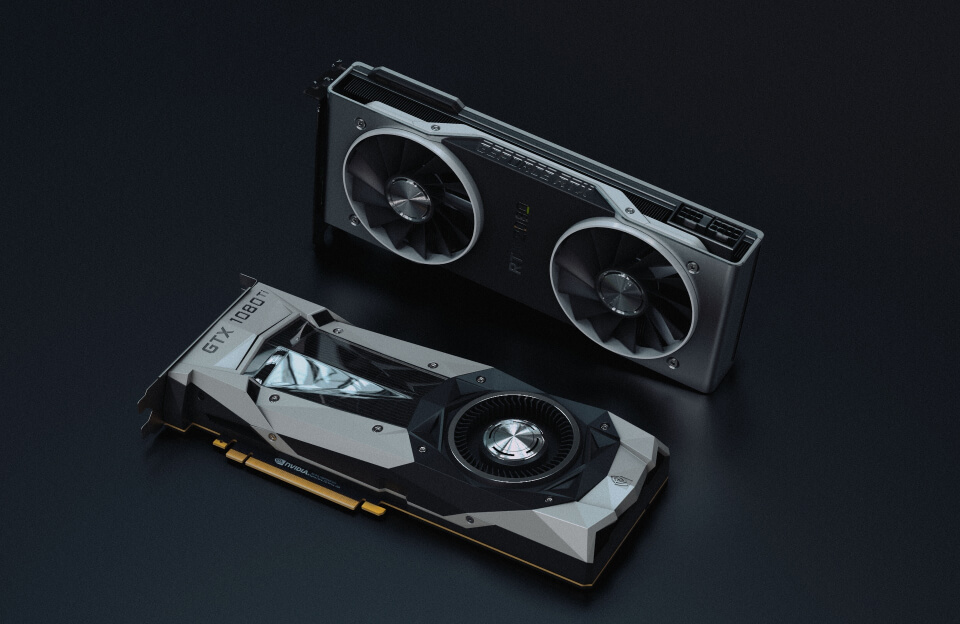
Choosing the right GPU is perhaps the most challenging upgrade in a compact build. Look for a card that offers a low-profile design, such as the NVIDIA GeForce RTX 3060 Ti or the AMD Radeon RX 6700 XT, both of which have a single‑fan design and a length under 280 mm. These cards provide excellent performance for 1080p and 1440p gaming while fitting comfortably in most mini‑ITX cases.
When selecting a GPU, also consider the power draw. A card that requires a 650‑W PSU may be overkill for a small build. Aim for a GPU that can run on a 500‑W PSU to keep the system efficient and quiet.
Gaming PC Upgrade Ideas: Future‑Proofing with PCIe 4.0
PCIe 4.0 offers double the bandwidth of PCIe 3.0, which can be beneficial for high‑end GPUs and NVMe SSDs. Many newer mini‑ITX motherboards support PCIe 4.0, so investing in a board that offers this standard can future‑proof your build. Even if you’re not using a PCIe 4.0 GPU today, the extra bandwidth can accommodate next‑generation components without needing a full system overhaul.
Gaming PC Upgrade Ideas: Budget‑Friendly Component Bundles
For those on a tight budget, consider component bundles that include a mini‑ITX motherboard, CPU, and cooler. These bundles often come with a pre‑installed 80 % efficient PSU and a 120‑mm fan, saving you time and money. Look for reputable vendors that provide a 12‑month warranty and a clear return policy. Bundles can also reduce the risk of compatibility issues, as all parts are tested together.
Gaming PC Upgrade Ideas: Software Optimization
Hardware upgrades are only part of the equation. Optimizing your operating system and drivers can unlock additional performance. Keep your GPU drivers up to date by visiting the NVIDIA GeForce or AMD Radeon support pages. Disable unnecessary background services, and use a lightweight gaming overlay like GOG Galaxy if you prefer a minimal footprint.
Final Thoughts
Implementing these Gaming PC Upgrade Ideas for Compact Builds can transform a cramped mini‑tower into a powerhouse that delivers smooth gameplay and future‑proof performance. From swapping to a high‑efficiency PSU and selecting a low‑profile GPU, each upgrade is designed to maximize space, cooling, and power delivery. Whether you’re a seasoned builder or a newcomer, these strategies will help you achieve a balanced, high‑performance system that fits your desk and your budget.