Building a reliable gaming PC for streaming setup is more than just picking a powerful GPU and a fast processor. It involves balancing performance, audio and video capture, networking, and ergonomics to keep your audience engaged while you focus on the game. In this guide we’ll walk through the essential components, how to optimize them for low latency and high quality video, and the best practices to ensure your stream looks and sounds professional. Whether you stream games on Twitch or YouTube Live, this setup will help you hit those key performance metrics.
A. Choosing the Right GPU for Smooth Gameplay and Encoding
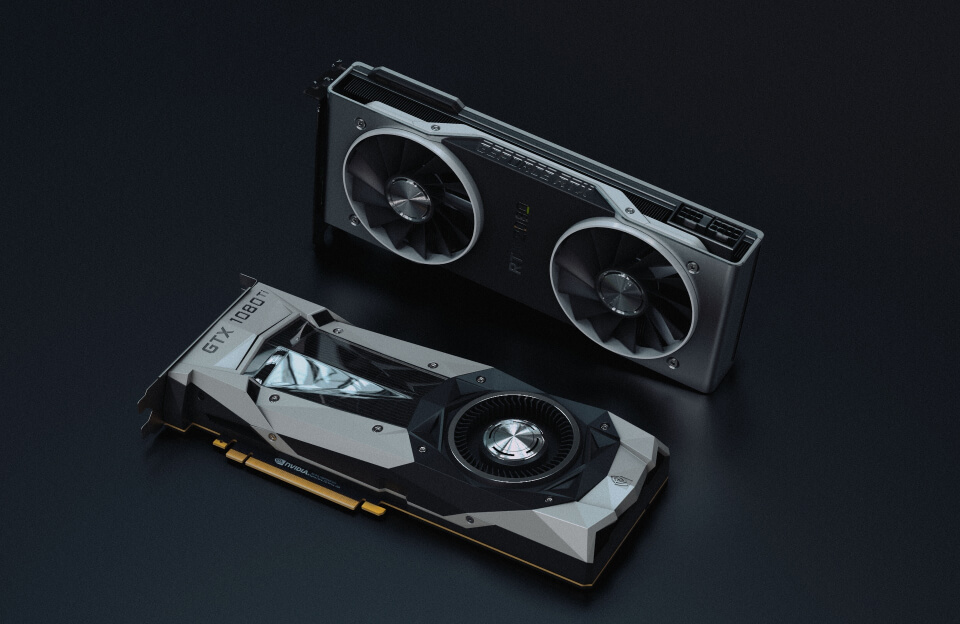
The Graphics Processing Unit (GPU) is the heart of a streaming rig. It not only renders the game but also handles the real‑time encoding either via NVENC (NVIDIA) or VCE/AVC (AMD). When selecting a GPU, consider both the raw game performance and the dedicated encoder:
- GeForce RTX 30‑Series – Offers excellent hardware‑accelerated encoding with NVENC, excellent ray‑tracing support, and ample VRAM for 4K techniques.
- AMD Radeon RX 6000‑Series – Provides robust GPU‑based video encoding, often at a lower price point.
- Number of VRAM – 8GB is a baseline for 1440p, while 11GB+ is ideal for 4K streaming or high‑detail textures.
It’s important to match the GPU to your streaming overlay complexity. An overlay with many animated widgets can push the encoder, so a card with a high‑tier NVENC channel is recommended for consistent bitrate.
B. CPU Choices: Encoding Power vs Game Logic
While the GPU takes care of the visuals, the Central Processing Unit (CPU) handles the game logic, macro‑operations, and the optional software encoder (x264/x265). For a gaming PC for streaming setup, you’ll want a processor that balances:
- Core Count – 8‑core or 12‑core CPUs from the AMD Ryzen 5000/7000 or Intel Core i7/i9 families provide headroom for background tasks like OBS and chat bots.
- Clock Speed – A base + boost clock of 3.8GHz+ reduces bottlenecks when Action‑Packed scenes require quick frame computation.
- Cache Size – A larger L3 cache improves rendering efficiency for complex shaders.
The AMD Threadripper or Intel Core X‑Series are overkill for most streamers, yet they ensure zero stutter when streaming at 60fps 4K. If your budget is tighter, the Core i5‑i7 13th Gen or Ryzen 7 5800X still provide strong performance for 1080p overlays.
C. Memory and Storage: Speed That Keeps Latency Low
RAM and SSD choice directly influences buffering and loading times. Below are the critical specs:
- RAM – 16GB of DDR4‑3600 or DDR5‑4800 is the sweet spot. If you use memory‑intensive overlays or run multiple virtual machines for moderation, upgrade to 32GB.
- SSD – NVMe PCIe 4.0 SSDs reduce load times and improve streaming pipeline stability. Aim for at least 1TB for OS, games, and all assets.
- Use a separate USB‑3.0 device (e.g., USB drive or mini‑PC) for camera feeds to avoid bus contention.
An example configuration is the RTX A100 RTX 3080 paired with a Ryzen 9 7950X and 1TB NVMe, which delivers 60fps 4K Encoding with no degradation.
D. Audio and Video Capture: Maximizing Stream Quality
A high‑quality stream relies on more than just crisp graphics. Audio capture, camera quality, and the capture card all contribute:
- Microphone – Condenser mics like the Beyerdynamic Marantz provide clear voice without compression artifacts.
- Video Capture Card – A PCIe capture card (Elgato HD60 S+, AVerMedia Live Gamer Ultra) encoding via HDMI/SDI ensures low latency capture cards.
- Camera – 1080p at 60fps like the Logitech C920 or Camlink 4K 30fps Boost. Lighting kits (Elgato Key Light) reduce shadows and improve depth of field.
- Positioning – A ring light or softbox behind your camera gives your face consistent illumination, while a desk mic stand keeps microphone placement stable.
For the best audio codec, route the microphone through a mixer like the Behringer Xenyx Q1202USB and use a hardware compressor to keep levels consistent.
E. Networking: Minimizing Latency and Packet Loss
Online streams are two-way streets: while your viewers are watching, you’re sending data back to the server. A reliable network setup reduces both latency (important for competitive games) and buffering:
- Wired Ethernet – Connect the streaming PC, capture card, and camera to a 1Gbps router via RJ45. Avoid Wi‑Fi for the main feed.
- Router Quality – Use router that supports QoS, prioritizing streaming traffic.
- Upload Speed – Aim for at least 12Mbps upload for 1080p @ 4,000 kbps; double that (24Mbps) for 1440p or 4K.
- Set TCP window and MTU to 1492 for optimal throughput on UDP 기반 protocols.
Testing latency with tools like Caliper helps confirm your network can handle the bitrate with a buffer of at least 10ms.
F. Software Stack: OBS, Stream Deck, and Automation
Choosing the right software makes the difference between a glitchy broadcast and a polished production. The stack often includes:
- Open Broadcaster Software (OBS) – Free, open‑source, and supports plug‑ins for overlays, chroma key, and custom transitions.
- Elgato Stream Deck – Allows you to trigger scenes, mute audio, or start recording with a single button.
- Chat Moderation Bot – Tools like StreamElements or Streamlabs provide real‑time moderation and alerts.
- Hardware Encoding Settings – In OBS, set ‘Encoder’ to ‘NVENC (Hardware)’ for 1080p at 60fps and ‘x264’ when reliability at higher frame rates is required.
The settings profile system in OBS lets you quickly switch between 720p, 1080p, or 1440p profiles, automatically adjusting bitrate and resolution for bandwidth changes.
G. Power Supply, Cooling, and Cable Management
Even the best components fail without proper power and cooling. Follow these guidelines:
- Power Supply – 650W‑750W PSU with 80+ Gold certification covers a high‑end GPU and CPU with headroom.
- Cooling – Aftermarket air coolers or AIO 240/360‑mm liquid coolers keep the CPU below 70°C at load.
- Cable Management – Thori‑matched cable ties and modular PSU cables reduce airflow obstruction.
- Case – Choose a mid‑tower with at least 3‑front‑fan support. The NZXT H510i offers integrated monitoring.
A tempered steel case and a negative pressure setup keep dust at bay while allowing efficient airflow, which directly affects encoding stability.
H. Final Checklist: Putting It All Together
Before hitting X‑button, double‑check the points below:
- CPU > 3.8GHz boost, 8 cores or more.
- GPU with a proprietary encoder (NVENC or AMD VCE).
- 16GB RAM (32GB for heavy overlays).
- 1TB NVMe SSD (PCIe 4.0 preferred).
- High‑quality audio and camera setup with proper lighting.
- Wired network with upload speeds >12Mbps.
- Proper PSU (Gold) and cooling.
- Pre‑stream test for latency, buffer, and audio sync.
By following this framework, your gaming PC for streaming setup will deliver professional quality, clear audio, and minimal lag, ensuring a lively and engaging experience for your community.
I. Conclusion: Unleash Professional Streaming Today
Building the right gaming PC for streaming setup doesn’t have to be a daunting task. With a focused component strategy—prioritizing GPU encoder capability, CPU cores, fast storage, a solid audio/video pipeline, and a reliable network—you can consistently produce high‑quality content that stands out on Twitch, YouTube, and beyond. It’s time to upgrade, optimize, and keep your stream ahead of the competition.
Ready to elevate your live streaming game? Start building your powerhouse PC kit now and watch your audience grow!
Frequently Asked Questions
Q1. What GPU should I choose for streaming at 1080p 60fps?
A good choice is the NVIDIA GeForce RTX 4060 Ti or AMD Radeon RX 6600 XT. They both offer strong NVENC/VCE encoders that free the CPU for encoding. Ensure the card has at least 6GB VRAM for minimal texture pop‑ins. If you stream 4K, consider the RTX 4080 or 4090 for extra encoding bandwidth.
Q2. Do I need a dedicated hardware encoder or can I rely on software encoding with x264?
Hardware encoders like NVENC or AMD VCE provide consistent performance with minimal CPU usage. Software encoding gives you more control over bitrate and quality, but can tax the CPU, causing stutter during demanding games. For most streamers, hardware encoding is recommended unless you have a very high‑core count CPU.
Q3. How much RAM do I need for a smooth streaming experience?
Sixteen gigabytes of DDR4‑3600 or DDR5‑4800 RAM is sufficient for 1080p streaming with standard overlays. If you run heavy overlays or multiple virtual machines, 32GB or more gives you plenty of headroom. Memory bandwidth matters, so choose modules rated at 3600+ MHz for optimal performance.
Q4. What kind of network setup will prevent buffering during live streams?
Connect your streaming PC, capture card, and camera via wired Ethernet to a 1Gbps router. Enable QoS on the router to prioritize UDP traffic destined for Twitch or YouTube. Aim for upload speeds of at least 12Mbps for 1080p and 24Mbps for 4K. Average latency should stay under 100ms to avoid viewer lag.
Q5. Is a 1TB NVMe SSD really necessary, or can I use a smaller drive?
A 1TB NVMe SSD gives enough space for the OS, games, and OBS libraries while keeping load times low. Still, if your budget is tight, a 500GB SSD works for lighter builds, but plan to expand if you install many games or large assets.