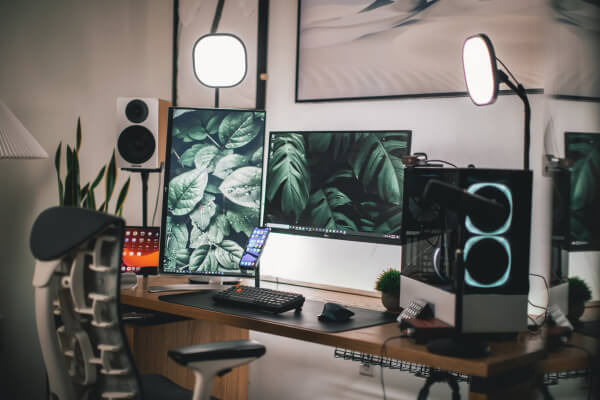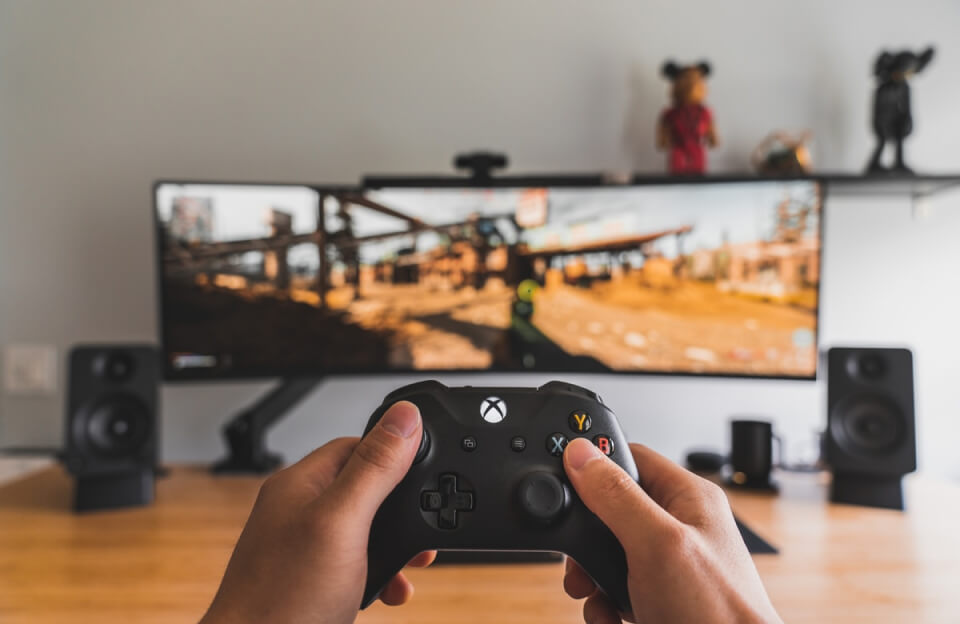
For gamers who crave control, Custom Gaming PC Assembly offers the ultimate blend of performance and personalization. Whether you’re replacing an aging rig or building from scratch, the process can feel intimidating. But with a clear plan, the right components, and methodical attention to detail, you can assemble a machine that not only feels powerful but also delivers a silky, responsive gaming experience.
Component Selection: Build Your Foundation
Every high‑performing rig begins with a rock‑solid foundation. The first decision—your motherboard—determines the rest of your build’s compatibility. For a gaming machine, choose an motherboard that supports the latest CPU sockets, offers sufficient PCIe lanes for a multi‑GPU setup, and includes robust VRM to sustain overclocking if that’s on your radar. Pair it with a processor that balances clock speed and core count; today’s mainstream enthusiasts often turn to the Ryzen 5 or 7 or Intel’s Core i5/i7 series for an excellent price/performance ratio.
Next, choose memory. At a minimum, 16 GB of DDR4/DDR5 RAM is recommended for modern titles, with 3200 MHz or higher speeds ensuring smooth multitasking. The graphics card is where “gaming hardware” truly shines. Opt for the latest model—such as the GeForce RTX 4070 or RTX 4080—but always cross‑reference the GPU’s power draw (TDP) to size your PSU appropriately.
- CPU – Ryzen 7 or Intel i7 13th Gen
- Motherboard – X570 or Z590 chipset
- RAM – 32 GB DDR5 5600 MHz
- Graphics – NVIDIA RTX 4080
- Storage – NVMe SSD 1 TB (PCIe 4.0)
- PSU – 750 W 80+ Gold
- Case – Mid‑tower with tempered glass
- Cooling – 360 mm AIO liquid cooler
Cable Management: Keep Airflow Flowing
Good cable management not only gives a cleaner aesthetic but also boosts airflow. Start by running power cables directly to the motherboard’s rear rail, then route all non‑essential cables toward the case’s rear or side panels. Use screw‑brace cable ties and an allen key when needed—this keeps every connector stable and reduces stress on ports during vibration. Remember, the more chaotic the cables, the harder the heat can find a path out, which may impair your cooling solutions.
Utilize cable covers or mesh wrap for exposed wires, and label each connection with a small sticker. This practice simplifies future upgrades and troubleshooting because you’ll instantly recognize which wires belong where.
Cooling Strategy: Opt for Precision
Heat is the enemy of performance. When planning your cooling strategy, think about the ideal temperature range for your selected GPU and CPU. A well‑designed case should feature a minimum of two intake fans (140 mm or larger) and one exhaust fan—ideally a 120 mm one at the rear. A crossover intake‑exhaust pattern reduces hot spots and ensures a lower average internal temperature.
If you select a liquid cooling setup, attach a high‑flow radiator to the rear of the case, and have the pump sit early on, close to the power supply, to minimize pump noise. For air cooling enthusiasts, consider a dual‑fan H‑type or AIO radiator paired with a high static pressure fan on the front intake.
When GPU and CPU both draw significant power, it’s wise to perform a thermal test in the finally assembled pc, verifying that temperatures stay below 80 °C during heavy workloads.
Power Management: Strengthen Reliability
The backbone of every gaming rig is the PSU. An 80+ Gold or Platinum unit is strongly recommended for any high‑end build, especially one that incorporates a graphic card with a TDP exceeding 300 W. Connect the 12‑V rail cables directly to the GPU and motherboard, ensuring the cables do not overlap or kink.
For overclockers, enable the Ryzen or Intel BIOS settings to regulate VRM limits, and consider a power‑regulated feature such as “Smart Shift” or “Quad-Power.” Keep the PSU cable’s maximum current rating within the component’s requirement; this prevents future failure and ensures a stable supply under peak loads.
Final Testing: Ensure Consistency
Before you claim victory, run a comprehensive suite of diagnostic utilities. Use Prime95 or 3DMark Anger to stress the CPU and GPU. Measure temperatures with HWMonitor or MSI Afterburner; if any component reports temperatures above safe limits (usually 90 °C for GPUs and 95 °C for CPUs), investigate airflow or re‑tighten cooling. A stress test that runs for 30‑60 minutes without errors confirms a solid assembly.
Next, launch a few popular titles—Fortnite, Cyberpunk 2077, or Elden Ring—to gauge real‑world performance. Monitor frame rates, input lag, and system stability. Any lag spikes or dropping fps may indicate a bottleneck or insufficient cooling.
Finally, document each step of your process. Keep photos of cable routing, fan placement, and component installation. These records help when revisiting the build for upgrades or troubleshooting later.
Conclusion: Take Charge of Your Gaming Future
When approaching Custom Gaming PC Assembly, treat it as a marriage of science and artistry. Carefully selected components, meticulous cable management, precise cooling, and robust power sourcing create a platform that thrives under intense gaming sessions. With these steps, you’ll not only see immediate performance gains but also lay the groundwork for a future‑proof system capable of evolving with new hardware demands.
Start assembling today—embark on your own custom journey, and unlock the full potential of your gameplay. Whether you’re a seasoned overclocker or a newcomer, a well‑built PC promises countless hours of immersive experiences. Let your passion guide you, and transform your gaming studio into the ultimate playground of power.
Frequently Asked Questions
Q1. Which CPU offers the best value for a high‑end gaming build?
For most gamers, an AMD Ryzen 7 5800X or an Intel Core i7‑13700K provides a strong balance of core count, clock speed, and price. Both chips support PCIe 4.0 and feature hyper‑threading (or simultaneous multithreading) for smooth multitasking. Pairing either CPU with DDR5 RAM and a capable GPU (like an RTX 4080) yields excellent performance in modern titles.
Q2. How important is cable management for airflow?
Proper cable routing reduces obstructions, allowing fans to push and pull air more efficiently. Tidy cables also prevent dust accumulation on vent openings and make maintenance easier. Using cable ties, zip‑ties, or cable sleeves keeps wires off the way and keeps temperatures lower, which is critical for sustained gaming sessions.
Q3. When should I choose liquid cooling over air cooling?
Liquid cooling shines in cases with limited front‑side airflow or when you run a high‑TDP GPU (e.g., 300 W+) and want top temperature control. Air cooling works well in compact builds or if you prefer a noise‑free setup. If you’d like to overclock aggressively, a high‑flow AIO or custom loop can provide cooler temps compared to high‑end air coolers.
Q4. What PSU rating is best for a multi‑GPU configuration?
An 80+ Gold or Platinum 1000 W PSU is recommended for dual RTX 4080s or a single card with a high TDP. The PSU should have sufficient 12‑V rails and a dedicated 12VHPWR connector for future GPUs. A reputable brand (Seasonic, Corsair, EVGA) guarantees reliability under peak loads.
Q5. How do I verify that my build is stable after assembly?
Run Prime95 for the CPU and 3DMark for the GPU for at least 30‑minute continuous stress tests while monitoring temps with HWMonitor. If temperatures stay below 90 °C for the GPU and 95 °C for the CPU, the build is stable. Afterward, play a few demanding games and watch for frame drops, stutter, or crashes; any sudden instability warrants a closer look at airflow or voltage settings.