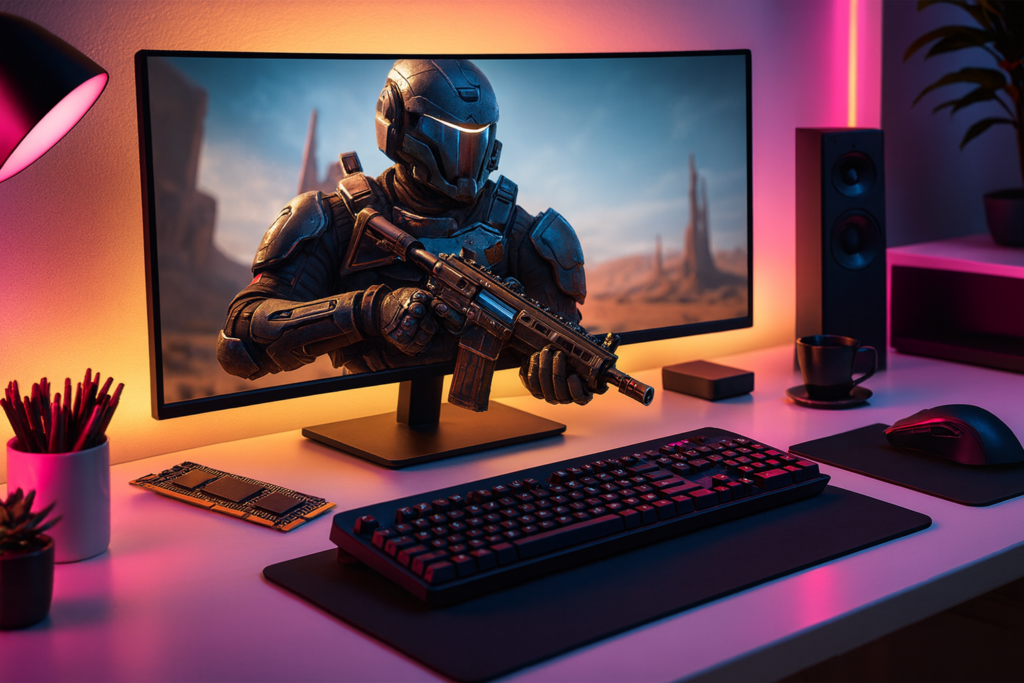
Many gamers today crave more than just high frame rates—they want a visual experience that mirrors the intensity of their gameplay. A well‑planned Gaming PC RGB Setup turns your build into a living, breathing light show that reacts to every victory, defeat, and nuanced detail in the virtual world. By thoughtfully integrating lighting, cooling, and hardware, you can create a setup that not only performs flawlessly but also showcases your personal style.
Choosing the Right Color Theme
The foundation of any compelling RGB design lies in selecting a color scheme that complements your gaming headsets, monitors, and overall interior décor. Start with a primary hue—many users favor deep blues or vibrant greens that echo the colors in popular e‑sports titles. Add secondary accents like neon pink or electric yellow to highlight specific components such as the GPU, AMD Ryzen processor, or a high‑refresh‑rate display. Using RGB lighting allows you to layer these colors in gradients, thereby reducing eye fatigue during marathon sessions.
When designing your palette, consider the psychological impact of light hues. Warm tints can boost adrenaline just before a boss fight, while cooler tones provide a soothing backdrop during stealth missions. Many advanced RGB controllers now support dynamic lighting modes that react to in‑game events, turning the PC into a responsive companion rather than a static backdrop. By fine‑tuning these settings, you achieve a blend that feels both immersive and sophisticated.
Optimizing GPU and CPU Components
High‑performance GPUs such as the NVIDIA RTX 4090 or the AMD Radeon RX 7900 XT are the cockpit of your PC’s eye. These cards often come with in‑built RGB strips along the frame or the underside of the heatsink, and they can be synchronized with other lights for a unified look. Pairing a powerful CPU, like Intel Core i9‑13900K or AMD Ryzen 7950X, with a matching RGB fan set creates a dual‑vector lighting scheme that clarifies the escalation between game and hardware.
Powerful cooling is essential for maintaining peak performance. Modern gaming rigs frequently use four‑ or six‑port pump and fan combos, often featuring RGB backlights. When selecting a cooler (liquid or air), ensure the mount supports “clean” cable paths so that the LEDs shine through without obstruction. The computer cooling solutions also serve as a canvas for light, with illuminated bezels that can be phased with system music or PS5 color contexts.
Cable Management with Modularity
One of the most striking aspects of an ideal RGB Setup is fluid cable routing. By employing modular cable bundles and slim‑line cabling, you can create a tight, organized chassis where the LEDs illuminate behind the panels, casting a soft glow across the frame. This not only reduces clutter but also improves airflow.
- Step 1: Gather modular cables—choose connectors that can be swapped easily, allowing future upgrades.
- Step 2: Route all power cables through pre‑wired channels, keeping the RGB leads separate to prevent signal interference.
- Step 3: Use cable ties made of flexible materials; label them with small colored tags so you know which segment powers the GPU vs. the motherboard.
- Step 4: Test the cables with an isolated power source to confirm all LEDs light up as intended before closing the case.
- Step 5: Apply a light‑blocking film to the panel edges where necessary; this will enhance the contrast and bring the RGB hues to life.
Placing the RGB cables behind the motherboard tray turns the lights into a “halo” effect that is visible from every angle. If you’re using a mid‑tower case, consider a tempered glass side panel that frames the current layout and showcases the colour flow across the motherboard, RAM, and storage.
Advanced Lighting Synchronization
Beyond static illumination, you can implement software that integrates with your CPU, GPU, and even gaming peripherals for multi‑device teamwork. Major ecosystems—C‑SMI for Intel, Energy‑Star guidelines allow for low‑power configurations, and National Institute of Standards and Technology offers frameworks for precisely calibrated light‑to‑sound conversion—ensuring that the lights pulse in perfect alignment with your gameplay.
For those who want a truly responsive setup, consider a lighting bus that receives real‑time statistics directly from the GPU’s performance counter. This allows the RGB band around the motherboard to flash in a crescendo during GPU spikes or GPU idle to dim downstream, providing a visual indicator of thermal load. The result is a PC that not only “looks” better but offers real-time feedback on performance metrics such as frame time, FPS, or even CPU temperature.
Conclusion and Next Steps
By combining a strategic color scheme, high‑performance hardware, meticulous cable management, and advanced synchronisation tools, you can transform your Gaming PC RGB Setup into a fully immersive experience. Consider evaluating each component’s lighting potential, and remember that the best setups are those that blend form and function seamlessly.
Ready to take your build to the next level? Dive into the worlds of Centers for Disease Control in hardware safety, Harvard CS Department‘s research on thermal dynamics, and unlock powerful tools that can bring a new dimension to your PC.
Start building your dream RGB Experience today—connect, customise, and dominate!
Frequently Asked Questions
Q1. What is the best color theme for a Gaming PC RGB Setup?
The best color theme depends on your personal taste and the lighting you want. Many gamers prefer cool tones like deep blue or green because they’re less harsh on the eyes during long sessions. You can add warm accents such as pink or yellow for a dynamic contrast. The key is to choose a primary hue and use secondary colors that highlight critical components.
Q2. How do I synchronize RGB lighting across peripherals?
Most manufacturers provide software that can sync GPUs, CPUs, and peripherals. Intel’s C‑SMI, ASUS Aura, MSI Mystic Light, and Corsair iCUE are common solutions. Once you have the software, simply assign the same light profile to all devices. If your motherboard supports RGB headers, connecting the LEDs to the same controller will keep them in step.
Q3. What cable type should I use for clean RGB routing?
Modular or flexible USB‑C cables are ideal for RGB routing. Use slim cable sleeves that allow you to bundle multiple RGB leads together. A slim‑line cable kit keeps the ribbons flat and reduces obstruction. Remember to keep RGB leads separate from power cables to avoid interference.
Q4. Can RGB lighting affect PC performance?
RGB lighting itself has a negligible impact on performance. However, a well‑managed cable path improves airflow, which keeps thermal levels stable and maintaining higher overclocking headroom. Thus, good cable management indirectly supports performance.
Q5. How can I make RGB lighting react to in‑game events?
Many RGB controllers offer event‑based profiles. The software monitors performance counters such as GPU temperature or FPS. Some advanced buses allow you to write custom triggers, like flashing when FPS drops below a threshold. This real‑time visual feedback turns your PC into a responsive companion.