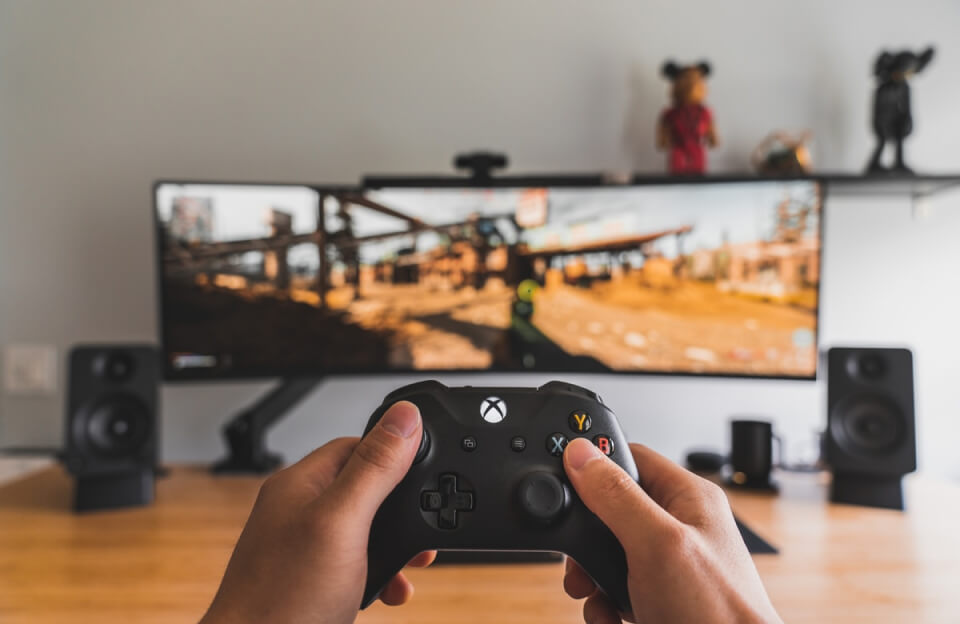
In today’s high‑definition, physics‑heavy games, the performance you experience on the screen is a direct reflection of the components working together inside your PC. While a powerful CPU, GPU, and plenty of memory are usually the headline specs, the motherboard is the hidden backbone that keeps everything synchronous and stable. Choosing the right motherboard for gaming can mean the difference between a buttery‑smooth frame rate and frustrating stutters or crashes.
Understanding Form Factors
Form factor refers to the physical dimensions and layout of a motherboard, which determines what case it will fit and how many expansion slots it offers. The most common options for gamers are ATX, Micro‑ATX, and Mini‑ITX. Each has its own sweet spot: a full‑size ATX board can house multiple GPUs and extensive cooling setups, while a Mini‑ITX fits in super‑compact builds but limits expansion. Learn more about form factors.
- Case compatibility: ensure the board fits the chassis.
- Expansion I/O: number and type of USB, Ethernet, and audio headers.
- Future‑proofing: support for the latest connectivity standards.
CPU & Socket Compatibility
The motherboard’s CPU socket determines which processors it can accept. AMD released the AM4 socket with its Ryzen line, and the newer AM5 will support Ryzen 7000‑series CPUs and DDR5 memory. Intel’s LGA 1200 and LGA 1700 sockets serve similar roles for the 10th–12th generation and 13th‑generation Core chips. Explore CPU socket history. Matching the right socket ensures you can upgrade your processor without needing to replace the entire board.
RAM & Memory Speed
Gaming performance is sensitive to memory latency and bandwidth. Most modern motherboards support DDR4 and the newer DDR5, with maximum supported frequencies ranging from 3200 MHz to 6000 MHz for DDR5. Look for boards that list a wide range of supported speeds and overclocking options. Dual‑channel architecture also helps by doubling the memory bandwidth if you install two sticks.
PCIe Slots and Expansion
Graphics cards connect via the PCI‑Express (PCIe) interface, and the number and width of your PCIe slots determine how many GPUs you can run. Most gamers use an x16 slot for a single GPU. For multi‑GPU setups or adding sound cards, GPUs, Wi‑Fi cards, and NVMe SSDs, ensure the motherboard provides ample PCIe x16 and x4 slots. The PCI‑Express specification details bandwidth and compatibility. Additionally, the board should support the latest PCIe Gen4 or Gen5 for full bandwidth capacity.
Power Delivery & VRM Quality
The motherboard’s voltage regulator module (VRM) provides clean power to the CPU. A robust VRM with high‑quality capacitors can maintain stable voltage during heavy gaming loads and overclocking. Look for at least a 10‑phase VRM for high‑end gaming boards. Read about VRM design. A solid VRM also extends components’ lifespan by reducing heat stress.
Cooling, Overclocking, and Features
Effective cooling is critical for any gaming build. While the motherboard itself does not air‑condition the case, it provides valuable sockets for CPU water blocks and heatsink mounting plates. Boards rated for overclocking often feature reinforced Extreme Overclocking (X.O.) headers and better power delivery. Additional features worth checking include in‑built Wi‑Fi 6, ample USB‑C ports, 10 Gbps Ethernet, and RGB lighting headers. Intel’s latest CPUs and AMD’s Ryzen 9 both demand strong VRMs and cooling routes.
Budget and Future‑Proofing
While high‑end boards offer the best VRM, PCIe bandwidth, and cooling options, mid‑range options often provide an excellent balance for gamers on a budget. Determine how much you’re comfortable spending on the board versus the CPU and GPU. If you plan to upgrade your CPU or add a second GPU in the future, opt for a board with an upgrade‑friendly chipset. Consider the additional connectivity the board brings; newer expansion connectors can serve future peripherals without costly add‑on cards.
Conclusion
Choosing the right motherboard for gaming is more than picking a board with a fancy logo. It’s about aligning the CPU socket, RAM speed, PCIe slots, and VRM grading with your gaming goals and future plans. By focusing on form factor, power delivery, connectivity, and cooling, you can build a system that stays stable under load, supports overclocking, and scales with tech advancements. Don’t let a mis‑matched motherboard stall your play; invest in the foundation that empowers every frame.
Ready to upgrade your gaming rig? Start with a motherboard that balances performance, features, and future readiness. Shop reputable retailers today and power your games to peak performance.
Frequently Asked Questions
Q1. What is the difference between ATX, Micro‑ATX, and Mini‑ITX motherboards?
ATX is the full‑size board that offers the most expansion slots and power delivery options, ideal for multi‑GPU or high‑end builds. Micro‑ATX is slightly smaller yet still supports many slots and is a good mid‑range choice. Mini‑ITX is the compact option for very small cases, but it limits expansion with only one PCIe x16 slot and few other connectors.
Q2. How important is the VRM on a gaming motherboard?
The VRM supplies clean power to the CPU, especially under heavy loads or overclocking. A robust, multi‑phase VRM keeps voltages stable, reduces heat, and can extend component lifespan. High‑end gaming boards typically feature at least 10‑phase VRMs.
Q3. Which RAM speeds should I look for in a new board?
Gaming performance benefits from low latency and high throughput. Most motherboards now support DDR5 at 4800 MHz or higher. Dual‑channel configurations double the memory bandwidth, so two sticks are recommended over a single high‑speed stick.
Q4. Do I need PCIe Gen5 on a new motherboard?
PCIe Gen5 offers double the bandwidth of Gen4, but current GPUs and NVMe drives rarely saturate Gen4 speeds. For most gamers Gen4 is sufficient, though Gen5 boards provide future‑proofing if you anticipate extremely high‑speed storage or next‑gen GPUs.
Q5. Should I prioritize built‑in Wi‑Fi and Ethernet on a motherboard?
Built‑in Wi‑Fi6 and 10 Gbps Ethernet are convenient for game streaming and fast downloads. If you already have a dedicated Wi‑Fi card or a wired connection, you can opt for a motherboard without these to reduce cost, but having them offers flexibility for future upgrades.