Every serious gamer knows that a smooth frame delivery experience hinges on the harmony between hardware components and software demands. This Gaming PC Upgrade Guide walks you through the precise upgrades that will eliminate stutter, reduce input lag, and consistently push high frame rates in modern titles. Whether you are chasing 144 Hz on a competitive shooter or 60 fps in a cinematic RPG, understanding where performance bottlenecks arise and how to address them is essential for a seamless gaming experience.
Gaming PC Upgrade Guide: Assessing Your Current Bottleneck
Secondary symptoms—like texture popping or micro‑stutters—often point to insufficient RAM capacity or slow storage I/O. Modern games can easily consume 16 GB of RAM, and titles that stream large worlds (e.g., open‑world adventures) benefit from rapid data retrieval. A thorough assessment gives you a clear roadmap and prevents unnecessary upgrades that won’t translate into smoother frames.
Gaming PC Upgrade Guide: Choosing the Right GPU
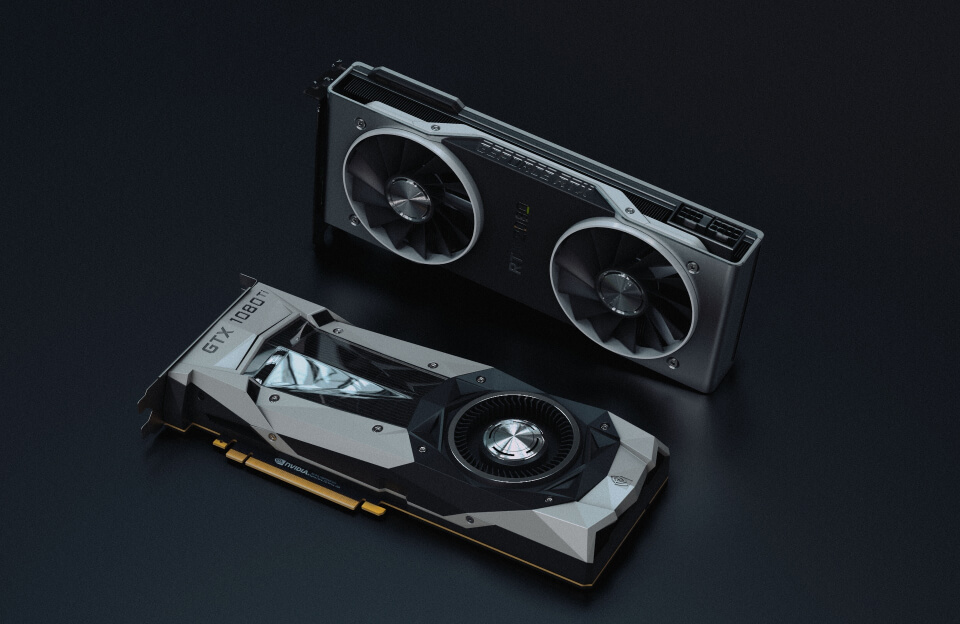
For 1080p gaming at ultra settings, a mid‑range card such as the NVIDIA RTX 3060 or AMD Radeon RX 6600 XT often suffices. If you aim for 1440p or 4K, step up to an RTX 4070 Ti or Radeon RX 7900 XT. Pay attention to VRAM; 8 GB is the bare minimum for high‑resolution textures, while 12‑16 GB provides headroom for future titles.
Don’t forget the importance of driver support. Regular driver releases from NVIDIA or AMD can unlock performance gains in new games. Keep your GPU’s firmware up to date, and consider enabling DLSS or FSR technologies to upscale lower‑resolution frames without sacrificing visual fidelity.
Gaming PC Upgrade Guide: Boosting CPU and RAM
Pair your new CPU with fast, low‑latency RAM. DDR5 kits at 5600 MT/s or higher are now mainstream and can shave off up to 5 % of frame time in CPU‑bound scenarios. Ensure the memory timing (CL) is optimized; lower latency translates to quicker data processing. Remember that dual‑channel configurations are a must—four‑channel setups are optional for enthusiast builds.
Beyond raw speed, the amount of RAM matters. If you currently run 8 GB, upgrade to at least 16 GB; 32 GB future‑proofs you for upcoming titles that leverage large asset packs. Choose reputable brands with proven RAM technology and warranty coverage.
Gaming PC Upgrade Guide: Storage and Cooling Solutions
Effective cooling ensures that both CPU and GPU maintain boost clocks without throttling. High‑performance air coolers or all‑in‑one liquid coolers keep temperatures under 75 °C under load, preserving frame consistency. Additionally, case airflow matters: front intake fans paired with rear exhaust fans create a balanced pressure environment.
Consider upgrading your power supply if you’re adding a power‑hungry GPU. A high‑efficiency (80 PLUS Gold) PSU with enough wattage headroom prevents voltage dips that could cause momentary frame stutters. Modular designs also improve cable management, enhancing airflow.
Gaming PC Upgrade Guide: Upgrade Checklist
- Identify bottleneck: Monitor CPU, GPU, RAM usage during gameplay.
- GPU selection: Match performance tier to desired resolution and frame target.
- CPU & RAM: Upgrade to a modern multi‑core processor and high‑speed DDR5 memory.
- Storage: Install a PCIe 4.0 NVMe SSD of at least 1 TB.
- Cooling & PSU: Ensure adequate cooling and a reliable power supply with sufficient wattage.
Following this checklist will align every subsystem toward delivering stable, high‑frame‑rate gaming sessions.
Conclusion
Ready to upgrade? Use this Gaming PC Upgrade Guide as your roadmap, purchase the recommended parts, and enjoy flawless gameplay that keeps you ahead of the competition. Start your upgrade today and feel the difference in every frame.
Frequently Asked Questions
Q1. How do I identify the main bottleneck in my gaming PC?
Use monitoring tools like HWiNFO, MSI Afterburner, or Windows Performance Analyzer while gaming. Look at CPU, GPU, and RAM utilization graphs. If the GPU is at 100 % and the CPU is low, the GPU is the bottleneck, and vice‑versa. Also check for occasional spikes that indicate RAM or storage limits.
Q2. Is a 1080p‑only GPU like the RTX 3060 sufficient for 144 Hz gaming?
For most titles at 1080p, the RTX 3060 can sustain 144 Hz on medium to high settings. Ensure your CPU can keep up and that you have enough RAM (16 GB). Enabling DLSS or FSR can help reach higher frame rates without sacrificing visual quality.
Q3. When should I upgrade from DDR4 to DDR5 memory?
Upgrade to DDR5 when your motherboard and CPU support it, typically with newer platforms such as AMD Zen 4 or Intel 13th Gen. DDR5 offers higher bandwidth (5600 MT/s and above) which can improve CPU‑bound frame times. If you’re on an older platform, a high‑speed DDR4 kit may be more cost‑effective.
Q4. How much NVMe storage do I need for modern games?
A 1 TB PCIe 4.0 NVMe SSD is a sweet spot for most gamers, providing fast load times and enough space for several large titles. If you frequently juggle many games or use game‑streaming services, consider 2 TB. Ensure your motherboard has an M.2 slot that supports PCIe 4.0 for maximum throughput.
Q5. What cooling solution is best for a high‑end GPU?
For most users, a high‑quality aftermarket air cooler or an all‑in‑one (AIO) liquid cooler rated for 240 mm or larger works well. AIO coolers keep GPU temps below 75 °C under load, preserving boost clocks. Make sure your case has good airflow; intake and exhaust fans are essential regardless of the cooler type.