
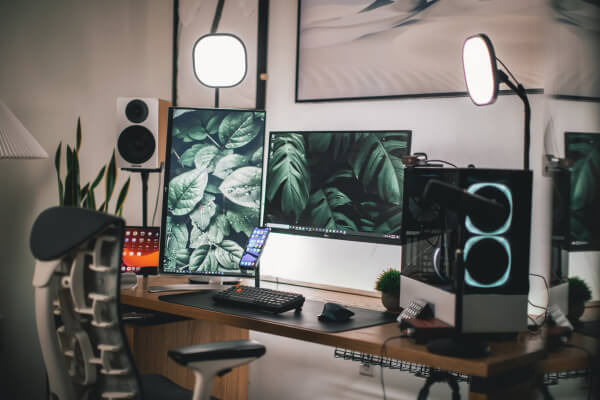
Building a high‑performance gaming rig on a tight budget is a common challenge for many enthusiasts. A Budget‑Focused Custom Gaming PC can deliver excellent frame rates and visual fidelity without breaking the bank, provided you choose components wisely and follow a clear build strategy. This guide walks you through every step—from selecting the right parts to fine‑tuning performance—so you can assemble a powerful, cost‑effective machine that meets your gaming needs.
Budget‑Focused Custom Gaming PC: Core Components
The heart of any gaming PC lies in its processor, graphics card, and memory. For a budget build, you’ll want to strike a balance between price and performance, ensuring each component complements the others without creating bottlenecks.
- CPU: A mid‑range AMD Ryzen 5 5600X or Intel Core i5‑12400 offers excellent single‑threaded performance for modern titles while staying under $200.
- GPU: The NVIDIA GeForce RTX 3060 or AMD Radeon RX 6600 XT provide 1080p and 1440p gaming at high settings for around $300–$350.
- RAM: 16 GB of DDR4 3200 MHz is the sweet spot for gaming; it’s affordable and future‑proof for most titles.
- Motherboard: A B550 or B660 chipset board supports PCIe 4.0 and offers good upgrade paths.
- Storage: A 500 GB NVMe SSD delivers fast load times; pair it with a 1 TB HDD for bulk storage.
- Power Supply: A 550 W 80+ Bronze PSU provides enough headroom for overclocking and future upgrades.
- Case: A mid‑tower with good airflow, such as the NZXT H510, keeps costs low while maintaining a clean aesthetic.
These components together keep the total cost around $900–$1000, leaving room for a decent monitor, keyboard, and mouse. For more detailed specs, see the Ryzen 5 5600X and RTX 3060 pages.
Budget‑Focused Custom Gaming PC: Cooling & Power
Effective cooling is essential for maintaining performance and longevity, especially when you’re working with a budget. A well‑ventilated case paired with a reliable power supply ensures your system runs smoothly under load.
Choose a case with at least two 120 mm fans and consider adding a third for improved airflow. The NZXT H510 includes a front fan and supports additional fans or radiators. For the power supply, a 550 W unit from a reputable brand (Corsair, EVGA, or Seasonic) guarantees stable voltage delivery and protects against power surges.
When selecting a PSU, look for the 80+ Bronze certification or higher. This rating indicates at least 82% efficiency at 20% load, which translates to lower electricity bills and reduced heat output. For a deeper dive into PSU efficiency, consult the U.S. Department of Energy’s energy efficiency standards.
Budget‑Focused Custom Gaming PC: Storage & Peripherals
Storage choices can dramatically affect your gaming experience. An NVMe SSD offers lightning‑fast load times, while a secondary HDD provides ample space for media and less frequently played titles.
When selecting peripherals, prioritize ergonomics and durability. A mechanical keyboard with a 60‑% layout can save space and cost, while a budget gaming mouse with adjustable DPI settings ensures precise control. Pair these with a 1080p monitor that supports at least 144 Hz for smooth gameplay.
For a comprehensive guide on choosing monitors, refer to the NVIDIA RTX 3060 product page, which includes recommended display specifications.
Budget‑Focused Custom Gaming PC: Assembly & Optimization
Assembling your PC is a straightforward process if you follow a systematic approach. Begin by installing the CPU, then the cooler, followed by the RAM and motherboard. Mount the motherboard into the case, attach the power supply, and connect all cables. Finally, install the GPU and storage devices.
After assembly, update the BIOS to the latest version to ensure compatibility with newer components. Install the operating system—Windows 10 or 11 is recommended for gaming—and then install all drivers, starting with the chipset, GPU, and audio drivers. Use the manufacturer’s utilities to keep your system up to date.
Once the system is running, use benchmarking tools such as UserBenchmark to compare performance against similar builds. If you notice any bottlenecks, consider modest upgrades: a higher‑clocked CPU, a slightly more powerful GPU, or additional RAM.
For advanced tuning, explore overclocking options. Even a modest CPU overclock can yield noticeable gains, but always monitor temperatures and stability. The TechRepublic guide provides a beginner’s overview of safe overclocking practices.
Final Thoughts and Call to Action
Building a Budget‑Focused Custom Gaming PC is an empowering way to get the performance you need without overspending. By carefully selecting components, prioritizing cooling and power, and following a clear assembly process, you can create a machine that delivers smooth gameplay and room for future upgrades.
Ready to start your build? Gather your parts, follow this guide, and enjoy the satisfaction of a custom rig that’s both powerful and pocket‑friendly. If you need help choosing components or want to share your build story, drop a comment below or join our community forum. Happy gaming!
Frequently Asked Questions
Q1. What is the best budget CPU for gaming?
The AMD Ryzen 5 5600X and Intel Core i5‑12400 are top choices, offering strong single‑thread performance and good value under $200. They pair well with mid‑range GPUs and keep bottlenecks minimal. Both CPUs support PCIe 4.0, giving future‑proofing for newer GPUs. If you’re on a tighter budget, the Ryzen 5 3600 still delivers solid performance for 1080p titles.
Q2. Which GPU should I pick for 1080p and 1440p gaming?
The NVIDIA GeForce RTX 3060 and AMD Radeon RX 6600 XT provide excellent 1080p and decent 1440p performance at high settings for around $300–$350. They support ray tracing and DLSS/FSR, which can boost frame rates. For a stricter budget, the RTX 3050 or RX 6500 XT are viable but may require lowering settings for 1440p. Always check current prices as GPU markets fluctuate.
Q3. How much RAM is enough for a budget gaming PC?
16 GB of DDR4 3200 MHz is the sweet spot for most modern games, offering enough headroom for multitasking and future titles. If you plan to stream or run memory‑intensive applications, consider 32 GB, but it will increase cost. Dual‑channel kits provide better performance than single‑stick setups. Stick to reputable brands like Corsair, G.Skill, or Kingston.
Q4. What PSU rating should I aim for?
Choose a 550 W 80+ Bronze PSU or higher to ensure stable power delivery and efficiency. Bronze certification guarantees at least 82% efficiency at 20% load, reducing heat and electricity costs. Brands such as Corsair, EVGA, and Seasonic offer reliable units. Avoid cheap, unbranded PSUs that may lack protection features.
Q5. How can I keep my build cool on a budget?
Use a case with at least two 120 mm fans and add a third if possible. The NZXT H510 supports additional fans and radiators. Pair the case fans with a decent air cooler or a low‑profile AIO if you plan to overclock. Keep cables tidy to improve airflow and consider a small aftermarket fan controller for better temperature management.
