In the rapidly evolving world of game engines, staying ahead of the curve means ensuring your gaming PC can handle the next generation of titles. Whether you’re a competitive esports player, a content creator, or a casual gamer, a well‑planned upgrade strategy can extend the life of your rig and keep you immersed in the latest experiences. This guide walks you through the essential components to upgrade, the timing of each upgrade, and how to balance performance with budget—all while keeping your system ready for future game engines.
Upgrade Gaming PC: CPU Selection
The central processing unit (CPU) is the backbone of any gaming system. Modern engines such as Unreal Engine 5 and Unity 2025 rely heavily on multi‑threaded performance, especially for physics calculations, AI, and background tasks. When selecting a new CPU, consider the following:
- Core Count & Threading: Aim for at least 8 cores and 16 threads. This provides headroom for future engines that will exploit parallelism.
- Clock Speed: High base and boost clocks (3.5 GHz+ for consumer CPUs) translate to better single‑threaded performance, which remains critical for many games.
- Socket Compatibility: Choose a motherboard that supports the latest socket (e.g., AMD AM5 or Intel LGA1700) to avoid future bottlenecks.
- Integrated Graphics: If you plan to use a discrete GPU, an integrated GPU is optional, but it can serve as a backup during GPU downtimes.
For example, the AMD Ryzen 9 7950X offers 16 cores and 32 threads, while the Intel Core i9‑13900K provides 24 threads with a hybrid architecture. Both are excellent choices for engines that demand high core counts.
Upgrade Gaming PC: GPU Power
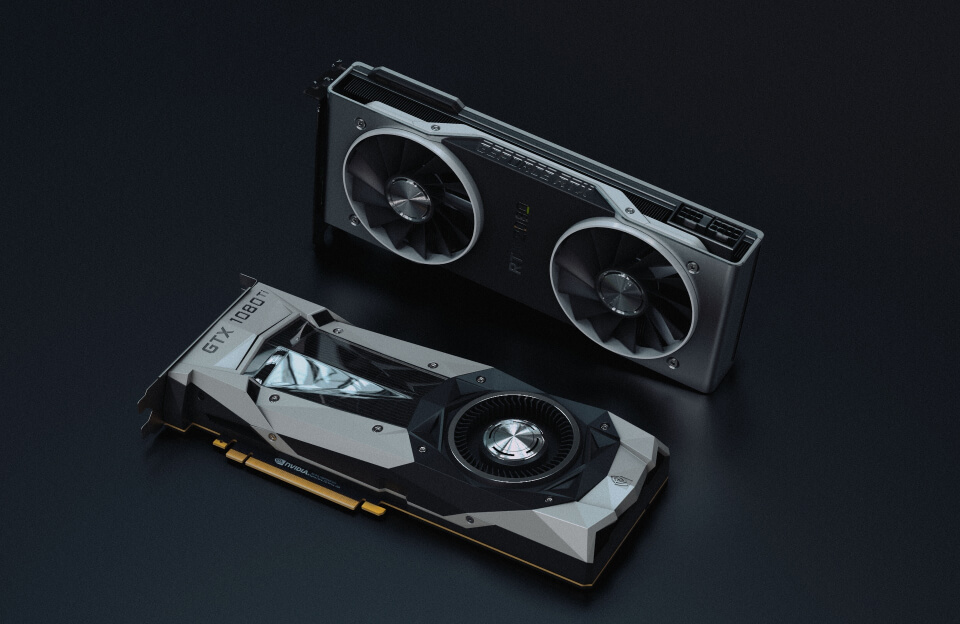
Graphics processing units (GPUs) are the most visible upgrade path for gamers. Future engines will push higher resolutions, ray tracing, and variable‑rate shading. When upgrading your GPU, keep these points in mind:
- Memory Capacity: 8 GB is the minimum for 1080p, but 12 GB or more is recommended for 1440p and 4K gaming.
- Ray Tracing & DLSS: NVIDIA’s RTX 40 series and AMD’s RX 7000 series support hardware‑accelerated ray tracing and AI upscaling, which future engines will increasingly leverage.
- PCIe Generation: PCIe 4.0 is currently standard, but PCIe 5.0 GPUs are emerging. A PCIe 4.0 motherboard will still deliver near‑max performance for most GPUs.
- Cooling & Power: High‑end GPUs consume 300 W+ and require robust cooling solutions.
Choosing a GPU that aligns with your resolution and refresh rate goals ensures you’re not limited by the card when a new engine releases.
Upgrade Gaming PC: Memory & Storage
RAM and storage are often overlooked but are critical for future engine performance. Modern engines load assets on the fly, and insufficient memory can cause stuttering or crashes.
- RAM Capacity: 16 GB is the baseline for 1080p gaming, but 32 GB is advisable for 1440p or 4K, especially when running multiple applications.
- Speed & Latency: DDR5 modules with speeds of 6000 MHz or higher reduce bottlenecks in data‑intensive tasks.
- Storage Type: NVMe SSDs deliver read/write speeds up to 7000 MB/s, drastically reducing load times. A 1 TB NVMe drive is a good starting point.
- Hybrid Setup: Pair a fast NVMe SSD for the OS and frequently played titles with a larger SATA SSD or HDD for bulk storage.
Upgrading to DDR5 and NVMe not only future‑proofs your system but also enhances overall responsiveness.
Upgrade Gaming PC: Cooling & Power
As components become more powerful, thermal output and power consumption rise. A reliable cooling system and a capable power supply unit (PSU) are essential to maintain stability.
- CPU Cooler: A high‑performance air cooler or AIO liquid cooler keeps temperatures below 80 °C under load.
- Case Airflow: Ensure your case has at least two intake and two exhaust fans to create a positive airflow environment.
- PSU Capacity: For a high‑end GPU and CPU combo, a 750 W or 850 W PSU with 80+ Gold certification is recommended.
- Modular Design: Modular PSUs reduce cable clutter, improving airflow and making future upgrades easier.
Proper cooling prevents thermal throttling, while a robust PSU guarantees consistent power delivery, both of which are vital when pushing new engines to their limits.
Planning Your Upgrade Path
Upgrading a gaming PC is not a one‑time event; it’s a strategic process. Here’s a step‑by‑step approach:
- Assess Current Bottlenecks: Use benchmarking tools (e.g., CPU Benchmark) to identify which component limits performance.
- Set a Budget: Allocate funds proportionally—often 40% CPU, 40% GPU, 10% RAM, 10% storage.
- Prioritize Components: If your CPU is older, upgrade first; if you’re already on a recent CPU, focus on GPU.
- Check Compatibility: Verify motherboard socket, BIOS updates, and power connectors.
- Install & Test: After each upgrade, run stress tests (e.g., OC Checker) to ensure stability.
- Repeat: As new engines release, revisit the cycle to keep your rig competitive.
Future‑Proofing Tips
Beyond component upgrades, consider these practices to extend your PC’s relevance:
- Modular Build: Choose a case and motherboard that allow easy component swaps.
- Software Updates: Keep drivers and firmware current to leverage performance optimizations.
- Overclocking: If you’re comfortable, modest overclocking can squeeze extra performance without new hardware.
- Backup Strategy: Regular backups protect against data loss during upgrades.
Conclusion: Upgrade Gaming PC for Future Success
By strategically upgrading your CPU, GPU, memory, storage, and cooling, you’ll position your gaming PC to handle the next wave of game engines. Remember to evaluate bottlenecks, stay within budget, and keep your system modular for easy future changes. A well‑upgraded rig not only delivers smoother gameplay today but also ensures you’re ready for tomorrow’s innovations.
Ready to future‑proof your gaming experience? Start planning your upgrade today and stay ahead of the next generation of game engines!
Frequently Asked Questions
Q1. What is the most important component to upgrade first for future game engines?
The CPU is often the first bottleneck, especially with engines that rely on multi-threading. A modern processor with high core count and clock speed ensures smooth gameplay and future compatibility.
Q2. How much RAM do I need for 1440p gaming?
For 1440p, 32 GB of DDR5 RAM is recommended, giving you headroom for background applications and future engine demands.
Q3. Should I invest in a PCIe 5.0 GPU now?
PCIe 5.0 GPUs are still emerging; a PCIe 4.0 card will deliver near‑max performance for most current titles, so it’s a safer bet until 5.0 becomes mainstream.
Q4. How can I keep my PSU from becoming a bottleneck?
Choose a modular 80+ Gold PSU with 750–850 W capacity to handle high‑end CPUs and GPUs, and ensure it has the necessary connectors for future upgrades.
Q5. What is the best storage setup for minimal load times?
A dual‑drive setup with a 1 TB NVMe SSD for the OS and games, plus a larger SATA SSD or HDD for media, balances speed and capacity.