When you decide to upgrade a gaming PC for next‑gen titles, you’re not just swapping parts—you’re future‑proofing your entire gaming experience. Modern releases demand higher frame rates, ray‑traced graphics, and faster loading times, which means every component from the graphics card to the storage drive must be up to the task. This guide walks you through the most effective upgrades, explains why each matters, and shows how to balance performance with budget, so you can dive into the latest AAA releases without compromise.
Assess Your Current Build
Before you start buying new parts, take stock of what you already have. Identify the weakest link in your system—often the GPU, CPU, or storage—by checking benchmarks on sites like Tom’s Hardware. Record the specifications: chipset, RAM capacity, power supply wattage, and case dimensions. Knowing these details helps you avoid compatibility issues and ensures you invest in upgrades that actually lift performance for next‑gen titles such as Cyberpunk 2077 or Starfield.
Prioritize GPU Upgrade
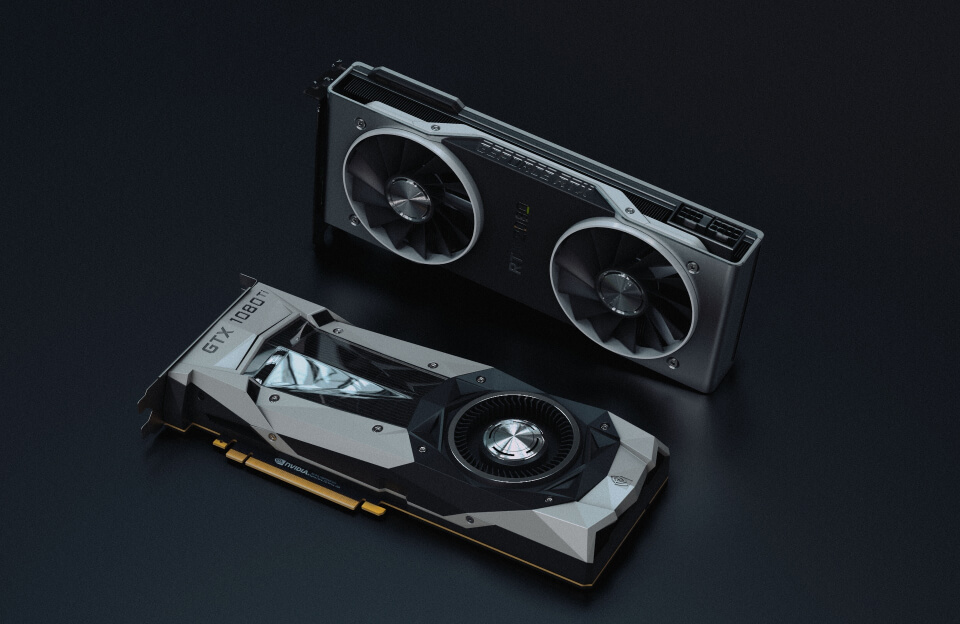
The graphics processing unit is the heart of any gaming rig. For next‑gen games, a modern GPU with dedicated ray‑tracing cores and ample VRAM (6 GB minimum, 12 GB preferred) is essential. Look for cards that support DirectX 12 Ultimate and have strong driver support. Current options include the NVIDIA RTX 40‑series and AMD Radeon RX 7000 series. Review performance charts on Wikipedia to compare frame rates across titles.
- Entry‑Level Upgrade: NVIDIA RTX 4060 or AMD Radeon RX 6600 XT – good for 1080p 60 fps gaming.
- Mid‑Range Upgrade: NVIDIA RTX 4070 or AMD Radeon RX 6700 XT – handles 1440p high settings and moderate ray tracing.
- High‑End Upgrade: NVIDIA RTX 4090 or AMD Radeon RX 7900 XTX – delivers 4K ultra‑settings and maxed‑out ray tracing.
Make sure your power supply can handle the new GPU’s power draw. Most high‑end cards require 300 W or more, plus additional PCIe power connectors.
Boost CPU and RAM
While the GPU does the visual heavy lifting, the CPU ensures smooth gameplay by handling physics, AI, and streaming data. Modern titles benefit from higher clock speeds and more cores. If you’re on a four‑core processor, consider moving to a six‑ or eight‑core model from Intel’s 13th‑gen or AMD’s Ryzen 7000 series. Detailed CPU performance data can be found on the CPU Wikipedia page.
RAM is another critical factor. Most next‑gen games run comfortably with 16 GB of DDR5 memory, but 32 GB future‑proofs your system for upcoming titles and multitasking. When upgrading, match the memory speed to your motherboard’s specifications—DDR5‑5600 is common for new builds.
Storage Solutions for Faster Load Times
Long loading screens can break immersion. Switching from a traditional HDD or SATA SSD to an NVMe PCIe 4.0 SSD dramatically reduces load times and improves asset streaming. Look for drives with read speeds of 5,000 MB/s or higher, such as the Samsung 990 Pro or Western Digital Black SN850X. For a comprehensive explanation of SSD technology, see the SSD Wikipedia entry.
Consider allocating a separate NVMe drive for your operating system and games, while using a larger SATA SSD or HDD for media storage. This setup balances speed and capacity.
Power Supply and Cooling Considerations
All the above upgrades increase power consumption and heat output. A reliable power supply unit (PSU) with an 80 Plus Gold rating and sufficient wattage (at least 650 W for mid‑range builds, 850 W+ for high‑end) is essential. Check the U.S. Department of Energy guidelines on energy efficiency for additional insights.
Effective cooling ensures component longevity and stable performance. Upgrade to larger case fans, consider a high‑quality CPU cooler—air or AIO liquid— and maintain positive airflow. For detailed cooling theory, refer to the National Institute of Standards and Technology thermal management resources.
Putting It All Together
Once you’ve chosen the right parts, follow these steps to complete the upgrade safely:
- Power down and unplug the PC. Ground yourself to avoid static discharge.
- Remove the existing GPU and install the new one, securing it to the PCIe slot and connecting power cables.
- If upgrading the CPU, detach the cooler, replace the processor, apply fresh thermal paste, and reinstall the cooler.
- Insert new RAM modules into the correct DIMM slots, ensuring they click into place.
- Mount the NVMe SSD onto the motherboard’s M.2 slot and secure it with a screw.
- Upgrade the PSU if necessary, routing cables for optimal airflow.
- Close the case, reconnect peripherals, and power on the system.
After booting, update drivers from the GPU manufacturer’s website, enable XMP profiles for RAM, and verify that the system recognizes all new components via Windows Device Manager.
Ready to dominate next‑gen titles? Upgrade your gaming PC today and experience the full power of modern gaming. Click the link below to explore the best deals on components and start building the ultimate rig now!
Frequently Asked Questions
Q1. How can I identify the bottleneck in my gaming PC?
Start by checking CPU and GPU utilization while playing a demanding game. Use tools like MSI Afterburner or Windows Task Manager to see which component is at 100 % most of the time. If the GPU spikes while the CPU sits low, the graphics card is likely the limiting factor, and vice‑versa. Benchmark results on sites such as Tom’s Hardware can also confirm the weak link.
Q2. Do I need to replace my power supply when I upgrade to a high‑end GPU?
High‑end GPUs can draw 300 W or more, so a quality PSU with enough wattage and the proper connectors is essential. Check the GPU’s recommended power rating and add a safety margin of about 20 %. An 80 Plus Gold certified 850 W unit is a common choice for RTX 4090 or Radeon 7900 XTX builds.
Q3. Is DDR5 RAM worth the upgrade over DDR4 for gaming?
DDR5 offers higher bandwidth and lower latency, which can improve frame rates in CPU‑heavy titles. However, the performance gain is often modest compared to a GPU upgrade. If your motherboard supports DDR5 and you can afford it, 16 GB or 32 GB of fast DDR5 (5600 MT/s or higher) will future‑proof your system.
Q4. How much storage do I need for modern games?
Most AAA titles now require 100 GB – 150 GB of space, and developers are adding more high‑resolution assets. A 1 TB NVMe PCIe 4.0 SSD comfortably stores several large games and provides quick load times. Keep a secondary larger SATA SSD or HDD for media and less performance‑critical files.
Q5. What cooling upgrades are recommended for a high‑performance build?
Upgrade to at least two 120 mm or 140 mm case fans to improve airflow, and consider a high‑quality CPU cooler—air or AIO liquid. Ensure the case supports positive pressure to keep dust out. Adding a dedicated GPU cooler or aftermarket heatsink can also help keep temperatures low during long gaming sessions.