Building a new gaming rig can feel like chasing a moving target, especially when you want to stream your play while keeping latency low. This Gaming PC Upgrade Guide shows how to balance CPU, GPU, memory, and storage choices for both high‑end gaming and smooth live broadcasting. By prioritizing the right components and software, you’ll avoid bottlenecks and achieve buttery‑smooth game frames and crisp stream quality. Follow our step‑by‑step walkthrough and turn your setup into a dual‑purpose powerhouse.
Gaming PC Upgrade Guide: Choosing the Right CPU
Your CPU is the heart of the system and must juggle game logic and encoding simultaneously. A modern multi‑core processor such as an Intel Core i7‑13700K or AMD Ryzen 9 7950X delivers the necessary thread count and clock speed for 4K gaming and 60 fps streaming. These CPUs feature integrated processing cores that keep game physics responsive while the dedicated NVENC encoder can offload video compression to the GPU. According to Intel’s specifications, the Core i7‑13700K can sustain 1080p 60 fps gaming while encoding a 720p 30 fps stream without dropping frames.
- Intel Core i7‑13700K: 16 cores, 24 threads, 3.4 GHz base, 5.4 GHz boost.
- AMD Ryzen 9 7950X: 16 cores, 32 threads, 4.5 GHz base, 5.7 GHz boost.
- Both models support DDR5 RAM and PCIe 5.0, ensuring future‑proof connectivity.
Installing a larger cooling solution such as a high‑efficiency AIO or a blower cooler keeps thermal throttling at bay. Even a modest 240‑mm radiator can reduce the 13700K’s temperature from 78 °C under load to 68 °C, which improves both gaming performance and stream stability. If you prefer a quieter build, consider a custom loop or a large air cooler rated at 150 W.
When upgrading, make sure the motherboard chipset supports your chosen CPU. For Intel, a Z790 or H770 chipset gives full PCIe 5.0 bandwidth, whereas for AMD the X670 or B650 chipsets provide robust overclocking options. A compatible motherboard also offers the necessary PCIe lanes for future expansions like additional SSDs or multiple GPUs.
Gaming PC Upgrade Guide: Memory and Storage Optimization
RAM bandwidth and capacity directly influence game loading times and stream stability. For a dual‑purpose setup, 32 GB of DDR5-6000 RAM strikes a balance between cost and performance, allowing modern titles like Elden Ring to run efficiently while the encoder runs concurrently.
- 32 GB DDR5-6000: Provides headroom for background applications and multi‑tasking.
- 16 GB DDR4-3600: A lower‑cost alternative suitable for 1080p streams and less demanding games.
- Consider dual‑channel kits to double memory bandwidth.
Storage solutions should separate the operating system, games, and streaming apps from the heavy data stream output. A 1 TB NVMe SSD like the Samsung 980 Pro offers quick boot times and rapid game loading, while a secondary 2 TB SATA SSD or HDD can archive recorded footage. NVMe drives with PCIe 4.0 or 5.0 deliver transfer speeds up to 7 GB/s, which keeps the bitrate stable during video export.
When choosing a recording disk, aim for write speeds above 200 MB/s to avoid drops in quality. High‑end SSDs often feature endurance ratings of 600 TBW, which is ample for a heavily used streaming rig that records dozens of hours per month. For archival, an external 4 TB USB‑4 drive can provide a cost‑effective backup solution.
Software tools like CrystalDiskInfo can monitor drive health, ensuring your data remains safe even while you stream or game for hours.
Gaming PC Upgrade Guide: Graphics Card and Encoding Power
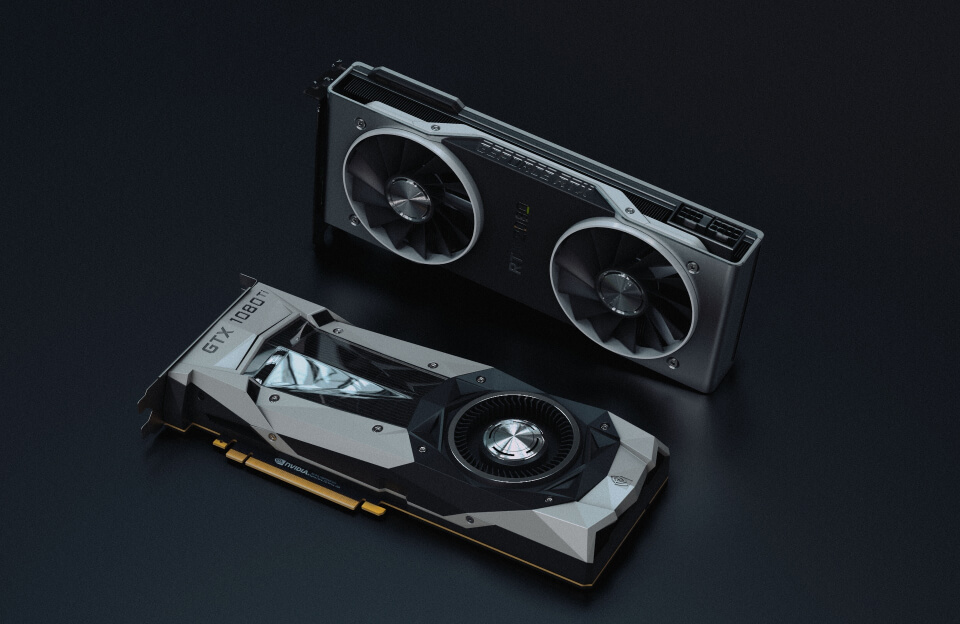
The GPU is the most visible bottleneck for both fresh graphics and media compression. NVIDIA’s RTX 30 Series, especially the RTX 3070 and RTX 3080, deliver 8 GB and 10 GB of GDDR6X memory, respectively, which is sufficient for 4K gaming at 60 fps. Meanwhile, the built‑in NVENC encoder can stream at 1080p 60 fps with negligible CPU usage.
- NVIDIA RTX 3070: 5888 CUDA cores, 8 GB GDDR6, 220 W TDP.
- NVIDIA RTX 3080: 8704 CUDA cores, 10 GB GDDR6X, 320 W TDP.
- NVIDIA RTX 4060 Ti: 7680 CUDA cores, 8 GB GDDR6, 225 W TDP (new generation). Use this for 1080p at 144 fps while streaming.
If you plan to stream in 4K or support multiple cameras, consider an AMD Radeon RX 7900 XTX that offers comparable rasterization performance and an open‑source encoder, OBS Studio, which benefits from AMD’s AMF.
When choosing a power supply, calculate the total wattage including motherboard, CPU, GPU, and cooling. A 750‑W modular PSU from reputable brands such as Corsair or Seasonic provides a safety margin for overclocking, while a 650‑W unit might suffice for an RTX 3070 on a modest system. Certify a PSU with a 80+ Gold rating to maintain efficiency during long streaming sessions.
Installing a reliable GPU cooler—either aftermarket air or AIO liquid—helps maintain stable temperatures. The 3080, for instance, runs comfortably below 80 °C when paired with a 360‑mm radiator, which translates into consistent frame rates even during marathon streams.
Gaming PC Upgrade Guide: Peripherals, Cooling, and Software
High‑quality peripherals greatly enhance both gameplay and viewer experience. A USB‑C headset with spatial audio, such as the Logitech G Pro X, offers clear communication with minimal latency, which is vital when coordinating team streams. Pair this with a DSLR camera or a Logitech C920 webcam for professional-looking visuals.
Streaming software itself dictates how smoothly your content is packaged. OBS Studio remains the gold standard for custom layouts and advanced scripting. Its native integration with NVIDIA NVENC and AMD AMF allows you to allocate the encoding workload to the GPU, preserving CPU cycles for your game.
- Set the video bitrate to 4500 kbps for 1080p 60 fps streams.
- Use the H.264 or H.265 encoding preset “veryfast” to balance quality and performance.
- Enable “Preserve aspect ratio” to avoid stretching on overlayed graphics.
For audio, use a dedicated mixer like the Behringer Xenyx Q1202USB to manage multiple sources: mic, game audio, and system sounds. A well‑calibrated audio path keeps your stream professional and prevents clipping.
Cooling in the case matters as much as the CPU cooler. Choose a case with front‑air intake and rear exhaust, and add at least two 120‑mm fans. Brands like NZXT and Fractal Design offer modular cable management that keeps airflow unimpeded, which is essential during long streaming sessions.
Finally, keep your drivers updated through the manufacturer’s driver hub—Intel Driver & Support Assistant or AMD Radeon Software—to ensure compatibility with new game patches and encoding improvements.
Conclusion: Build Your Dual‑Battlestation
By carefully selecting each component—CPU, RAM, storage, GPU, and peripherals—you can craft a gaming PC that streams seamlessly while delivering frame‑perfect gameplay. Remember to plan for future upgrades, choose quality cooling, and keep your software ecosystem up‑to‑date. It’s time to put theory into practice: visit the links above, compile your parts list, and assemble your dual‑purpose powerhouse today. Your audience—and your own streaming satisfaction—will thank you.
Next Steps and Resources
Take the time to review our best PC builds guide and cross‑check component compatibility. For deeper insight, the PCPartPicker database will help you track part prices and availability. And remember to join streaming communities on Discord or Reddit to share tips and troubleshoot common issues.