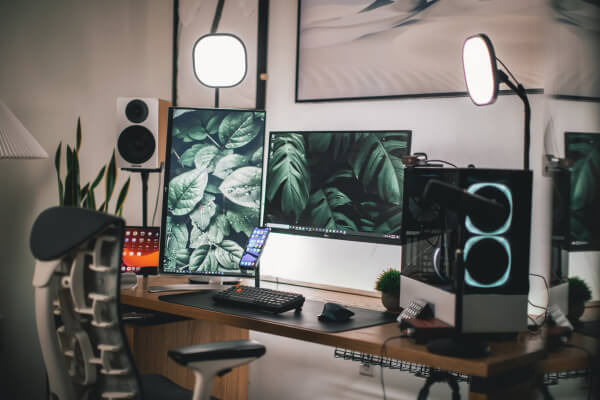
Building a machine that can smoothly handle both high‑quality streaming and demanding gaming sessions is no longer a niche hobby; it’s a practical necessity for creators who want to engage audiences in real time. A well‑balanced Streaming and Gaming PC Build must blend raw processing power, fast graphics rendering, ample memory, and reliable networking. In this guide we’ll walk through each component category, explain why certain parts outperform others, and provide a sample parts list that can be tweaked for different budgets. Whether you are a Twitch newcomer or a seasoned YouTuber, understanding the hardware fundamentals will save you time, money, and frustration.
Choosing the Right CPU
The central processing unit acts as the brain of any streaming‑and‑gaming configuration. Modern titles rely heavily on multi‑core performance, while encoding software such as OBS Studio uses CPU‑based encoders (e.g., x264) or leverages hardware acceleration. A processor with at least six cores and strong single‑thread performance—like the AMD Ryzen 7 5800X or Intel Core i7‑12700K—offers the ideal balance for simultaneous gameplay and live encoding.
When evaluating CPUs, pay attention to the base clock and boost frequencies, as well as the cache size, which improves data retrieval during complex calculations. The computer processor article provides a thorough overview of these metrics. For budget‑conscious builders, the Ryzen 5 5600X still delivers respectable 1080p streaming performance when paired with a capable GPU, though you may need to lower your stream bitrate slightly to avoid CPU overload.
Graphics Card: The Heart of Performance
A modern RTX graphics card is arguably the most critical component for a streaming and gaming PC build. Nvidia’s RTX 30‑series GPUs include dedicated NVENC encoders that offload video compression from the CPU, enabling smooth high‑resolution streams without sacrificing frame rates. The RTX 3070, for example, handles 1440p gaming at 144 Hz while simultaneously streaming at 1080p60 using the hardware encoder.
If you aim for 4K streaming, the RTX 3080 or RTX 4080 provide the extra CUDA cores and memory bandwidth needed for both intense textures and high‑quality encoding. AMD’s Radeon RX 6800 XT also includes an AV1 hardware encoder, but driver support for streaming software is still catching up. You can read more about Nvidia’s RTX technology on the official product page.
Memory and Storage Considerations
Fast system memory ensures that game assets and streaming applications can access data without bottlenecks. Aim for at least 16 GB of DDR4 3200 MHz RAM; 32 GB becomes essential if you run multiple resource‑heavy applications (e.g., video editing software) alongside your stream.
Storage speed directly influences load times and how quickly video files are written to disk. A primary NVMe SSD of 500 GB–1 TB (such as the Samsung 970 EVO Plus) provides sub‑millisecond read/write speeds, while a secondary SATA SSD or large HDD can store recorded footage. The solid‑state drive entry explains the performance gap between NVMe and SATA solutions. For streaming, placing both your operating system and recording folder on the NVMe drive minimizes frame drops caused by disk latency.
Cooling, Power, and Case Selection
High‑performance CPUs and GPUs generate significant heat, especially during long streaming sessions. An effective cooling solution—whether an all‑in‑one (AIO) liquid cooler or a high‑airflow tower—maintains stable boost clocks and prevents thermal throttling. Look for CPUs with a TDP rating and select a cooler rated above that value; a 65 W TDP such as the Ryzen 5 5600X pairs well with a 240 mm AIO, while the 125 W TDP of the i7‑12700K benefits from a 360 mm unit.
Power supplies should be 80 PLUS Gold certified and provide at least 20 % headroom above your system’s estimated wattage. For a build featuring an RTX 3080, a 750 W PSU is a safe minimum. Finally, choose a case that supports ample front‑panel USB‑C for webcam hookups and includes dust filters to keep the interior clean; reputable manufacturers include Fractal Design, NZXT, and Lian Li.
Optimizing Software and Network Settings
Even the most powerful hardware can underperform without proper software configuration. Ensure your operating system is updated and that you have the latest graphics drivers from the GPU manufacturer. In OBS Studio, select the hardware encoder (NVENC) and set the preset to “Quality” for the best visual fidelity while keeping CPU usage low.
Network bandwidth is another critical factor. Streaming at 1080p60 typically requires an upload speed of 5–8 Mbps; for 4K60, aim for 25 Mbps or higher. If you have a fiber connection, configure your router to prioritize the stream’s traffic using QoS settings. The Federal Communications Commission offers guidelines on broadband performance that can help you assess whether your ISP meets these requirements: FCC Broadband Speed Guide.
Recommended Build Example
- CPU: AMD Ryzen 7 5800X
- GPU: Nvidia RTX 3070 8 GB
- Memory: 32 GB (2 × 16 GB) DDR4‑3600
- Primary Storage: 1 TB NVMe SSD (PCIe 3.0 x4)
- Secondary Storage: 2 TB SATA SSD
- Cooler: 240 mm AIO liquid cooler
- Power Supply: 750 W 80 PLUS Gold
- Case: Mid‑tower with good airflow and USB‑C front panel
- Network: Gigabit Ethernet adapter
Final Thoughts
Assembling a Streaming and Gaming PC Build that excels at both gameplay performance and live broadcast quality is a strategic process: choose a robust CPU, leverage a GPU with hardware encoding, equip ample fast memory and storage, and ensure cooling and power headroom. By following the component guidelines and software tweaks outlined above, you’ll create a reliable platform that boosts viewer engagement and reduces technical headaches.
Ready to power up your channel? Start gathering these parts today, and watch your streaming potential soar. Build your ultimate gaming‑streaming rig now and dominate the digital arena!
Frequently Asked Questions
Q1. What CPU is best for streaming and gaming?
A high‑core‑count CPU with strong single‑thread performance, such as the AMD Ryzen 7 5800X or Intel Core i7‑12700K, provides the ideal balance for running games and encoding video simultaneously.
Q2. Does a GPU’s hardware encoder improve stream quality?
Yes. Nvidia’s NVENC and AMD’s AV1 encoders handle video compression on the graphics card, freeing CPU cycles and allowing higher resolution streams without dropping game FPS.
Q3. How much RAM do I need for a dual‑purpose PC?
At least 16 GB is required for smooth gameplay and 1080p streaming; 32 GB is recommended if you plan to run additional applications like video editing or multiple overlays.
Q4. What storage setup reduces dropped frames while recording?
Using a fast NVMe SSD for the operating system and the active recording folder eliminates disk latency, while a secondary SATA SSD or HDD can archive older footage.
Q5. What internet speed is necessary for 4K streaming?
A stable upload of 25 Mbps or higher is advisable for 4K 60 fps streams; lower resolutions like 1080p60 can work with 5–8 Mbps.