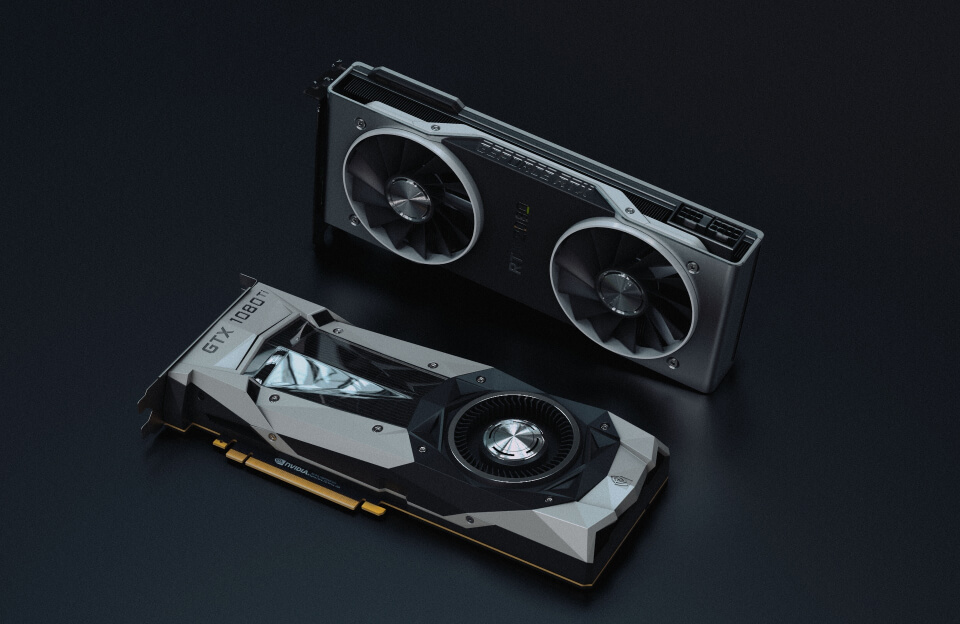
In the rapidly evolving world of high‑end gaming, performance scaling is no longer a luxury—it’s a necessity. As game engines push the boundaries of realism, developers and hardware manufacturers must collaborate to deliver systems that can adapt to increasing demands. This article explores the latest gaming PC trends that optimize performance scaling, from cutting‑edge GPU architectures to advanced cooling solutions and software optimizations. Whether you’re building a new rig or upgrading an existing one, understanding these trends will help you future‑proof your setup and keep your games running smoothly.
GPU Architecture Evolution
Modern GPUs are the heart of any gaming PC, and their architecture has seen dramatic changes in the past few years. The shift from discrete memory to unified memory architectures, the introduction of ray‑tracing cores, and the integration of AI‑based upscaling engines are all part of a broader trend toward more efficient, scalable performance.
- Unified Memory Architecture (UMA) – By sharing VRAM between the GPU and CPU, UMA reduces memory bottlenecks and improves data throughput, especially in high‑resolution gaming.
- Ray‑Tracing Cores – Dedicated hardware for ray‑tracing allows real‑time lighting and reflections without a massive performance hit.
- DLSS & FSR – NVIDIA’s Deep Learning Super Sampling and AMD’s FidelityFX Super Resolution use AI to upscale lower‑resolution frames, delivering higher frame rates while preserving visual fidelity.
These innovations mean that a single GPU can now handle more complex scenes at higher frame rates, making performance scaling more predictable across a range of hardware configurations.
CPU and Memory Synergy
While GPUs handle the heavy lifting of rendering, the CPU and system memory play a crucial role in ensuring that data reaches the GPU without delay. The latest trends focus on tighter integration and higher bandwidth to reduce latency.
- PCIe 5.0 and 6.0 – Doubling the bandwidth of PCIe 4.0, these standards allow GPUs to communicate with the rest of the system faster, reducing bottlenecks.
- DDR5 RAM – With speeds up to 6000 MHz and improved power efficiency, DDR5 provides the bandwidth needed for modern games that rely on large texture sets and complex physics calculations.
- CPU Thread Scaling – Modern CPUs with 16–32 cores and hyper‑threading can handle background tasks, streaming, and AI calculations more efficiently, freeing up GPU resources for rendering.
By aligning CPU and GPU capabilities, gamers can experience smoother frame pacing and lower input lag, even as game engines become more demanding.
Cooling Innovations for Sustained Performance
Thermal management is a critical factor in performance scaling. Overheating can throttle both CPU and GPU, leading to inconsistent frame rates. Recent trends in cooling technology aim to keep components within optimal temperature ranges, even under sustained load.
- All‑in‑One (AIO) Liquid Cooling – AIO units provide efficient heat dissipation with minimal noise, making them ideal for high‑clocked CPUs and GPUs.
- Custom Water Loops – For enthusiasts, custom loops can be tailored to specific heat sinks and radiators, offering maximum cooling potential.
- Advanced Fan Controllers – Smart fan curves that adjust speed based on real‑time temperature data help maintain a balance between cooling performance and acoustic comfort.
Effective cooling not only preserves performance but also extends component lifespan, ensuring that your gaming PC remains a reliable platform for years to come.
Software Optimizations and Driver Updates
Hardware alone cannot guarantee optimal performance. Software plays a pivotal role in translating raw power into playable frames. Game developers, GPU manufacturers, and operating system vendors all contribute to a smoother experience through continuous updates.
- Game‑Specific Optimizations – Titles like Call of Duty: Modern Warfare release patches that fine‑tune rendering pipelines for specific GPU models.
- Driver Enhancements – NVIDIA’s GeForce Drivers and AMD’s Radeon Software regularly introduce performance boosts and bug fixes.
- Operating System Tweaks – Windows 11’s DirectX 12 Ultimate and Linux’s Vulkan API provide low‑level access to hardware, reducing overhead and improving frame rates.
Staying up to date with these updates ensures that your system can fully leverage the latest hardware capabilities.
Future‑Proofing with Modular Design
As game engines continue to evolve, the ability to upgrade individual components becomes increasingly valuable. Modular designs allow gamers to swap out GPUs, CPUs, or cooling solutions without replacing the entire system.
- PCIe Expansion Slots – Boards with multiple PCIe 4.0/5.0 slots enable dual‑GPU setups or future upgrades.
- Modular Power Supplies – 80+ Gold or Platinum modular PSUs reduce cable clutter and improve airflow.
- Standardized Motherboard Form Factors – ATX and E‑ATX motherboards support a wide range of components, ensuring compatibility with upcoming hardware.
Investing in a modular platform means you can adapt to new technologies—such as next‑generation GPUs or faster memory—without a complete rebuild.
Conclusion: Build for Scale, Play for Future
Optimizing performance scaling in a gaming PC is a multifaceted endeavor that blends cutting‑edge GPU architecture, high‑bandwidth CPU and memory, advanced cooling, and continuous software support. By focusing on these trends, you can create a system that not only meets today’s gaming demands but also adapts to tomorrow’s innovations.
Ready to upgrade? Explore the latest components, stay informed about driver updates, and choose a modular design that grows with your gaming ambitions. Discover NVIDIA GPUs or AMD Radeon cards today and elevate your gaming experience to new heights.
Frequently Asked Questions
Q1. What is performance scaling in gaming PCs?
Performance scaling refers to a system’s ability to maintain or improve frame rates and visual quality as game demands increase. It involves balancing CPU, GPU, memory, and cooling to avoid bottlenecks. Modern games push higher resolutions, ray‑tracing, and AI features, so a well‑scaled rig can adapt without drastic drops in performance.
Q2. How does GPU architecture evolution affect performance scaling?
New GPU designs introduce unified memory, dedicated ray‑tracing cores, and AI upscaling engines like DLSS and FSR. These features reduce memory bandwidth pressure, accelerate complex lighting, and upscale lower‑resolution frames, allowing a single GPU to handle more demanding scenes. As a result, frame rates stay stable even when game engines become more graphically intensive.
Q3. What role does DDR5 RAM play in performance scaling?
DDR5 offers higher bandwidth and lower power consumption compared to DDR4, which is crucial for loading large textures and physics data. Faster memory reduces latency between the CPU and GPU, ensuring that the GPU receives data quickly. This synergy helps maintain smooth gameplay, especially at 4K or with high‑resolution texture packs.
Q4. How can cooling solutions help maintain performance scaling?
Effective cooling prevents thermal throttling, where CPUs or GPUs reduce clock speeds to stay within safe temperatures. All‑in‑one liquid coolers and custom loops keep components cool under sustained load, while smart fan controllers balance noise and airflow. Consistent temperatures mean consistent frame rates and longer component lifespan.
Q5. Why is modular design important for future‑proofing performance scaling?
Modular builds allow you to upgrade individual components—such as GPUs, CPUs, or cooling systems—without replacing the entire system. This flexibility ensures that you can adopt new technologies like PCIe 5.0 or next‑gen GPUs as they arrive. A modular platform keeps your rig relevant and capable of handling future game engine advancements.