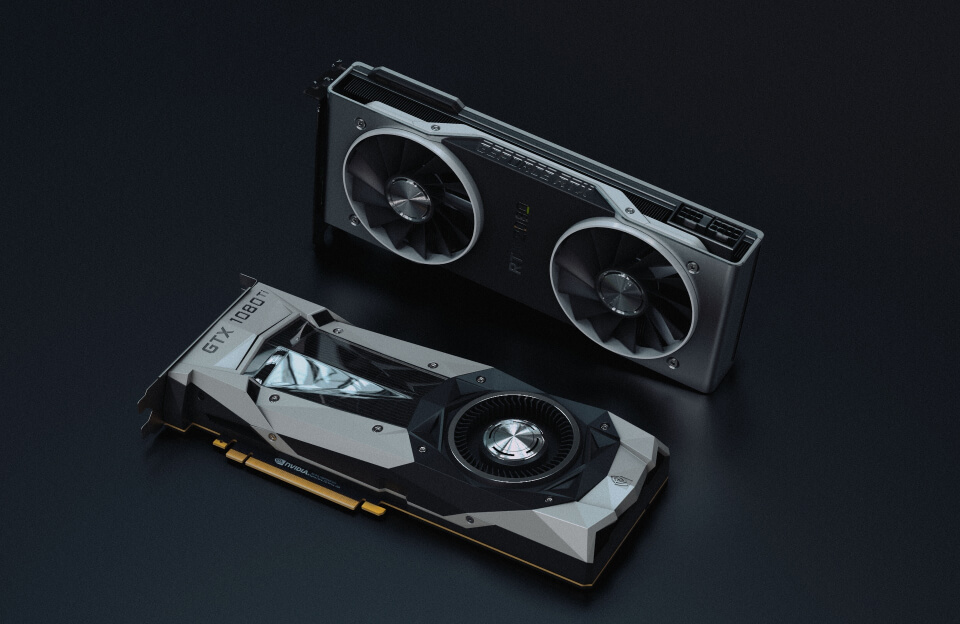
Gaming PC upgrades are the most reliable way to keep your setup competitive as titles grow more demanding. When new releases push 4K resolution, real‑time ray tracing, or high frame‑rate gameplay, a single component can become a bottleneck. Upgrading intelligently, rather than blindly purchasing the latest gear, ensures you extract the maximum performance for your budget. Professional reviewers consistently recommend beginning with the graphics card, as it delivers the biggest lift in visual fidelity and tick rates. In the following sections we’ll map out the most effective upgrades for modern titles and explain why each component matters.
While many gamers still prioritize memory or storage, the GPU is the heart of any gaming rig. Modern engines such as Unreal Engine 5 and Unity compute lighting and shadows through massive parallel processing on the card. At 1440p and 4K, the GPU’s raw floating‑point operations dictate frame quality and rate. A well‑matched GPU not only unlocks higher settings but also preserves a consistent refresh rate on high‑refresh displays. Therefore, selecting the right graphics card should be the first step in your upgrade journey.
Gaming PC Upgrades: Selecting the Right GPU for Modern Titles
Graphics processing units, or GPUs, specialize in matrix operations that graphics engines require. According to the Wikipedia entry on GPUs, modern models feature multiple streaming cores, dedicated memory, and specialized shaders. When shopping for an upgrade, look at the GPU’s memory bandwidth, core clock, and VRAM count to determine its capability at target resolutions. For instance, a 8 GB card will comfortably handle most 1440p titles, while 16 GB becomes essential for 4K and ray‑traced modes. Remember that higher resolution reduces the per‑pixel workload, allowing less powerful GPUs to maintain playable frame rates.
High‑end cards such as the NVIDIA RTX 4090 or RTX 4080 deliver unmatched performance for 4K gaming and ambitious ray‑tracing workloads. These GPUs often surpass 35 TFLOPS of single‑precision throughput, dwarfing mid‑range models by more than twofold. A 1440p enthusiast may find a 4080 more than sufficient, especially when paired with a fast CPU to mitigate bottlenecks. However, the price premium can be significant, so evaluate whether your current screen resolution or intended playstyle justifies such a spend. For many players, a slightly older generation—like the RTX 3080 Ti—offers a near‑identical experience for a fraction of the cost.
Mid‑range GPUs, such as the RTX 3060 Ti or AMD RX 6700 XT, strike an excellent balance between price and performance for 1440p gaming. These models typically feature 10–12 GB of GDDR6 memory and maintain a smooth 60–100 FPS window on contemporary AAA titles. They also support hardware‑accelerated ray tracing at reduced sampling rates, allowing you to enjoy visual upgrades without breaking the bank. Many users report that upgrading from a legacy card to a mid‑range system removes the most common performance constraints within their budget bracket. Consequently, a mid‑range option is often the most practical first upgrade after a lower‑end GPU.
For gamers on tighter budgets, the NVIDIA RTX 2060 Super or AMD RX 6500 XT present respectable compromises. Though their raw compute power is lower, they still deliver playable frame rates—often between 30–60 FPS—on 1080p with medium settings. These cards also have built‑in support for DLSS or FidelityFX, which can boost perceived performance by 20–30 %. It’s essential to pair a budget GPU with an adequate power supply and a CPU that won’t underdrive its capabilities. While upgrades in this tier are modest, they can dramatically improve overall smoothness when combined with other component enhancements.
A powerful GPU can be hampered by a sluggish CPU that lags behind at scene preparation or AI processing. Research from TechSpot indicates that games like Cyberpunk 2077 frequently hit CPU limits on older processors, causing frame drops even with high‑end graphics cards. Therefore, balancing your CPU and GPU tiers ensures consistent performance across varied titles. On the other hand, a too‑powerful GPU with a weak CPU can waste its potential, creating an unbalanced system that feels slow in certain scenarios.
Modern monitors commonly offer 144 Hz, 240 Hz, or even 360 Hz refresh rates, turning frame consistency into a decisive competitive advantage. A GPU capable of maintaining over 120 FPS at 1080p on titles like Call of Duty or Fortnite translates directly into smoother combat and better reaction times. Meanwhile, high refresh rates also reduce motion blur on 60 Hz displays, providing a cleaner visual experience. Investing in a GPU that can reliably hit those rates is a strategic move for esports and casual players alike.
Gaming PC Upgrades: CPU and Motherboard Pairing for Optimal Performance
The central processing unit, or CPU, orchestrates the complex tasks underlying modern gaming, from physics calculations to AI decision‑making. Modern CPUs such as Intel’s 13th‑gen Alder Lake or AMD’s Ryzen 7000 series introduce multi‑core architectures and improved single‑thread performance, directly influencing game load times and frame pacing. Games that are heavily optimized for CPUs—like Red Dead Redemption 2 or Microsoft Flight Simulator—exemplify the critical role of the processor. Therefore, an upgrade to a newer, faster CPU can unlock higher in‑game benchmarks on many titles.
Choosing between Intel and AMD hinges on your performance priorities. Intel’s hybrid architecture, featuring performance cores and efficient cores, delivers strong single‑thread speed, aiding games that cannot parallelize tasks. AMD’s Ryzen chips, meanwhile, offer a higher core count at comparable price points, giving them an advantage in multithreaded workloads. According to a study by Tom’s Hardware, some titles show a 5–10 % difference between equivalent CPUs, with AMD excelling in open‑world environments and Intel excelling in simulators. Thus, your chosen CPU should align with the types of games you play most often.
Next‑generation game studios increasingly optimize for more CPU cores, meaning a higher core count can extend your system’s relevance for years. A 12‑core/24‑thread processor can comfortably support game engines that allocate tasks across dozens of threads, especially when paired with a solid GPU. However, the diminishing returns past 16 cores for mainstream gaming suggest that a mid‑range CPU with 8–12 cores may offer the best balance between performance and cost. Future‑proofing also involves ensuring that the CPU’s cache size and memory controller can handle fast DDR5 modules for low latency.
The motherboard is the critical bridge between the CPU, GPU, memory, and storage, directly influencing system stability and upgrade potential. Key factors include chipset compatibility, the number of PCIe lanes, support for the latest RAM speeds, and adequate VRM cooling. For example, a B660 or X670 motherboard will provide robust power delivery and multiple M.2 slots for SSD expansion. Paying attention to BIOS update paths can also unlock performance improvements for new CPU releases and firmware optimizations. Additionally, having a motherboard with integrated Wi‑Fi and a robust audio codec offers added convenience.
Gaming PC Upgrades: Memory, Storage, and Read Speed Enhancements
Random access memory (RAM) holds the data required for real‑time game logic and assets. Most modern titles recommend a minimum of 16 GB for smooth gameplay on 1080p or 1440p resolutions. Faster RAM speeds (measured in MT/s) reduce latency in data retrieval between the CPU and memory, especially beneficial for CPU‑bound titles. It is important to pair the same capacity and speed modules to achieve dual‑channel performance, which typically doubles effective bandwidth.
The transition from DDR4 to DDR5 offers higher transfer rates and greater capacity per module. DDR4 remains cost‑effective and widely supported across many mid‑range motherboards, while DDR5 modules provide up to 6000 MT/s on mainstream sticks, yielding a noticeable boost in load times and multitasking. However, the performance advantage in gaming is sometimes modest, depending on the game’s memory pressure. As such, upgrading to DDR5 can be a future‑proof move if you already plan a new CPU and motherboard that support the standard.
While the capacity ensures enough headroom for background applications, RAM speed—especially in games that are memory bandwidth‑intensive—can be a decisive factor. Benchmarks from AnandTech show that increasing RAM speed from 3200 MT/s to 3600 MT/s can deliver a 2–5 % improvement in certain titles, such as Destiny 2 or Cyberpunk. Furthermore, for 4K gaming, pairing a 16‑GB dual‑channel kit with over 3200 MT/s bandwidth offers the best compromise between capacity and speed.
Memory timing, expressed as CL values (e.g., CL16, CL18), indicates how many cycles the RAM takes to complete read/write operations. Even with the same MT/s rate, a lower CL can result in smoother gameplay. Enthusiasts often overclock RAM to achieve tighter timings, though this requires stable voltage levels and a suitable motherboard. Keep in mind that most modern DDR4 sticks come with a default timing window of 16–18, which is adequate for most gamers who prioritize performance over ultra‑low latency.
Solid state drives (SSDs) have revolutionized game load times, allowing developers to design larger worlds without compromising start‑up speed. A fast NVMe SSD can reduce level load times from several minutes to mere seconds, providing a tangible difference in gameplay immersion. When selecting a storage upgrade, it’s crucial to balance sequential read/write speeds with capacity, as some high‑speed drives may come at higher cost.
NVIDIA and AMD both support PCIe interfaces, making NVMe drives capable of delivering up to 3500 MB/s throughput, while SATA SSDs are capped at 550 MB/s. This performance disparity is significant for titles that stream large data sets, such as open‑world games like The Witcher 3 or Elden Ring. However, SATA SSDs remain a viable option for systems that only support M.2 slots, offering a decent boost over mechanical drives at a lower price point.
PCIe 4.0, introduced with AMD’s Ryzen 3000 series, doubles the bandwidth of its predecessor and supports the majority of current NVMe drives. PCIe 5.0, now available on newer motherboards, promises double that bandwidth again, but consumer SSDs are still catching up. The bandwidth difference may only affect certain workloads, such as real‑time ray tracing texture streaming, but most gamers will still see solid performance with PCIe 4.0.
Empirical data from PassMark shows that games with high asset streaming can shave upwards of 50 % off load times when moving from SATA to NVMe. For instance, a 1‑TB NVMe drive reads level data three times faster than a 500 GB SATA SSD, translating to 8–12 seconds saved during a typical in‑game jump. While the visual jitter is minimal, the cumulative benefit can significantly improve overall user experience, especially during frequent level transitions.
Gaming PC Upgrades: Cooling, Power, and Future‑Proofing
Effective thermal management keeps your components operating within safe temperatures, which is pivotal for sustaining performance and longevity. Modern CPUs and GPUs can reach 80 °C under full load; exceeding this threshold can trigger driver throttling or hardware shutdowns. Air cooling solutions such as high‑kelvin heat sinks with dual‑fan designs remain reliable and affordable, while liquid cooling offers lower noise and consistent temperatures under sustained loads.
While air cooling is often sufficient for mid‑range builds, gaming enthusiasts with high‑end GPUs often opt for all‑in‑one (AIO) liquid coolers. AIO units with 240‑mm or 280‑mm radiators can lower CPU temperatures by up to 12 °C during intense sessions, as reported by Digital Trends. Moreover, liquid cooling setups allow more aggressive overclocking, enabling better frame rates. However, a reputable thermal paste and a well‑ventilated case are essential for any cooling strategy.
Thermal paste serves as the microscopic bridge between a CPU cooler and processor die, filling in atomic gaps to transfer heat efficiently. Brands such as Arctic MX‑3 or Thermal Grizzly Kryonaut offer superior conductivity, reducing temperatures by 2–4 °C compared to standard pastes. Failure to replace old paste or to apply it incorrectly can lead to higher surface temperatures and decreased performance. Applying just a pea‑size amount of paste and spreading it evenly is a critical step before installing a new cooler.
The power supply unit (PSU) must supply steady current to all components, especially under gaming peaks. A PSU’s wattage rating should exceed the sum of all component TDPs by at least 20–30 % to provide headroom. High‑efficiency units with 80 Plus Gold or Platinum certification ensure lower waste heat and higher reliability, reducing the risk of in‑case crashes caused by voltage fluctuations. For power‑hungry GPUs like the RTX 4090, a 850‑watt or larger supply is mandatory.
Beyond wattage, the PSU’s efficiency rating affects your electricity bill and the overall thermal environment of your build. A 80 Plus Gold PSU delivers 87–90 % efficiency at 50 % load, while Platinum units can reach 90–95 %. The higher the efficiency, the less heat is produced, giving your cooling system a smaller workload. Additionally, many manufacturers offer modular cabling for easier cable management and improved airflow inside the case.
Investing in high‑quality components today can extend the life of your system for several years. Supporting PCIe 4.0 or 5.0 on the motherboard and GPU, opting for DDR5 memory, and ensuring a PSU that can accommodate future GPU upgrades all contribute to lower upgrade cycle costs. Even incremental improvements, such as an extra M.2 slot or a BIOS update path, can unlock new performance metrics without a full hardware overhaul. Thus, future‑proofing is both an economic and practical consideration.
Overclocking, when performed responsibly, can yield a noticeable performance boost without a significant extra expense. CPU and GPU overclocks are achievable through manufacturer software like MSI Afterburner or Prime95 for stability testing. However, ensure that your cooling solution can handle the added heat and that voltage limits set by motherboard VRMs are respected. Many gamers see a 5–10 % increase in frame rates by overclocking the GPU alone, especially in less demanding titles.
Before purchasing new components, always confirm compatibility with the motherboard’s socket, BIOS version, and power connectors. For example, high‑end graphics cards require a 8‑pin or 12‑pin power connector, and not all motherboards supply them. Similarly, DDR5 memory requires a compatible chipset, and older CPUs will not support it. Using an EVGA compatibility table or the manufacturer’s official guide can prevent costly mismatches that would necessitate further upgrades.
Strategic budgeting begins by prioritizing components that provide the highest performance‑per‑dollar ratio. For most gamers, allocating funds first toward a GPU followed by a CPU and then RAM or storage yields the biggest visible improvement. Track recent price trends on platforms like PCPartPicker to catch sales or drop events. Allocate a small buffer—around 5–10 %—for unforeseen costs such as additional case fans or new cables.
By methodically selecting upgrades across GPU, CPU, memory, storage, cooling, and power, you can transform any entry‑level rig into a modern gaming powerhouse. The proven, high‑performance components highlighted here—RTX 30‑series GPUs, 13th‑gen Alder Lake CPUs, DDR5 memory, NVMe PCIe 4.0 SSDs, and efficient 80 Plus Gold power supplies—represent the best value for titles pushed to 4K or beyond. Begin your upgrade journey today by assessing your current bottlenecks, choosing the right parts, and installing them with care. Take advantage of the growing inventory of components, and soon you’ll experience sharper visuals, faster load times, and uninterrupted gameplay. Start building your future‑proof rig now and dominate the latest releases with confidence!