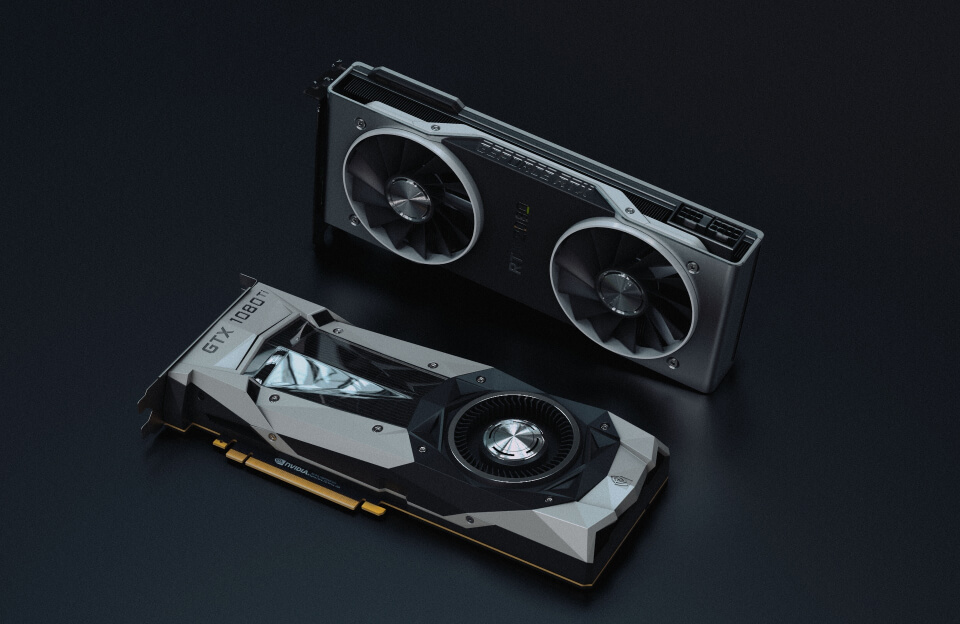
Looking to upgrade a gaming PC without tearing down the whole system? That’s a common concern for PC builders and gamers alike. The good news is that many components can be swapped out one at a time, keeping the core structure intact. This guide shows how to upgrade a gaming PC step by step while preserving your existing case, motherboard, and power supply.
Start by understanding that an upgrade plan depends on where your hardware currently limits performance. Identify whether your bottleneck is the GPU, CPU, memory, or storage based on the latest titles you play. Modern games often demand higher resolutions, more ray tracing, and larger textures, so knowing which part trumps the rest is crucial. Document every spec before you lift a screw—this will speed the installation process.
Upgrade a Gaming PC: Assess Your Current System
Before you pull any parts, gather detailed information about every component in your rig. Tools like CPU-Z and GPU-Z capture CPU, GPU, memory, and storage specifications in one snapshot. Cross‑reference the results with the manufacturer’s datasheet to confirm that the firmware is up to date; outdated BIOS can prevent newer cards from working. Keep a printed or digital log—this will save you troubleshooting time when new parts are installed.
Check the motherboard board version and chip set to determine supported CPU sockets and memory types. An old chipset may limit you to DDR4 even if you want the faster DDR5. Verify the maximum PCIe lane count, as a modern GPU requires at least PCIe 4.0 x16 for optimal performance; many older boards only offer PCIe 3.0. If your motherboard is outdated, consider purchasing a new board—but only if you are open to a more substantial rebuild.
Desktop computer architecture has evolved from simple board‑to‑case setups to modular designs. Understanding this evolution helps you choose parts that fit without drastic changes. For instance, a mid‑tower case may accommodate a larger graphics card but not a full‑height cooler. Knowing the layout early avoids costly surprises.
Upgrade a Gaming PC: Upgrade the Graphics Card Strategically
The graphics card usually provides the greatest performance return for price in a gaming rig. Before picking the next-gen GPU, consult the Graphics Processing Unit (GPU) Wikipedia page to review feature sets like ray tracing cores and Tensor flow units. Look at benchmark comparisons on Tom’s Hardware GPU Performance Comparison to match your resolution goals with the right model. Always double‑check the card’s power draw.
Your power supply must handle the new GPU’s TDP plus a safety margin—ideally 20% extra. If your PSU is under 500W, a high‑end card such as the RTX 3080 will be incompatible, regardless of the case. Use the manufacturer’s PSU calculator or the PCWorld article on GPU replacement guidance to confirm wattage and connector availability. If extra wattage is needed, buying a modular PSU can improve airflow and cable management.
Upgrade a Gaming PC: Graphics Memory (VRAM) Considerations
While the GPU’s computing power is critical, the amount of VRAM determines how well modern titles can run at high resolutions and detail settings. A 6GB card will handle 1080p with high‑detail textures, but at 1440p or 4K the same card will often be limited by memory bandwidth and capacity. Most recent releases highlight the importance of at least 8GB of VRAM for 1440p and 10GB or more for true 4K gaming. If your current GPU lacks sufficient VRAM, installing a newer card with a larger memory buffer is often the single most effective upgrade.
When comparing VRAM, examine both capacity and memory type. GDDR6 cards offer better bandwidth than older GDDR5 variants, allowing for higher refresh rates and lower latency. Some GPUs feature HBM2 memory, which, though expensive, delivers even greater throughput for high‑end designs. Always check the manufacturer’s specifications to verify both the total memory and the memory speed, as advertised figures can sometimes be misleading if they represent peak rather than sustained performance.
Upgrade a Gaming PC: CPU and Cooling – Power and Performance
CPU upgrades are highly dependent on socket compatibility; simply swapping a faster CPU into a older socket may not unlock the performance you expect. Check the manufacturer’s Intel Support page for the exact socket and BIOS version required for new processors. If your current cooling solution cannot handle the increased TDP, you’ll need a larger or more efficient air cooler or a liquid cooling loop. Proper thermal paste application is crucial—most guides recommend a pea‑size amount in the center for an even spread.
An updated motherboard can also provide better power delivery and newer I/O options like USB 3.2 Gen 2 and PCIe 5.0, which future‑proof your rig. When planning a CPU change, factor in the time to reinstall RAM, as new motherboards often demand higher memory speeds. If you stick to the same motherboard, consider a higher‑clocked DDR4 or a DDR5 kit if the board supports it, but upgrade the BIOS first. Remember, the CPU and motherboard are the backbone of the system; a mismatch can bottleneck your entire build.
Upgrade a Gaming PC: Memory and Storage – Keep Up With Games
Modern titles require between 12GB and 16GB of computer memory to run smoothly, especially at higher settings. DDR5 offers lower latency and higher bandwidth, yet it is still relatively new and expensive; for those on a budget, DDR4 remains a solid choice. Pairing a fast NVMe SSD with a larger SATA HDD gives you both quick load times and expansive storage for assets and mods.
- 12‑GB DDR4 3200 MHz kit (budget)
- 16‑GB DDR4 3600 MHz kit (mid‑range)
- 32‑GB DDR5 4800 MHz kit (future‑proof)
Upgrade a Gaming PC: Power Supply and Case – Ensuring Compatibility
Even if the GPU fits, a cramped case can choke airflow and cause thermal throttling. Verify the clearance for your new graphics card—most boards list the maximum dimensions on the seller’s page. Modular PSUs not only reduce cable clutter but also improve airflow by allowing you to plug only the necessary cables directly into the power block. If you already have a high‑quality cooler, you can keep it if it matches the new case’s mounting points; otherwise, consider a case‑mated cooler for the best fit.
Upgrade a Gaming PC: Final Checklist – Avoid Common Pitfalls
Before starting any upgrade, power off, unplug, and discharge static electricity with an anti‑static wrist strap. Use a magnetic screwdriver to avoid losing small screws inside the tight cabinet. Keep a small container to collect any stray screws or thermal paste residue. Finally, confirm that every new component fits both physically and electrically within the system.
| Component | Upgrade Path | Typical Cost |
|---|---|---|
| GPU | RTX 3080 / RTX 4070 Ti | $700‑$1200 |
| CPU | Ryzen 7 5800X / Intel i7 12700K | $300‑$350 |
| RAM | 16GB DDR4 3600MHz / 32GB DDR5 4800MHz | $80‑$200 |
| SSD | 1TB NVMe Samsung 980 / 2TB SATA HDD | $90‑$120 |
| PSU | 750W Modular 80+ Gold | $100‑$140 |
Upgrade a Gaming PC: Example Upgrade Workflow
Below is a practical workflow that most gamers follow when upgrading a PC without a full rebuild. Begin with a comprehensive inventory of current components and performance bottlenecks. Next, select a GPU and CPU that are within the same power envelope as your existing PSU, or plan a PSU upgrade early. Install the new parts one at a time: first the CPU and cooler, then the GPU, followed by RAM and SSD, ensuring each part is seated correctly. Finally, update drivers, BIOS, and test stability with benchmarks before resuming regular gaming.
- Step 1: Inventory and diagnostics.
- Step 2: Select parts within power budget.
- Step 3: Install CPU and cooler.
- Step 4: Install GPU.
- Step 5: Install RAM and storage.
- Step 6: Update software and test.
Before committing to any part, consider the return on investment for your use case. If you mainly play competitive titles with lower settings, upgrading the GPU might give diminishing returns compared to adding a higher‑clocked RAM kit. Conversely, if you are aiming for immersive open‑world games at 4K, a solid GPU upgrade coupled with higher storage speed is paramount. Use online tools to estimate wattage and component compatibility before finalizing purchases.
Conclusion
Upgrading a gaming PC can be accomplished piece by piece, preserving the essence of your build while boosting performance. With careful assessment, component compatibility checks, and the right timing, you’ll avoid costly mistakes and enjoy smoother, higher‑resolution gameplay. Ready to start your upgrade journey? Explore your options, budget wisely, and transform your rig today!