When a gaming PC is underperforming, the culprit is often a CPU bottleneck that tramples even the latest graphics card.
Understanding how to detect, diagnose, and solve CPU bottlenecks is essential for any gamer who wants smooth, high‑frame‑rate play.
In this guide, we explore a variety of gaming PC upgrade solutions for CPU bottlenecks, from simple component swaps to advanced overclocking techniques, and explain how to balance your system so every part works in harmony.
Diagnosing a CPU Bottleneck
Before you spend money, you need to confirm that the CPU is really the limit.
A good starting point is the Windows Task Manager or a lightweight benchmark like 3DMark Time Spy.
If the CPU usage spikes to 100% while the GPU peaks well below 80%, your processor is most likely the bottleneck.
This problem can also show up in frame‑rate drops that are consistent across games, even when you lower visual settings.
1. Upgrade to a Higher‑Performance CPU
The most direct way to eliminate a CPU bottleneck is to replace the processor with one that has a higher base frequency, more cores, or a newer architecture.
Modern CPUs such as Intel’s 13th‑gen Core i7 or AMD’s Ryzen 7900X feature multi‑threaded performance that can keep up with demanding titles.
When choosing an upgrade, also consider the socket compatibility and chipset requirements; for example, a new Intel 13th‑gen chip will require a Z690 or Z790 motherboard, while an AMD Ryzen 7000 series will need an AM5 board.
Key factors to compare include:
- Base and boost clocks (in GHz)
- Thread count and core count
- Cache sizes
- TDP (thermal design power) and power connectors
Choosing a CPU that aligns with your power supply and cooling solution is crucial.
A higher‑clocked processor often requires a more robust cooling system, such as a 360‑mm AIO or high‑performance air cooler.
2. Enable CPU Overclocking for Extra Performance
If your current CPU supports overclocking, tuning the multiplier and voltage can unlock significant performance gains without hardware replacement.
Overclocking is often safer on unlocked CPUs like Intel’s Core i7‑13700K or AMD Ryzen 5 7600X.
Use the BIOS or UEFI interface to adjust the CPU multiplier (also called the “speed”), increase the base clock gradually, and fine‑tune the voltage to maintain stability.
Watch overclocking guides from your motherboard manufacturer; they typically provide step‑by‑step procedures specific to the chipset.
A well‑managed overclock can raise gaming performance by 10‑20%, which often transforms an otherwise sluggish system into a high‑FPS machine.
The process can be risky, so always monitor temperatures and use stress‑testing tools such as Prime95.
3. Pair Your CPU with an Adequate Game‑Ready GPU
Even if you upgrade your CPU, a mismatch with a low‑end GPU can keep you from realizing full performance.
It’s essential to balance the two: a powerful CPU paired with a budget graphics card will still feel bottlenecked in many modern titles.
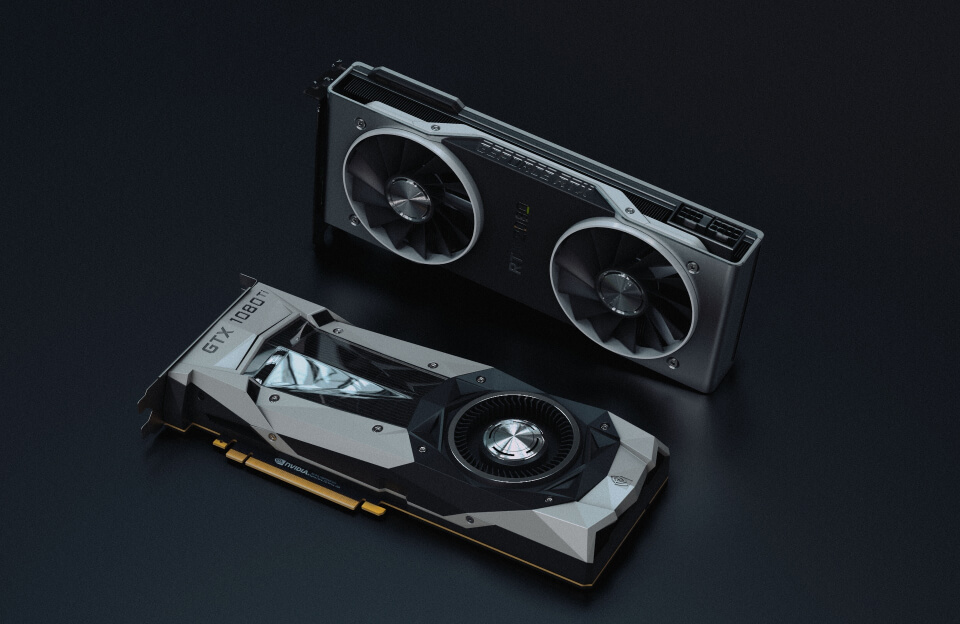
Consider GPUs that match your CPU’s capabilities, such as the RTX 3060 Ti for a 12th‑gen Intel Core i7, or the RTX 4060 for a Ryzen 5 7600X.
Consult comparative guides like NVIDIA’s GPU comparison page to find the best equilibrium for your budget.
The optimal balance typically falls within a 1:1 performance ratio, meaning the CPU and GPU achieve similar FPS thresholds at the chosen settings.
If the GPU is underutilized, you can raise resolution or graphical detail, pushing more demand onto the CPU.
If the CPU is starved, consider a higher‑end card.
4. Upgrade Your Motherboard and Memory for Added CPU Headroom
A supportive motherboard can amplify CPU performance.
Modern mainboards offer better power rail designs, enhanced BIOS overclocking options, and improved memory support.
For example, a motherboard with dual 12V rails and a robust VRM can supply clean power, reducing latency and improving boost ceilings.
Memory speed also plays a role; faster RAM (e.g., 3200 MHz or 3600 MHz DDR5) can boost CPU throughput in gaming workloads.
Ensure the motherboard supports the chosen memory type and speed, and install matched DDR pairs for dual‑channel performance.
Stability tests such as MemTest86 can confirm memory reliability after changes.
5. Optimize Cooling to Enable Higher Sustained Clocks
Heat limits CPU performance: when temperatures exceed safe thresholds, the processor throttles its speed.
Installing a high‑efficiency cooler, upgrading thermal paste, or building a better airflow case can keep temperatures low, enabling higher sustained clocks during extended sessions.
For air cooling, consider an ELi8060 Xi‑Air or a Corsair H150i RGB, while the liquid AIO market features the NZXT Kraken Z63 or the Thermaltake Floe.
Monitor ambient room temperature; a cooler room leads to lower CPU temperatures.
Regular maintenance, such as dust removal from fans and heatsinks, also preserves cooling efficiency.
6. Consider a CPU Cooler‑Integrated System Integration
Some gamers prefer a modular system where the CPU cooler double‑serves the power supply and PC internals, creating a focused thermal pathway.
A good example is the Revo 2 AIO, which uses dual radiators to cool both CPU and GPU, particularly useful in small form‑factor builds.
This integration reduces thermal lag and allows higher overclock stability.
7. Benchmark and Verify Performance Gains
After making any upgrades, run a multi‑stage benchmark to confirm that the bottleneck has shifted, if at all.
Tools such as 3DMark Time Spy, Unigine Heaven, or Heaven Benchmark provide quantitative FPS results.
To isolate CPU effects, run the benchmarks with GPU settings set to low and observe the CPU usage; ideally, it should stay well below 80%.
Here is a simple comparison table of benchmark results before and after a CPU upgrade (values are illustrative):
| Component | CPU | Previous FPS | New FPS |
|---|---|---|---|
| Benchmark | RTX 3060 Ti | 58 fps | 71 fps |
These numbers show a noticeable uplift attributable to the new CPU.
Conclusion: Upgrade Strategically, Not Excessively
Game‑ready performance hinges on a balanced system in which no single component throttles the others.
By diagnosing bottlenecks, selecting a suitable CPU upgrade, enabling responsible overclocking, matching a compatible graphics card, and ensuring solid cooling and power delivery, you can overcome CPU bottlenecks once and for all.
Choose the solution that best fits your budget and comfort level, and remember that an open, well‑ventilated case plus continuous monitoring will keep your system humming at peak performance.
Ready to take your gaming PC to the next level?
Start by inspecting your current CPU usage, and then choose a tuned upgrade path that fits your style.
Shop for a new processor or an optimized cooler, and watch the game performance rise.
Your next adventure is just a few clicks away—upgrade today and feel the difference in every frame.