Gaming PC enthusiasts often face the same dilemma: how to evolve their rigs without blowing their wallets. The key to a successful build lies in understanding the “gaming PC upgrade path for low, mid, and high‑end systems.” By strategically swapping out the CPU, GPU, RAM, and storage, you can stretch a modest machine into a powerhouse. This guide gives you a clear plan for each budget tier, ensuring you get the best performance for every dollar spent. It also offers tangible benchmarks, real‑world usage scenarios, and expert recommendations that make even the most complex upgrades approachable. Whether you’re upgrading an existing build or planning a fresh start, this roadmap will keep your system competitive for years ahead. Dive in and discover how to make the most of your investment.
A low‑end gaming rig is ideal for players who enjoy esports titles or older AAA releases at 1080p. The most cost‑effective upgrade begins with the GPU, as modern games remain most demanding on graphics performance. A card such as the GeForce GTX 1650, with 4 GB of GDDR5, offers smooth 30–60 frames per second without requiring a top‑tier CPU. Pairing it with a 4‑core, 3.6 GHz processor, like the Intel Core i3‑12100 or AMD Ryzen 5 5600G, keeps the bottleneck minimal and stays well below a hundred dollars for the CPU segment. In addition, a modest NVMe SSD and a low‑profile power supply provide enough headroom for future component upgrades. Finally, a well‑ventilated case that supports adequate airflow will keep temperatures stable during long gaming sessions.
Storage decisions can further push performance without a major expense. A SATA SSD of 240 GB or a modest NVMe drive improves load times and system responsiveness. Adding 8 GB of DDR4 RAM—expandable to 16 GB—provides stability for modern titles that increasingly rely on larger memory pools. Lastly, a PSU in the 450 W range from a reputable brand ensures sufficient headroom. For budget builders, a fully assembled system can stay under $500, with each component selectable based on region or retailer pricing.
- CPU: Intel Core i3‑12100 (or AMD Ryzen 5 5600G)
- GPU: NVIDIA GeForce GTX 1650 or AMD Radeon RX 6500 XT
- RAM: 8 GB DDR4 (upgradeable to 16 GB)
- Storage: 240 GB SATA SSD (or 480 GB NVMe)
- PSU: 450 W 80+ Bronze
Even with a tight budget, small optimizations can yield noticeable gains. Start by enabling “Game Mode” in Windows 10 or 11 to prioritize CPU resources for the active game. Keep the GPU drivers updated; a fresh release often lifts performance by a few frames per second. Trim or disable background services that consume CPU cycles, such as cloud backup tools or indexing services. If your case doesn’t have a dedicated power button, consider installing a basic motherboard ATX power connector to reduce cable clutter. Finally, invest in a single, quality fan that provides both intake and exhaust; proper air pressure keeps the system cool even during extended play.
Mid‑range gamers seek a balance between price and performance, often targeting 1440p or high‑settings 1080p play. The upgrade usually starts with the GPU, selecting a 1650 Ti or RTX 3050 series card that supports ray tracing and DLSS at moderate resolutions. Coupled with a 6‑core, 3.8 GHz processor—such as the AMD Ryzen 5 7600 or Intel Core i5‑13400F—you achieve a blend of solid single‑thread speed for older titles and strong multithread capacity for newer releases. Memory should be 16 GB of DDR5 or faster DDR4, with timings near CL16 to minimize latency. A 480 GB NVMe SSD offers quick boot times, while a secondary 1 TB SATA SSD can host large game libraries. Finally, a 650–750 W 80+ Gold PSU handles power spikes and future upgrades comfortably.
Striking the right power‑to‑price ratio in a mid‑range build requires evaluating the performance‑per‑dollar metric of each component. GPUs tend to have the highest price volatility, so monitoring market trends or waiting for new launch cycles can result in significant savings. CPUs with higher core counts often justify their premium in productivity applications, but gamers will find a 6‑core model adequate for most titles to date. Remember that overclocking may close a small performance gap, but it also increases power consumption and heat output, potentially requiring better cooling solutions. Choosing a modular power supply can reduce cable clutter and improve airflow, translating into longer component life and lower maintenance costs. By methodically comparing benchmarks, you can identify sweet spots that maximize gaming performance without inflating the overall budget.
Mid‑range CPUs typically allow safe, modest overclocks that push core frequencies above their base values. For instance, the Ryzen 5 7600 can sustain a core clock of 4.5 GHz at a modest 110 W power limit, resulting in smoother frame rates in CPU‑bound games. Overclocking the GPU with XMP profiles or manual tweaks may yield a 5–10 % increase in refresh cycles, but the benefit often diminishes past a certain threshold. Any overclocking effort must consider the cooling solution, as higher TDP can raise temperatures and trigger thermal throttling. Implementing a low‑profile liquid cooler or high‑flow air cooler can offset these effects, but keep power delivery and motherboard VRM quality in mind when pushing performance beyond stock specifications.
- CPU: AMD Ryzen 5 7600 or Intel Core i5‑13400F
- GPU: NVIDIA RTX 3050 Ti or AMD Radeon RX 6600 XT
- RAM: 16 GB DDR5/DDR4 (upgradeable to 32 GB)
- Primary Storage: 500 GB NVMe SSD
- Secondary Storage: 1 TB 7200 RPM HDD
- PSU: 650–750 W 80+ Gold
- Case: Well‑ventilated mid‑tower (Fractal Design Focus, NZXT H510)
For mid‑range builds, optimizing the thermal curve is crucial. Using a software utility, set a conservative temperature threshold—around 70 °C for the GPU and 80 °C for the CPU—and adjust fan curves accordingly. You can also enable dynamic overclocking profiles (e.g., AMD Precision Boost Overdrive) to automatically utilize the extra core speed when workload demands arise. Enabling NVIDIA DLSS or AMD FSR in supported titles can compensate for occasional frame dips, letting you push settings higher without sacrificing smoothness. Monitor voltage curves; a 0.05 V increase to the GPU can push performance by 5 % if the power supply supplies sufficient headroom. Finally, consider installing a high‑efficiency PSU; a 90 % efficiency rating reduces heat and power costs over time.
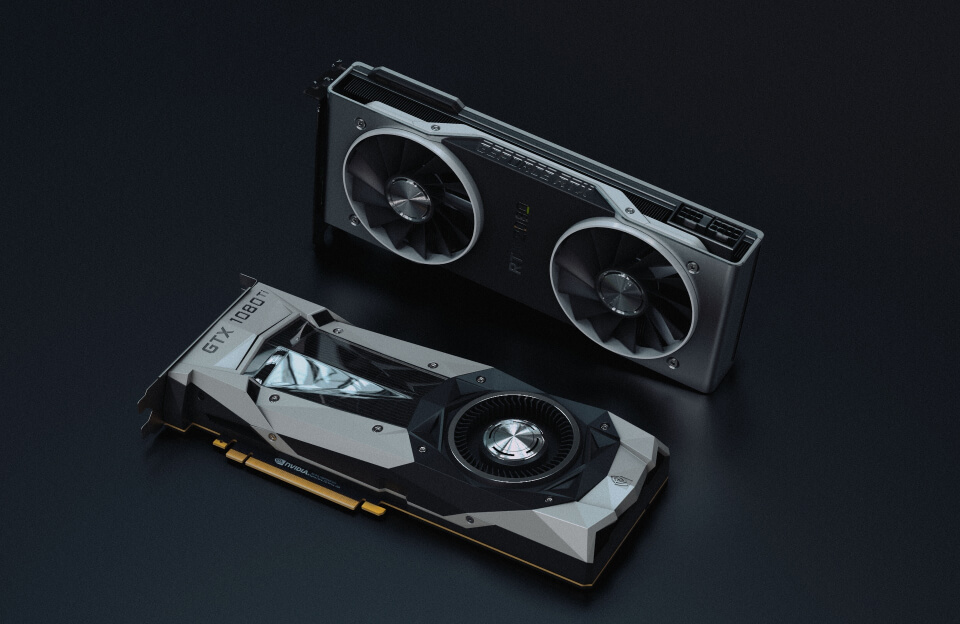
High‑end systems push the envelope by integrating the latest GPU such as the NVIDIA RTX 4090 or AMD Radeon RX 7900 XTX. These cards excel at 4K resolutions, high frame rates, and advanced ray tracing—features that future‑proof the build for years. Pairing them with a 12‑core, 5.0 GHz processor like the AMD Ryzen 9 7950X or Intel Core i9‑13900K guarantees that CPU‑bound and heavily multithreaded workloads stay a blur.
Ray tracing performance is not just about GPU raw power; memory bandwidth and cache also play vital roles. The RTX 4090, for instance, offers 24 GB of GDDR6X memory with 384 bit bandwidth, which dramatically reduces frame times during ray‑heavy scenes. Coupling this with a 32 GB DDR5 kit allows you to maintain high frame rates while enabling features like DLSS 3.0 or FSR 2.2, which synthesize frames to smooth visual output. GPU clock offsets and boost settings further refine performance, enabling games like Cyberpunk 2077 to hit 60 fps at 4K with moderate ray tracing on.
High‑end systems also demand robust cooling solutions. A custom AIO loop or a 360 mm radiator on the CPU, combined with a 360 mm radiator on the GPU, keeps thermal limits well below the manufacturer’s specifications. Ensuring proper airflow by configuring intake‑exhaust pairs and using high‑airflow fans keeps overall system temperatures below 30 °C during extended sessions. Additionally, enabling BIOS settings for PCIe configuration—such as setting the GPU to x8 or x16 link speed—ensures maximum bandwidth and avoids bottlenecks at 4K resolution.
- CPU: AMD Ryzen 9 7950X or Intel Core i9‑13900K
- GPU: NVIDIA RTX 4090 or AMD Radeon RX 7900 XTX
- RAM: 32 GB DDR5 (upgradeable to 64 GB)
- Primary Storage: 1 TB NVMe SSD
- Secondary Storage: 4 TB NVMe or SATA SSD
- PSU: 1000 W 80+ Gold/Platinum
- Cooling: 360 mm AIO or custom loop, high‑flow fans
- Case: High‑airflow, tempered‑glass mid‑tower (Corsair iCUE 5000X, Lian Li PC‑O11)
High‑end systems benefit from sophisticated cooling strategies. A dual‑radiator configuration—a 360 mm front radiator and a 120 mm rear radiator—keeps GPU and CPU temperatures below 30 °C during heavy workloads. Enabling “PCIe x8” link speed in BIOS ensures the GPU receives full bandwidth, preventing bottlenecks at 4K resolution. Configuring GPU clock offsets in NVIDIA Control Panel allows custom overclocking without the risk of automated tools. Consider running a synthetic benchmark such as 3DMark Time Spy to validate stability after any overclock; a pass guarantees that frame rates remain consistent over extended sessions. Finally, set the operating system to “High performance” power plan to avoid throttling during demanding tasks.
Future‑proofing extends beyond component specifications; it also involves ensuring your software stack keeps pace. When choosing parts, always test for compatibility with the latest standards like PCIe 5.0 or DDR5 memory, which provide double the bandwidth over earlier generations. Selecting a motherboard with a B550 or X570 chipset allows drivers to roll out to support new CPU models, thereby extending the usable lifespan of the board.
PCIe 5.0 delivers 32 GB/s per direction, doubling the throughput of PCIe 4.0. While current GPUs can already benefit from PCIe 4.0, the upcoming RTX 60‑series and future Ryzen chips will leverage the higher bandwidth to reduce data latency in AI and ray‑tracing workloads. Early adoption of PCIe 5.0 motherboards also facilitates future storage upgrades, such as NVMe SSDs that exceed 7 TB of sequential read speeds.
Software is as critical as hardware. Drivers from NVIDIA or AMD often release performance patches months after a new title launch. Keeping Windows, DirectX, and Vulkan runtimes auto‑updated guarantees you receive those boosts. Additionally, tools such as GeForce Now or PlayStation 5 Cloud Gaming provide high‑frame‑rate cloud solutions, which reduce local GPU demands albeit at the cost of latency.
- Motherboard: B550 or X570 chipset for PCIe 4.0+ support
- CPU: AMD Ryzen 7000‑series or Intel 13th‑Gen flagship
- GPU: RTX 40 or RX 7000 series with 12 GB+ VRAM
- RAM: 32 GB DDR5 5200 MHz or higher
- Storage: 1 TB NVMe PCIe 4.0 SSD, expandable to 4 TB
- PSU: 80+ Gold with 20 % headroom, modular design
- Case: Full‑tower with ample airflow and cable management
- Cooling: Custom loop or high‑flow AIO; consider liquid cooling for GPU
Future‑proofing extends beyond component specifications; it also involves ensuring your software stack keeps pace. Enable automatic updates for Windows, DirectX, and Vulkan drivers to exploit hardware enhancements as they become available. Leverage cloud gaming services that deliver high frame rates without local GPU demands, but be mindful of latency and subscription costs. When planning a mid‑range or high‑end build, allocate a portion of your budget for a modular PSU, which allows you to swap out power modules without replacing the entire unit. Keep an eye on emerging standards—such as PCIe 5.0 or the upcoming 3D‑Xpoint memory—so that future upgrades can plug into your existing chassis. Finally, regularly back up system and game data; a reliable SSD ensures fast recovery, protecting your investment against hardware failures.
A clear gaming PC upgrade path for low, mid, and high‑end systems equips you to invest wisely and avoid common pitfalls. Whether you’re a beginner, a casual player, or a hardcore enthusiast, the right plan delivers sustained performance without regret. Begin by assessing your primary gaming needs—resolution, frame rate, and desired quality settings—and then follow the upgrade tiers outlined above. Build your system today, scale your components as new titles and technologies arrive, and enjoy every pixel, every frame, and every victory.
If you’re ready to start building or upgrading, browse our recommended components, read in‑depth reviews, and compare prices. Tom’s Hardware offers up‑to‑date benchmarks that help you make the best choices for your budget. Dive in, stay informed, and let your gaming experience evolve the way you want it to.