When you’re ready to elevate your gaming rig, the first decision you face is what to upgrade first. The Gaming PC Upgrade Order guides you through a logical sequence that maximizes performance while keeping costs under control. By addressing the bottleneck early, you ensure that each subsequent component delivers tangible gains. This article walks through the key steps in the upgrade order, from the processor to the peripheral layer.
A single upgrade can quickly become a cycle of diminishing returns if you ignore the interdependencies between CPU, GPU, RAM, storage, and power delivery. For example, swapping in a shiny new graphics card into a quad‑core, 2015‑era processor still leaves most frames limited by the CPU’s clock speed. Likewise, adding an extra 8 GB of memory may have no effect if the motherboard doesn’t support the desired speed. Thoughtful planning avoids wasted spend and keeps your system poised for peak performance.
In practice, most users follow a four‑stage path: first resolve the biggest performance bottleneck, then move to storage, next upgrade memory, and finally refine cooling and power. This linear approach guarantees that each upgrade becomes the new limiting factor only when justified by a measurable benchmark. Moreover, it aligns spending with incremental gameplay rewards, so you see the payoff in the next title you launch. If you’re uncertain where to start, evaluate what games or workloads currently lag behind.
Gaming PC Upgrade Order: Determine the Bottleneck
The first step is identifying whether your CPU or GPU is holding the system back. A simple way to check is to run a synthetic benchmark such as 3DMark or a real‑world game that stresses one component more than the other. For CPU‑bound titles like strategy simulations or older shooters, higher clock speeds and additional cores will translate directly into smoother frames. Conversely, graphically intensive games—think modern first‑person shooters—benefit most from a more powerful GPU and adequate VRAM.
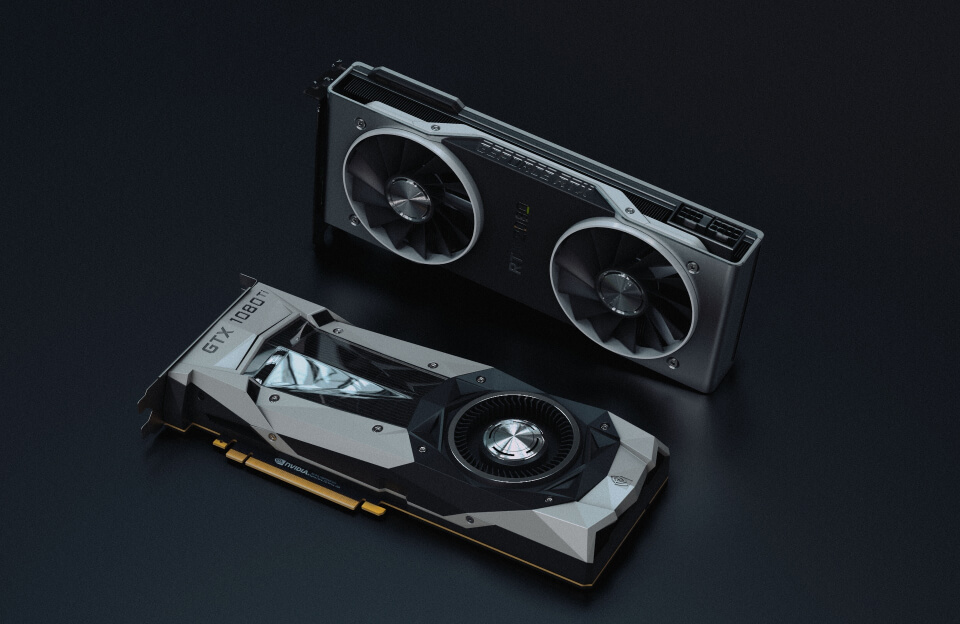
To make an informed decision, compare the scores from CPU‑centric tests like Cinebench R23 with GPU measurements from Unigine Heaven or 3DMark Firestrike. When the CPU score is markedly lower than the GPU, the processor is the bottleneck; upgrade to a higher model or overclock if feasible. If the reverse is true, investing in a newer graphics card—such as the GeForce RTX 30 series—provides the most immediate lift in performance. This benchmarking framework also helps avoid phantom upgrades that never reach the next threshold.
Suppose you run 3DMark Time Spy and achieve a 600 score while your GPU can push 800. The CPU is not keeping pace, so a transition to an Alder Lake or a newer Ryzen Zen 3 processor would unlock further gains. On the other hand, if a GPU test returns 650 and the CPU manages 700, the GPU dictates the ceilings and the next logical step is a newer G‑Card. By targeting the actual limiting factor you align your spend with the biggest payoff, ensuring that each new component feels like a step forward rather than a cosmetic change.
Once you’ve isolated the bottleneck, schedule the upgrade in a budget‑friendly manner. If the bottleneck is the CPU, assess whether a socket‑compatible overclock or a new board tier can accommodate a more capable silicon family. If GPU is the limiting factor, consider mid‑range options that strike a balance between price and ray‑tracing performance. Either way, the goal is to remove the single weakest link before the rest of the system starts to notice differences.
Gaming PC Upgrade Order: Prioritize Storage
With the primary bottleneck resolved, storage becomes the next priority for improving load times and overall responsiveness. Replacing an aging 7200 RPM hard disk with a PCI‑e NVMe solid state drive instantly reduces both operating system boot times and game world streaming. According to the SSD specification, read speeds can exceed 3000 MB/s, dwarfing traditional HDD capabilities.
For budget‑constrained build-ups, a SATA SSD with 500 GB still offers a dramatic difference over mechanical drives, especially for console‑mode games that rely heavily on streaming data. However, if your workload involves high‑resolution textures or large game installations, an NVMe drive ensures that the GPU never stalls for asset loading. Additionally, dual‑drive setups—install the OS on an NVMe and games on a secondary SATA SSD—combine the speed of PCIe with the capacity and cost advantage of SATA.
When selecting an NVMe drive, pay attention to the interface: Gen 3 versus Gen 4. While Gen 4 NVMe sticks advertise up to 7500 MB/s, most current games will see performance gains plateaus above 4000 MB/s, so a Gen 3 card may be a better value. Also, consider endurance ratings and warranty as NVMe drives tend to wear faster under sustained 4K gaming sessions. Finally, ensure that your motherboard chipset supports M.2 slots without bottlenecking the PCIe lanes to your GPU.
In practice, the storage upgrade order can be summarized in a quick list:
- Replace any mechanical HDD with a SATA SSD.
- Upgrade to a PCIe NVMe SSD if you game at 1440p or higher.
- Consider a secondary SSD for mass storage or an SSD + HDD hybrid for large media libraries.
Gaming PC Upgrade Order: Memory Matters
RAM capacity and speed directly affect your ability to hold large game worlds in memory and reduce page‑fault pauses during frame rendering. A standard 8 GB kit may suffice for casual play, but titles running on 64‑bit engines and mod packs often benefit from 16 GB or more. Doubling the RAM also enables higher in‑game resolution settings, since the engine can cache more textures locally.
Speed is just as important as quantity; 3200 MHz kits provide noticeable throughput gains over 2666 MHz sticks, especially on platforms that lock the memory controller to the CPU’s specifications. On AMD systems, the memory clock is typically tied to the CPU’s multiplier, so a higher‑speed kit can unlock better cache efficiency. Intel CPUs, meanwhile, benefit from tighter latency and the ability to run memory at higher frequencies through the XMP profile.
Before you add more memory, verify the motherboard’s maximum supported capacity and supported speeds through its BIOS documentation or official resources. If your board only allows 12 GB total, then purchasing an 8 GB kit may be redundant; in that case, investing in a new platform may bring broader benefits. Moreover, matching both DDR sticks for dual‑channel efficiency reduces fragmentation and keeps data lines smooth.
When assessing whether to upgrade RAM, benchmark your system’s memory usage in high‑end games via tools such as GPU‑Z or MSI Afterburner. If memory usage consistently approaches 90 % at higher graphics settings, increasing capacity will alleviate stalls. Conversely, if memory usage sits comfortably below 70 %, a speed upgrade may yield a measurable frame‑rate bump instead.
Gaming PC Upgrade Order: Cooling and Power
A new processor or graphics card brings increased thermal output; thus addressing cooling early in the upgrade order keeps temperatures under control and prolongs component lifespan. For CPUs, a high‑performance air cooler or an AIO liquid cooler rated at 150 W is advisable when moving from a mid‑range silicon to high‑end chips. On the GPU side, consider if the current case airflow suffices—adding a second intake or exhaust fan is often a cost‑effective tweak.
Improving airflow also mitigates noise levels, a side benefit that many gamers cherish. While installing a more robust heatsink can raise static pressure, fans tuned for low RPM will blend with the system’s ambient soundscape. If your GPU’s TDP exceeds the case’s supply of airflow, adding a supplementary fan at the rear exhaust can make the difference between a throttled frame drop and a steady race.
Power delivery must keep pace with higher TDP demands. Upgrading a 400 W PSU to a 650 W or 750 W unit with an 80 + Gold rating or better ensures that the system runs safely under load. Consult the power recommendations on the component manufacturers’ documentation. For example, Nvidia’s RTX 3080 requires at least a 750 W supply, whereas a Ryzen 9 7900X calls for at least a 650 W PSU; a combined 850 W unit provides headroom for overclocking.
In addition to wattage, the quality of voltage regulation is crucial; a PSU with a high efficiency rating reduces heat generation and voltage droop. When choosing a power supply, double‑check connector types: the GPU may need one 8‑pin and two 8‑pin connectors, while the motherboard uses a 20‑plus 8‑pin connection. Skipping these can lead to instability—rarely will a system boot up but fail under load.
Gaming PC Upgrade Order: Fine‑Tuning Peripherals and Monitor
After internal upgrades, polish the gaming experience with peripherals that complement your system’s capabilities. A mechanical keyboard with low latency and durable switches enhances text input and macro execution, while a high‑refresh‑rate gaming mouse provides precise aiming. Ensure that the mouse’s polling rate matches the system’s maximum to avoid jitter—setting it at 500 Hz is common for competitive play.
Monitor selection is the most noticeable external upgrade that often directly correlates with hardware performance. Match the monitor’s resolution and refresh rate to your GPU’s output; a 1440p screen at 144 Hz will look smoother than a 1080p 120 Hz display if your GPU can maintain 144 Hz at that resolution. Also, consider adaptive sync technologies such as FreeSync or G‑Sync to eliminate tearing and stutter.
When evaluating monitors under 240 Hz, factor in the panel type: TN panels often boast the fastest response times but lack color accuracy, while IPS panels provide better color reproduction but may have slower response. For pure competitive gaming, a TN panel with a 1 ms response time is ideal; for a more balanced experience, an IPS panel around 180 Hz offers a sweet spot between color fidelity and speed. In both cases, calibrating the display’s gamma and white point using a colorimeter will ensure the hues you see match the game’s intended palette.
Finally, consider sound quality; a set of high‑end headphones with a wide frequency response and comfort for long sessions can transform immersion. Combine the upgrades in a logical order—CPU, GPU, storage, RAM, cooling, power, and then peripherals—and you’ll systematically eliminate bottlenecks while staying mindful of budget. This methodical approach ensures that each new component delivers a noticeable difference in your gaming experience.
Now that you know the Gaming PC Upgrade Order that prioritizes performance gains over vanity upgrades, it’s time to put this roadmap into action. Start by diagnosing the bottleneck with a reliable benchmark, then move through storage, memory, cooling, and power before fine‑tuning your monitor and peripherals. If you’re ready to level up, download our free upgrade checklist or contact our experts for a personalized upgrade plan. Don’t wait—every new component you add is a step closer to the smooth, tear‑free gameplay you deserve.