Gaming PC Upgrade is a crucial step for content creators who demand high performance for video editing, streaming, and 3D rendering. Whether you’re a YouTuber, a Twitch streamer, or a freelance video editor, the right hardware can dramatically reduce render times, improve streaming quality, and keep your workflow smooth. In this guide, we’ll walk through the key components you should focus on, explain why each matters for content creation, and give you a clear path to a powerful, future‑proof setup.
Assess Your Current Setup
Before you start buying new parts, take inventory of what you already have. Check the specifications of your CPU, GPU, RAM, and storage. Use tools like HWInfo or CPU-Z to get detailed data. Identify bottlenecks: if your CPU is older than 2015, it may struggle with modern editing software; if your GPU is a decade old, you’ll see lag in 4K playback and real‑time effects.
Also consider your power supply unit (PSU). A high‑end GPU can draw 300–400 W, so a 650 W or higher PSU with an 80+ Gold rating is recommended. Don’t forget the case: good airflow and enough space for larger GPUs and liquid cooling loops are essential for sustained performance.
Choose the Right CPU
For content creators, the CPU is the backbone of your system. It handles encoding, decoding, and multitasking. Modern editing suites like Adobe Premiere Pro, DaVinci Resolve, and Final Cut Pro leverage multi‑core performance. A 6‑core or 8‑core processor from Intel’s Core i7/i9 or AMD’s Ryzen 7/9 series offers a solid balance between price and speed.
- Intel Core i7‑13700K – 16 cores (8 performance + 8 efficiency), 24 threads, excellent single‑thread performance for legacy plugins.
- AMD Ryzen 9 7950X – 16 cores, 32 threads, strong multi‑core throughput for 8K editing.
- Intel Core i5‑13600K – 14 cores, 20 threads, great value for mid‑range budgets.
When selecting a CPU, also check the socket compatibility with your motherboard. For Intel, LGA1700 is common for 12th and 13th generation chips; for AMD, AM5 supports the latest Ryzen 7000 series. A modern chipset (Z690/Z790 for Intel, X670/B650 for AMD) ensures you can upgrade future components without replacing the motherboard.
Upgrade Your GPU for Rendering
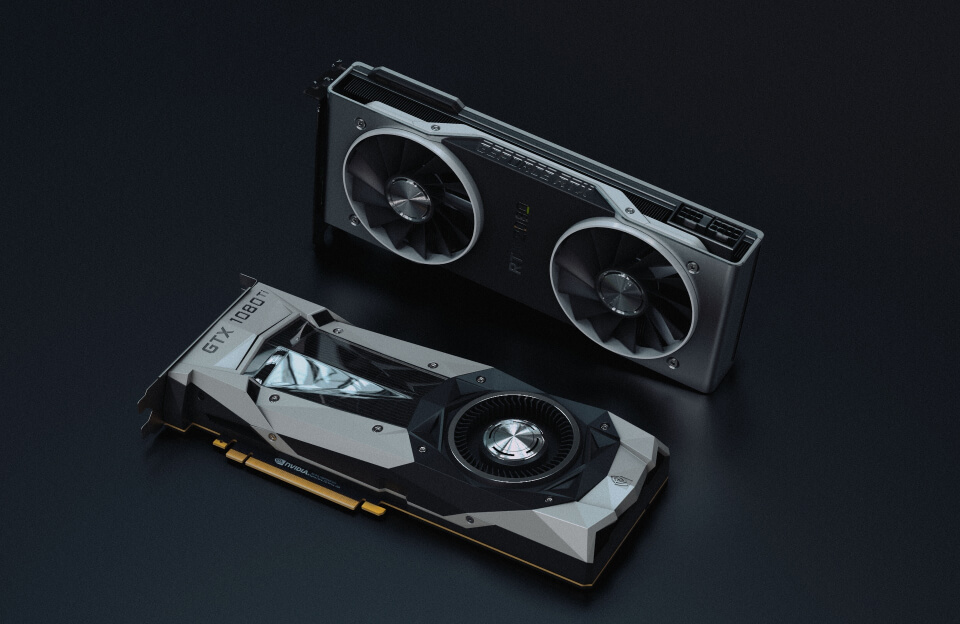
The GPU is critical for real‑time effects, 3D rendering, and GPU‑accelerated encoding. NVIDIA’s RTX 30‑series and AMD’s RX 6000‑series deliver the best performance for content creation. If you use Adobe Media Encoder or DaVinci Resolve, the GPU can offload encoding tasks, cutting render times by up to 50%.
For 4K or 8K projects, consider a card with at least 8 GB of GDDR6 memory. The RTX 4070 Ti or AMD Radeon RX 7900 XT are excellent choices. If you’re on a tighter budget, the RTX 3060 Ti or RX 6800 still provide solid performance for most editing workflows.
Remember to enable GPU acceleration in your software settings. In Premiere Pro, go to File > Project Settings > General and select the GPU. In DaVinci Resolve, enable GPU decoding in the Playback menu.
Maximize Storage and Cooling
Fast storage is a game‑changer for content creators. An NVMe SSD (PCIe 4.0) with at least 1 TB of capacity ensures quick access to large media files and smooth playback. Pair it with a secondary SATA SSD or HDD for archival storage. For example, a 1 TB Samsung 980 Pro for your OS and applications, plus a 2 TB Seagate Barracuda for media.
Cooling is equally important. Overheating can throttle performance. Consider a high‑quality air cooler like the Noctua NH-D15 or a 240 mm AIO liquid cooler for the CPU. For the GPU, ensure your case has at least two intake fans and one exhaust fan. If you plan to overclock, a custom loop can keep temperatures low and noise minimal.
Power delivery matters too. A 650 W or 750 W PSU from reputable brands (Corsair, Seasonic, EVGA) with an 80+ Gold rating guarantees stable power for high‑end components.
RAM: The Unsung Hero
Content creation software is memory hungry. 16 GB is the bare minimum; 32 GB is recommended for 4K editing, and 64 GB for 8K or heavy VFX work. Look for DDR4 or DDR5 kits with speeds of 3200 MHz or higher. Dual‑channel kits provide better bandwidth, so buy matched pairs.
When upgrading RAM, check your motherboard’s maximum supported capacity and speed. Some boards support up to 128 GB, which is useful for future‑proofing.
Software Optimization and Workflow Tips
Hardware upgrades are only part of the equation. Optimize your workflow to get the most out of your new system:
- Use proxy files for high‑resolution footage to reduce CPU load.
- Enable GPU acceleration in all supported applications.
- Keep your drivers up to date; NVIDIA and AMD release frequent updates that improve encoding performance.
- Organize media libraries with metadata and color‑coding for faster navigation.
- Consider using a dedicated editing workstation with a secondary monitor for reference footage.
Regularly clean dust from fans and heatsinks, and monitor temperatures with software like HWInfo or CoreTemp. Keeping temperatures below 70 °C under load ensures longevity.
Conclusion: Build the Future‑Proof Creator’s Machine
Investing in a Gaming PC Upgrade tailored for content creation pays dividends in speed, reliability, and creative freedom. By selecting a modern CPU, a powerful GPU, ample RAM, fast storage, and robust cooling, you’ll be ready to tackle 4K, 8K, and complex VFX projects with confidence.
Ready to elevate your production? Start by evaluating your current setup, then choose components that align with your workflow and budget. Don’t forget to keep your software and drivers updated, and enjoy the smoother, faster editing experience that comes with a well‑balanced system.
Take the next step—upgrade your rig today and unlock the full potential of your creative projects!
For deeper technical insights, refer to the following resources:
- Graphics Processing Unit (Wikipedia)
- CPU (Wikipedia)
- RAM (Wikipedia)
- Intel Official Site
- NVIDIA GeForce
Frequently Asked Questions
Q1. What components should I prioritize when upgrading a gaming PC for content creation?
Start with the CPU and GPU, as they handle most encoding and real‑time effects. Next, add ample RAM—32 GB is a solid baseline for 4K work. Finally, invest in fast NVMe storage for quick media access and consider a reliable PSU and good cooling to keep everything stable.
Q2. How much RAM is recommended for 4K video editing?
For 4K editing, 32 GB of DDR4/DDR5 is the minimum to avoid bottlenecks. If you work with multiple timelines or heavy effects, 64 GB can provide a smoother experience and future‑proof your setup.
Q3. Is a high‑end GPU necessary if I mainly edit in Adobe Premiere Pro?
Premiere Pro benefits from GPU acceleration for effects and encoding, especially with the latest versions. A mid‑range card like the RTX 3060 Ti or RX 6800 can still deliver significant speedups, but a high‑end GPU will reduce render times further and support 8K workflows.
Q4. What storage configuration gives the best balance between speed and capacity?
Use a PCIe 4.0 NVMe SSD (1 TB or larger) for your OS and active projects to ensure fast read/write speeds. Pair it with a secondary SATA SSD or HDD for archival storage, giving you both speed and ample space.
Q5. How can I ensure my system stays cool during heavy workloads?
Choose a high‑quality air cooler or a 240 mm AIO liquid cooler for the CPU, and make sure your case has at least two intake and one exhaust fan. Keep the PSU rated 80+ Gold or better, and regularly clean dust from fans and heatsinks to maintain airflow.