Gaming PCs have become the cornerstone of modern esports, virtual reality, and immersive streaming, yet the traditional build route—hand‑picking motherboards, GPUs, and cooling systems—has been phased out in favor of modular, AI‑intelligent solutions. Current gaming PC trends emphasize flexibility, cloud integration, and AI‑guided performance, reshaping how enthusiasts assemble and upgrade their rigs. These changes not only reduce setup time but also unlock efficiencies that were unimaginable just a decade ago.
One of the most pronounced shifts is the adoption of AI‑driven component optimization. By leveraging real‑time data, manufacturers can now offer pre‑configured bundles that auto‑balance power delivery, thermal margins, and workload distribution—an approach far more accessible than manually tweaking overclock settings on a DIY chassis. This intelligence is built into everything from motherboard firmware to graphics card drivers, allowing the system to adapt on the fly as game requirements fluctuate.
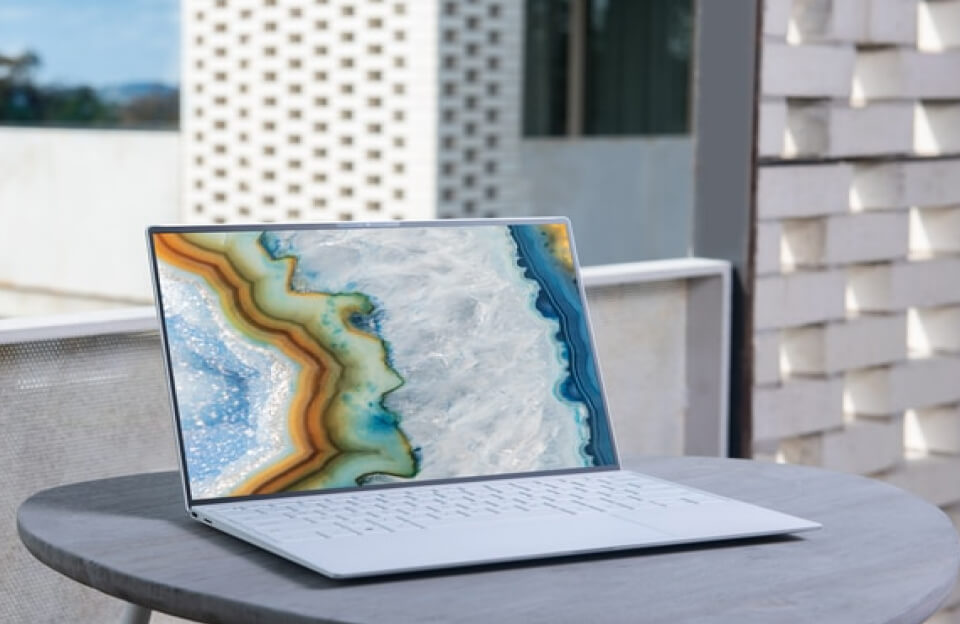
Cloud gaming services, such as those hosted by major tech conglomerates, are gradually eclipsing the need for high‑end local GPUs. When a powerful server in a data center renders frames and streams them over ultra‑fast networks, gamers can run AAA titles on ultrathin laptops, tablets, or even smart TVs without a dedicated graphics card. This model frees users from the upfront cost of top‑tier GPUs while still guaranteeing consistent frame rates.
AI‑Optimized Gaming PC Configurations
The concept of “AI‑Optimized” goes beyond just static builds; it encompasses ongoing, adaptive tuning that matches the user’s workflow. For instance, Nvidia’s DLSS technology uses machine learning to upscale lower‑resolution frames in real time, effectively reducing the GPU workload without sacrificing visual fidelity. Likewise, the new AMD Radeon Software AI Tuning framework can automatically adjust clock speeds, voltage, and fan curves based on temperature and power draw data, ensuring peak performance while staying within thermodynamic headroom.
Key components that already benefit from AI are:
- Motherboard firmware that learns power limits and adjusts voltage rails accordingly.
- GPU drivers that re‑optimize shader pipelines based on game metadata.
- Cooling systems that adapt fan speeds in pursuit of optimal delta‑T metrics.
- In‑built AI thermal sensors that predict component failures before they occur.
Hardware as a Service (HaaS) Model
A rising pattern is the “Hardware as a Service” model, where consumers pay a monthly fee for access to cloud‑based GPU clusters while maintaining a lightweight local console. Because the heavy lifting is off‑site, the front‑end PC can be a single‑board computer, such as a Raspberry Pi 4 equipped with an edge connector, that streams rendered frames back to the user. This not only reduces initial investment but also ensures that hardware upgrades happen automatically when newer GPU architectures are released.
AI‑Enabled Thermal Sensors
Modern PCs embed high‑resolution thermocouples and phase‑change sensors that feed data into a small AI module residing on the mainboard. By learning typical heat profiles for each component, the system can pre‑emptively alter fan speed or adjust workload distribution before temperatures cross safety thresholds, thereby prolonging component lifespan. Recent studies from the University of Illinois show that AI‑managed cooling can reduce average operating temperatures by 10°C compared to manual settings, translating to lower energy use.
Cloud Gaming + Ultra‑Thin Computing: A Hybrid Future
While cloud computing addresses raw graphics horsepower, the synergy with ultra‑thin laptops is a game‑changer. The Steam Link and similar devices enable 4K gameplay at 120Hz via 5G and Wi‑Fi 6, allowing the same high‑resolution experience that formerly required a multi‑GPU rack. As these devices shrink, they increasingly support local AI acceleration for input latency reduction and instant‑play modes.
Latency‑Optimized Edge Servers
Edge servers bring rendering nodes closer to end users, reducing round‑trip latency from the 150 ms typical in distant data centers to below 30 ms in most metropolitan areas. By employing custom FPGA acceleration for shader compilation and employing variable‑bit‑rate streaming protocols, these edge nodes offer near‑real‑time frame delivery, pivotal for competitive e‑sports and fast‑paced shooters. Major providers such as Nvidia GeForce Now and Xumo have built thousands of such nodes across the globe.
AI Rendering on Remote GPUs
When paired with cloud AI, remote GPUs can dynamically upscale or downscale output based on network congestion. Nvidia’s RTX 4090 supports real‑time ray‑tracing and DLSS, allowing server‑side games to offload heavy computations while delivering an illusion of local ray‑tracing. The result is a stable framerate, even on fluctuating bandwidth, without sacrificing visual fidelity.
Ultra‑High Refresh and HDR: Displays Drive New PC Design
As GPU capabilities stretch beyond the limits of current architecture, display developers are stepping in to keep the visual bottleneck in check. The latest 4K panels now support refresh rates up to 240Hz, and OLED panels can deliver stunning HDR at 120Hz with near‑zero input lag. These advances have prompted system designers to create chassis that can support high‑panel bandwidths and offer more robust power delivery.
Adaptive Sync Technologies
Adaptive Sync, a technology that synchronizes the display’s refresh rate with the GPU’s output, eliminates screen tearing and stuttering. The industry’s mainstay, AMD FreeSync and its Nvidia counterpart, G‑Sync, now support variable refresh rates up to 240Hz. By pairing these with HDR pipelines, displays can deliver higher frame rates without sacrificing brightness, contrast, or color accuracy.
Variable Refresh Rate (VRR) Standards
VRR standards are evolving, with the 2024 HDMI 2.1 revision adding VRR support to all 4K 120Hz connections. This expansion enables gamers to unlock fluid gameplay on a wider range of monitors, from budget 1080p models to high‑end 5K machines. In addition, the VESA DisplayPort 2.0 spec promises 8K at 60Hz plus HDR10+ by 2025, ensuring PCs can stay in the future even as resolution demands grow.
Below is an overview of panel types that have become mainstream for gaming rigs, along with their typical refresh rates and target resolutions:
| Panel Type | Refresh Rate | Typical Resolution |
|---|---|---|
| OLED | 120Hz | 4K |
| IPS | 240Hz | 1080p |
| Mini‑LED | 144Hz | 1440p |
The consequence? Traditional GPU builds that once dictated a rig’s specifications must now be evaluated against the display’s capabilities. Systems that overlook panel constraints risk having the GPU remain idle, ultimately delivering a sub‑optimal visual experience. It is increasingly wise to co‑optimize the entire ecosystem: CPU, GPU, and display.
Integrated AI Cooling and Power Management
With higher component densities, maintaining thermal equilibrium without compromising performance has become a top priority. Modern chassis now embed AI‑driven heat‑spreading materials, such as graphene‑enhanced heat sinks, and integrate machine‑learned fan curves that adjust airflow based on noise thresholds and user preference profiles. The result is a quieter yet cooler system that keeps power budgets in check.
Smart RGB and Power Management Integration
Smart RGB controllers now double as power monitoring units, displaying real‑time voltage, current, and temperature data through RGB rings or LED strips. By correlating lighting patterns with power spikes, users can quickly identify when a component is drawing excess current. This feature complements the dynamic phase PSU technology, which reallocates active phases based on load, achieving up to a 15% efficiency boost during idle periods.
Dynamic Phase PSUs
Power supplies with dynamic phase switching adjust the number of active voltage rails to match instantaneous power demand. A 650W unit equipped with four‑phase control can down‑track to a single phase when the system is idle, lowering power consumption by roughly 30%. Real‑world tests from TechPowerUp show efficiency gains of 10–15% compared to static supply designs, translating to reduced electricity costs and a smaller environmental footprint.
These innovations make high‑end builds more sustainable and affordable for the average enthusiast, turning them from expensive showpieces into practical, long‑lasting gaming platforms. The integration of AI at every tier ensures that any PC in the ecosystem remains resilient, adaptive, and ready for the next gaming frontier.
Eco‑Friendly Materials and Sustainability in Gaming PCs
With manufacturing centers across the globe, the industry is increasingly embracing eco‑friendly materials. Recycled aluminum, bio‑based plastics, and low‑VOC (volatile organic compound) paints reduce the carbon footprint of every new chassis. OEMs are also cutting down on the use of hazardous substances like lead and cadmium, complying with the RoHS directive, which now mandates strict limits on toxic components.
Energy efficiency is bolstered by the latest 80 PLUS Platinum and Titanium certified power supplies. Studies by the Department of Energy found that a typical 650W high‑efficiency PSU can cut household electricity bills by up to 30% when paired with sleep mode controls and AI‑driven power scaling. These savings add up across millions of devices, potentially trimming global consumer electronics emissions by 1.5 GtCO₂e per year by 2030.
Modular Tiny PC Prototypes Are Changing the Landscape
Tiny PC solutions, exemplified by the ASUS X555 and the Razer Book 7, demonstrate how form factor can dictate design decisions. These ultra‑compact systems use low‑profile CPUs like the Ryzen 7 7800H and PCIe 4.0 single‑lane GPUs, achieving respectable performance with a single 3.5‑inch drive and under 500 W power draw.
Because of their tight footprints, modular tiny PCs rely heavily on integrated heat spreaders and on‑board AI to maintain thermal stability. They also support modular expansion via USB‑4 or Thunderbolt 4, allowing users to plug in external GPUs (eGPU) or storage arrays when higher performance is needed. This plug‑and‑play philosophy keeps the system lean yet scalable, fitting for gamers who travel or have limited desk space.
Future‑Proofing with Quantum and Neuromorphic Computing
Researchers are beginning to explore how quantum processors can augment traditional GPUs for specific workloads, such as procedural generation and complex physics simulations. Quantum algorithms can, in theory, solve optimization problems exponentially faster than classical algorithms, promising significant improvements in AI inference latency for real‑time ray‑tracing. Though still in infancy, quantum‑enhanced workstations could soon provide a decisive edge for next‑generation game engines.
Neuromorphic chips, designed to mimic the architecture of the human brain, are already appearing in edge devices. They excel at pattern matching and sensor fusion, enabling lower latency in motion‑sensing and adaptive rendering. By integrating neuromorphic co‑processors with existing GPUs, developers could achieve perceptually higher frame rates without increasing power consumption, preserving battery life for portable gaming.
As these research domains mature, they will further reinforce the shift away from monolithic traditional builds, offering modular, hybrid systems that can be upgraded piecemeal rather than retrofitted wholesale. Gamers who stay ahead of the curve will benefit from the compounded performance gains, while system designers will enjoy lower development costs.
Embrace the Future: Upgrade Your Gaming Experience Today
In summary, the latest gaming PC trends are reshaping what it means to own a high‑performance rig. From AI‑guided builds and cloud‑based rendering to ultra‑high refresh displays and AI‑powered cooling, these trends converge to deliver better performance, lower power consumption, and easier maintenance. Whether you’re a competitive esports participant or a casual stream‑viewer, these shifts give you access to superior hardware without the traditional constraints of building. Don’t let obsolete builds hold you back—upgrade to a system that grows with your games and pushes the boundaries of what you can achieve. Explore the newest gaming PC offerings on our platform today and experience the next generation of gameplay.