
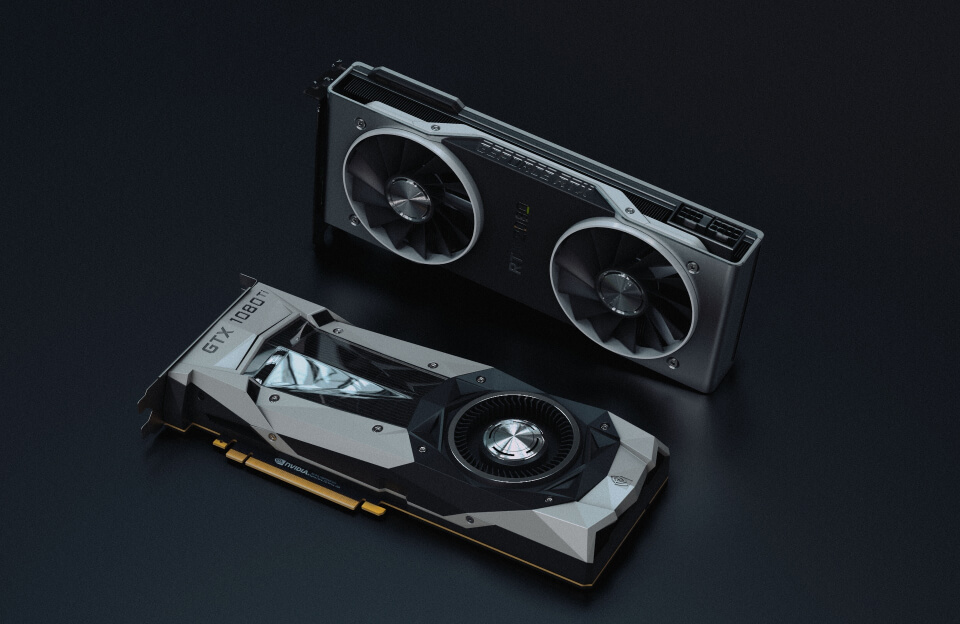
When you’re looking to boost your gaming experience, the right hardware upgrades can make a world of difference. From the heart of your system, the CPU, to the visual powerhouse, the GPU, each component plays a pivotal role in delivering smooth gameplay, higher frame rates, and immersive graphics. In this guide, we’ll focus on the upgrades that truly matter most for a gaming PC, ensuring you get the best performance without breaking the bank.
Gaming PC Hardware Upgrades: CPU Choices
The central processing unit (CPU) is the brain of your computer, handling everything from game logic to background tasks. A powerful CPU ensures that your games run smoothly, especially those that are CPU‑intensive, such as strategy or simulation titles. When selecting a CPU, consider the following:
- Core Count and Threading: Modern games benefit from 6–8 cores and 12–16 threads. More cores allow better multitasking and future‑proofing.
- Clock Speed: Higher base and boost clocks translate to faster frame rendering. Look for CPUs with boost speeds above 4.0 GHz.
- Compatibility: Ensure your motherboard’s socket and chipset support the chosen CPU. For example, Intel’s LGA 1200 or AMD’s AM4 sockets are common for mid‑range builds.
- Thermal Design Power (TDP): A lower TDP can reduce power consumption and heat output, easing cooling requirements.
For detailed technical specifications, the CPU Wikipedia page provides an excellent overview of processor architecture and performance metrics.
Gaming PC Hardware Upgrades: Graphics Card (GPU)
The GPU is arguably the most critical component for gaming. It renders textures, shadows, and physics, directly impacting visual fidelity and frame rates. When upgrading your graphics card, keep these points in mind:
- VRAM Capacity: 6 GB is the minimum for 1080p gaming; 8–12 GB is ideal for 1440p or 4K resolutions.
- Ray Tracing and DLSS: Modern GPUs support real‑time ray tracing and AI‑based upscaling, enhancing realism without a massive performance hit.
- Power Requirements: High‑end GPUs can draw 300 W or more. Verify that your power supply unit (PSU) can handle the load.
- Driver Support: Choose GPUs from manufacturers with robust driver updates, such as NVIDIA or AMD.
For a comprehensive look at GPU technology, visit the Graphics Processing Unit Wikipedia page.
Gaming PC Hardware Upgrades: Memory (RAM)
Random Access Memory (RAM) stores data that the CPU needs quick access to. While many gamers overlook RAM, insufficient memory can bottleneck performance, especially in open‑world or memory‑heavy titles. Here’s what to consider:
- Capacity: 16 GB is the sweet spot for most modern games; 32 GB is recommended for future‑proofing and content creation.
- Speed: DDR4 modules at 3200 MHz or higher provide better bandwidth, reducing load times.
- Dual‑Channel Configuration: Installing RAM in matched pairs doubles the effective bandwidth.
- Latency: Lower CAS latency (CL) values improve performance, though the difference is often marginal compared to speed.
For more on how RAM works, the Random‑Access Memory Wikipedia page offers a clear explanation.
Gaming PC Hardware Upgrades: Storage (SSD)
Solid State Drives (SSDs) have revolutionized game loading times and overall system responsiveness. Upgrading from a traditional hard drive to an SSD can shave minutes off load times and improve texture streaming. Key considerations include:
- Form Factor: 2.5‑inch SATA SSDs are inexpensive, while NVMe M.2 drives offer the fastest speeds.
- Capacity: 500 GB is sufficient for a core library; 1 TB or more is ideal for a large collection.
- Read/Write Speeds: NVMe SSDs can reach 3500 MB/s read and 3000 MB/s write speeds, far surpassing SATA SSDs.
- Reliability: Look for drives with high TBW (terabytes written) ratings and good warranty terms.
Learn more about SSD technology on the SSD Wikipedia page.
Gaming PC Hardware Upgrades: Cooling and Power Supply
Even the best CPU and GPU can underperform if your system overheats or lacks sufficient power. Proper cooling and a reliable PSU are essential for stability and longevity.
- Cooling: Air coolers with large heatsinks and fans are cost‑effective, while liquid cooling solutions (AIO) offer quieter operation and higher headroom for overclocking. The Computer Cooling Wikipedia page explains the differences.
- Power Supply Unit (PSU): Choose a PSU with at least 80 Plus Gold certification for efficiency. For high‑end GPUs, a 650 W or 750 W PSU is recommended. The Power Supply Unit Wikipedia page details PSU specifications.
- Cable Management: Good airflow is aided by tidy cables, which also improve heat dissipation.
- Noise Levels: Consider fan speed curves and noise ratings if you prefer a quiet build.
Conclusion and Call to Action
When planning your Gaming PC Hardware Upgrades, prioritize the CPU, GPU, and SSD first, as these components deliver the most noticeable performance gains. Follow up with sufficient RAM, a reliable PSU, and effective cooling to ensure your system runs smoothly and stays stable under load. By focusing on these key upgrades, you’ll experience higher frame rates, sharper visuals, and a more responsive gaming experience.
Ready to elevate your gaming rig? Start researching the best components for your budget and build a system that’s ready for the next generation of games. Explore top GPUs now and take the first step toward a faster, more immersive gaming experience.
Frequently Asked Questions
Q1. What is the most important component to upgrade first for gaming performance?
For most gamers, the GPU delivers the biggest visual impact, especially at higher resolutions. However, if you’re playing CPU‑heavy titles or multitasking, a modern CPU can also provide noticeable gains. In practice, start with the GPU for the most immediate boost, then consider a CPU upgrade if you hit bottlenecks.
Q2. How much RAM do I need for modern games?
Sixteen gigabytes is the sweet spot for most current titles and allows room for background applications. If you plan to stream, edit video, or run memory‑intensive mods, 32 GB gives you future‑proofing. Always pair RAM in matched dual‑channel sets for optimal bandwidth.
Q3. Should I choose an NVMe SSD over a SATA SSD?
NVMe drives offer significantly faster read/write speeds, reducing load times and improving texture streaming. For a budget build, a SATA SSD still provides a noticeable jump over a hard drive. If you want the best performance and can afford it, NVMe is the recommended choice.
Q4. What cooling solution is best for a mid‑range build?
High‑quality air coolers with large heatsinks and 120‑mm fans strike a good balance between cost, noise, and performance. If you plan to overclock or want quieter operation, a 240‑mm AIO liquid cooler is a solid option. Ensure your case has adequate airflow to support either choice.
Q5. How do I ensure my PSU can handle a new GPU?
Check the GPU’s TDP and add a safety margin of 20–30 %. For most modern GPUs, a 650‑W or 750‑W PSU with 80 Plus Gold certification is sufficient. Verify that the PSU has the required PCIe power connectors and sufficient amperage on the 12‑V rail.
