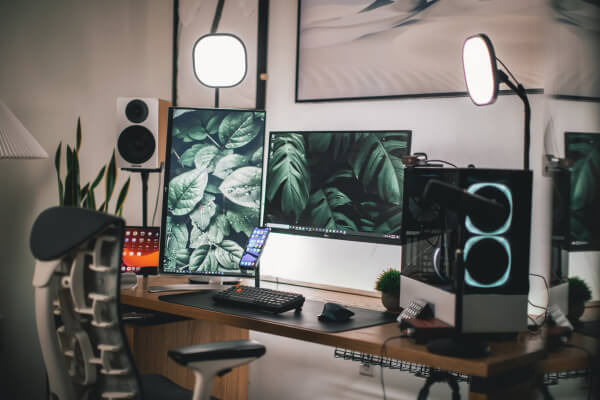
If you’re a budget builder looking to assemble a Custom Gaming PC that delivers solid performance without breaking the bank, this guide will walk you through the essential components, cost‑saving strategies, and performance benchmarks to help you make informed decisions. By focusing on the right balance of price and power, you can create a machine that feels premium while staying within a modest budget.
Custom Gaming PC: Define Your Budget and Goals
Before you even pick a part, set a clear budget and list your priorities. Are you targeting 1080p gaming, or do you want to dip into 1440p? Do you plan to stream or record gameplay? Answering these questions narrows the component choices and prevents overspending on features you won’t use.
- Set a hard cap: Decide on a maximum spend—$600, $800, or $1,000—and stick to it.
- Identify must‑haves: 1080p gaming, 60 fps, or a specific game title can dictate GPU and CPU choices.
- Plan for future upgrades: Allocate a portion of your budget for a future GPU or CPU upgrade to extend the life of your build.
Custom Gaming PC: Core Components
The heart of any gaming rig is the CPU, GPU, and motherboard. These three components determine the baseline performance and compatibility.
CPU: The Brain of Your Build
For a budget build, a mid‑range processor like the Intel Core i5‑10400F or the AMD Ryzen 5 5600X offers excellent performance per dollar. Both CPUs provide six cores and twelve threads, which is more than enough for modern titles and light multitasking.
GPU: The Visual Powerhouse
Graphics cards are the most expensive component, but you can still find great value. The NVIDIA GeForce RTX 3060 or the AMD Radeon RX 6600 XT deliver 1080p and decent 1440p performance at a fraction of the price of flagship models. Check the GPU Wikipedia page for technical details and compare benchmarks.
Motherboard: The Backbone
Choose a motherboard that supports your CPU socket and offers the features you need. For Intel builds, a B460 or B560 chipset board is sufficient, while AMD users can opt for a B550 board. Look for at least one M.2 slot for SSDs and a decent VRM for future overclocking.
Custom Gaming PC: Memory, Storage, and Cooling
RAM, storage, and cooling are often overlooked but can dramatically affect performance and longevity.
RAM: Speed and Capacity
8 GB is the bare minimum for gaming today, but 16 GB is the sweet spot for most titles and future‑proofing. Aim for a dual‑channel kit (e.g., 2×8 GB) with a speed of 3200 MHz or higher. This setup balances cost and performance without bottlenecking the CPU.
Storage: SSD vs. HDD
Install your operating system and most played games on an NVMe SSD for lightning‑fast load times. A 500 GB or 1 TB SSD is ideal for a budget build. Add a secondary 1 TB HDD for bulk storage if you need more space for media or less‑played titles.
Cooling: Keep the Heat in Check
Stock coolers that come with many CPUs are adequate for moderate workloads, but consider an aftermarket air cooler if you plan to overclock or want lower noise levels. A 120 mm fan or a small 140 mm cooler can provide better airflow without a hefty price tag.
Custom Gaming PC: Power Supply, Case, and Future‑Proofing
Power delivery and case selection are critical for stability and upgrade potential.
Power Supply: Reliability Matters
Choose a reputable brand with at least 80 PLUS Bronze certification. For a mid‑range GPU, a 550 W or 650 W PSU is sufficient. Avoid the cheapest options; a solid PSU protects your components and saves money in the long run.
Case: Space, Airflow, and Aesthetics
Mid‑tower cases offer ample room for future upgrades and better airflow. Look for cases with mesh front panels and at least two fans. A case with a tempered glass side panel can showcase your build while keeping dust out.
Future‑Proofing: Planning Ahead
Even on a tight budget, you can future‑proof by selecting a motherboard with extra PCIe slots, a PSU with enough headroom, and a case that supports larger GPUs. This approach reduces the need for a full rebuild when you upgrade components later.
Custom Gaming PC: Building Tips and Final Checklist
Follow these practical steps to ensure a smooth build and optimal performance.
- Read the manuals: Each component comes with a guide—read them before you start.
- Static protection: Use an anti‑static wrist strap or work on a non‑conductive surface.
- Cable management: Tidy cables improve airflow and make future upgrades easier.
- BIOS updates: Update the motherboard BIOS to the latest version for better compatibility.
- Benchmark and tweak: After installation, run a benchmark (e.g., 3DMark) and adjust settings for the best balance of performance and temperature.
Ready to build your Custom Gaming PC? Start by choosing the right components, stick to your budget, and enjoy the satisfaction of a machine that feels premium without the premium price tag. Click here to shop for the best deals on CPUs, GPUs, and more.
Frequently Asked Questions
Q1. What is the minimum budget for a solid 1080p gaming PC?
A solid 1080p gaming PC can be built for as low as $600 to $800. This range allows you to include a capable CPU, a mid‑range GPU, 16GB of RAM, and an SSD. You’ll still get smooth gameplay at 1080p with 60fps in most titles. If you’re willing to stretch to $900, you can upgrade the GPU for better 1440p performance.
Q2. Which CPU offers the best value for budget builds?
The Intel Core i5‑10400F and AMD Ryzen 5 5600X are top picks for value. Both provide six cores and twelve threads, which is more than enough for modern games and light multitasking. They pair well with mid‑range GPUs and keep power consumption low. Choosing either gives you a solid foundation for future upgrades.
Q3. How much should I allocate for a GPU?
For a budget build, set aside roughly $200 to $300 for a GPU. Options like the NVIDIA GeForce RTX 3060 or AMD Radeon RX 6600 XT fit this price point and deliver excellent 1080p performance. If you want to play at 1440p, consider a slightly higher budget or a used card. Remember to factor in the power supply’s capacity when selecting a GPU.
Q4. Is an aftermarket cooler necessary for a budget build?
Stock coolers that come with many CPUs are adequate for moderate workloads. However, an aftermarket air cooler can lower temperatures and reduce noise, especially if you plan to overclock. A 120 mm or 140 mm cooler is inexpensive and provides noticeable improvements. If you’re staying within a strict budget, the stock cooler is acceptable.
Q5. How can I future‑proof my build?
Future‑proofing starts with a motherboard that has extra PCIe slots and supports the latest standards. Choose a PSU with enough headroom—550 W to 650 W for mid‑range GPUs—and a case that accommodates larger GPUs and additional drives. Keep an eye on RAM capacity; 16GB is the sweet spot, but 32GB will extend the build’s lifespan. Planning for upgrades reduces the need for a full rebuild later.