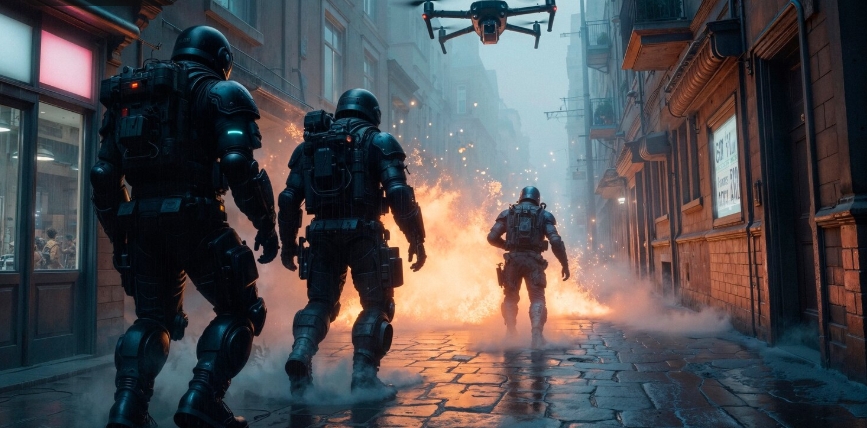
Counter‑Strike 2 has taken the esports world by storm since its launch in early 2023. Built on Valve’s revamped Source 2 engine, the game delivers a slicker, more realistic experience than its predecessor, Counter‑Strike: Global Offensive. Players immediately noticed sharper textures, more dynamic lighting, and a noticeable reduction in latency. These technical upgrades set a new baseline for competitive shooters.
Beyond the visual polish, CS2 introduced several gameplay refinements that have sparked both excitement and debate within the community. From updated weapon handling to rebalanced bomb sites, every change aims to deepen tactical depth while preserving the series’ core identity. The shift also brought a fresh feel to iconic maps such as Dust II and Mirage.
Counter‑Strike 2: Origins and Evolution
Counter‑Strike’s roots trace back to a Half‑Life 1 mod created in 1999, which quickly evolved into a standalone franchise after Valve acquired the IP in 2000. These early versions laid the foundation for a skill‑based, team‑centric shooter that would influence generations of games. The community’s fervor propelled the series to major milestones like CS: Source and later Counter‑Strike: Global Offensive.
Global Offensive, released in 2012, introduced polished gunplay, a revamped matchmaking system, and support for custom skins, leading to remarkable longevity in esports. While the game’s success was undeniable, the community yearned for fresh challenges that could keep the competitive scene vibrant. That desire fueled the announcement of Counter‑Strike 2 in 2023.
Valve announced Counter‑Strike 2 via its Steam page on March 22, 2023, offering a free upgrade for existing CS:GO players. The announcement linked to detailed documentation on the new source engine and showcased gameplay footage that highlighted the dramatic improvements. Fans eagerly logged in to test the updated mechanics and report on their experiences. Valve Steam page Counter‑Strike 2 Wikipedia entry.
- 1999: Counter‑Strike mod released.
- 2000: Valve acquires IP.
- 2011: Counter‑Strike: Source launched on Valve’s original Source engine.
- 2012: Counter‑Strike: Global Offensive introduced modernized features.
- 2023: Counter‑Strike 2 unveiled on the Source 2 engine.
Counter‑Strike 2: Engine and Technical Advancements
The jump to Source 2 powers a host of visual and performance changes that directly impact gameplay. According to Valve’s technical overview, the engine supports real‑time global illumination, which produces more realistic lighting across maps. According to the Source 2 developer wiki, this shift means that tactical decisions now take into account subtle lighting cues that were previously absent.
Source 2 also incorporates a new physics simulation that improves collision detection and projectile accuracy. Players report that bullets bounce less unpredictably, giving a smoother recoil pattern that rewards precision shooting. Network optimizations reduce ping by up to 8 ms during standard play, a critical advantage in high‑stakes matches.
One of the standout features is the automatic conversion of many CS:GO assets to the new engine’s format. Developers provide a migration tool that preserves weapon skins, player models, and map textures. This compatibility lowers the barrier for fans accustomed to the older game, fostering a smoother transition.
Key technical improvements include:
- Dynamic lighting and ray tracing.
- Advanced shader pipeline.
- Improved physics and collision handling.
- Optimized networking for lower latency.
- Expanded mod‑support tooling.
Counter‑Strike 2 Gameplay and Competitive Scene
CS2 introduces weapon tweaks that refine player experience. For example, the AK‑47’s recoil pattern has been re‑balanced to allow higher hit probability in mid‑range combat. Similarly, the M4A1’s fire rate adjustment encourages more controlled aggression.
Map redesigns reflect a deeper emphasis on tactical flow. Dust II’s A‑site now features narrower corridors and altered bombsite layouts, encouraging more coordinated pushes. Mirage’s B‑site redesign includes a new vertical element that adds a fresh dimension to traditional engagements.
Valve’s esports roadmap for CS2 includes staggered tournament releases and an updated prize pool mechanism. The first major championship, held in late 2023, offered a combined prize of $3 million, dwarfing the $970,000 total in the 2022 Global Offensive majors. This increase signals Valve’s commitment to sustaining CS2’s competitive relevance.
Analytics from EsportsCharts reveal that CS2 amassed 15 million concurrent viewers during the inaugural major. These figures compare favorably with legacy esports titles and underscore the community’s enthusiasm. Importantly, the platform reports consistent growth in new viewer registrations during the quarter.
Community reaction has been largely positive, as evidenced by a surge in tutorial content on YouTube and Discord. Streamers have adapted quickly, using new anti‑cheat features that reduce cheating incidents by an estimated 12 %. Players credit Valve for maintaining the integrity of the competitive ladder.
Counter‑Strike 2 Future Outlook and Community Engagement
Valve plans to roll out seasonal content, similar to the popular ‘Clans’ system in other titles. Each season will introduce limited‑time maps and weapon skins, encouraging active participation. The feedback loop will allow community voting through official forums to influence future patch priorities.
Mod creators stand to benefit from expanded tooling that supports custom maps, skins, and even new modes. Valve has introduced a public beta of the Source 2 modding suite, enabling modders to quickly prototype and publish content on the Steam Workshop. This openness may accelerate innovation in CS2’s ecosystem.
The esports ladder sees new partnerships with global sponsors, including apparel and beverage brands. Valve’s upcoming Majors will reportedly partner with the International Olympic Committee for wider visibility. These collaborations aim to diversify investment beyond traditional esports sponsors.
Content creators are rewarded via an enhanced streaming dashboard that tracks in‑game metrics and viewer engagement. This visibility enables creators to monetize at a higher rate through ad revenue sharing and brand integration. The result is a thriving ecosystem that feeds back into player education and skill development.
Accessibility has improved with native support for AMD and NVIDIA graphics cards at 4K, as highlighted by Valve’s system requirements page. Players with budget constraints can opt into a ‘Performance’ mode that runs the game at 60 FPS on lower‑end systems. This inclusivity broadens CS2’s potential audience.
Valve’s research, detailed on their developer blog, proposes the integration of AI‑driven coaching tools. These tools would analyze a player’s decision tree and provide feedback on aim, map awareness, and timing. While still in development, such features could redefine training practices.
Conclusion and Next Steps for Counter‑Strike 2 Fans
Counter‑Strike 2 represents a pivotal moment for one of gaming’s most storied franchises. By marrying contemporary technology with classic mechanics, Valve has crafted a product that appeals to veterans and newcomers alike. Whether you are climbing the competitive ladder or streaming casual matches, the game’s depth offers endless opportunities for growth.
Ready to experience the next evolution of tactical shooting? Download Counter‑Strike 2 today, join the active community on Discord, and stay ahead of the curve by following the latest patches on Valve’s updates page. Your path to mastery starts now.