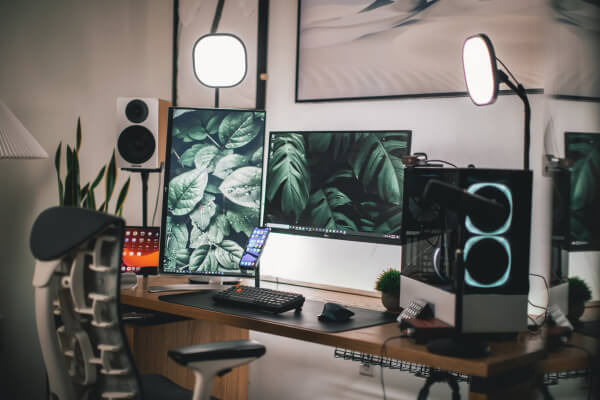
Building a high‑performance rig without draining your wallet is a challenge that many gamers face. A cost‑focused custom gaming PC build strategy guides you to prioritize performance‑critical parts while cutting unnecessary expenses. Whether you’re a student on a tight budget, a freelance creator, or simply a savvy shopper, understanding where to invest and where to economize can make the difference between a machine that stalls at 1080p and one that powers through modern titles at 1440p. This guide walks you through the philosophy, component selection, and practical tips that keep your build both powerful and affordable.
Understanding the Cost‑Focused Philosophy
The first step in any budget‑oriented build is to define the performance ceiling you truly need. Many gamers over‑specify components based on marketing hype rather than actual gameplay requirements. Focus on the resolution and frame‑rate you aim to achieve; a 1080p, 60‑70 fps target often requires far less horsepower than a 4K, 144 fps vision. By anchoring your goals, you can allocate funds strategically, ensuring each dollar contributes directly to the gaming experience you desire.
Key Components and Where to Save
Every custom gaming PC hinges on five core components: CPU, GPU, RAM, storage, and motherboard. Below is a concise list that highlights where you can save without sacrificing core performance:
- CPU: Choose a recent generation mid‑range processor, such as the AMD Ryzen 5 5600X or Intel Core i5‑12400F. These CPUs deliver excellent gaming ratios while costing a fraction of high‑end models.
- GPU: Opt for a last‑generation graphics card that still meets your resolution targets. For 1080p, the NVIDIA GeForce RTX 3060 or AMD Radeon RX 6600 XT provide strong frame‑rates at a discount compared to newer releases.
- RAM: 16 GB of DDR4‑3200 is the sweet spot for most titles. Avoid the allure of 32 GB unless you also edit video or run virtual machines.
- Storage: Pair a 500 GB NVMe SSD for the operating system and key games with a larger 1–2 TB SATA HDD for bulk storage. This hybrid approach balances speed and capacity cost‑effectively.
- Motherboard: A B550 (AMD) or B660 (Intel) board offers essential features without the premium of X‑series chips. Look for models with at least two M.2 slots and USB‑3.2 support.
Remember, peripherals such as monitors, keyboards, and mice are often overlooked in budgeting. Reuse existing accessories where possible, or hunt for reputable refurbished options.
Optimizing Performance Without Breaking the Bank
Even with cost‑focused parts, you can squeeze extra performance through smart configuration:
- Enable XMP/DOCP: Activating the memory profile in BIOS unlocks the advertised RAM speed, delivering a modest boost in bandwidth.
- Fine‑tune graphics settings: Use in‑game presets that balance visual fidelity with frame‑rate. Settings like shadow resolution, ambient occlusion, and anti‑aliasing often have a high performance cost for minimal visual gain.
- Keep drivers current: Updated GPU drivers can improve efficiency by up to 10 % in some titles, according to Graphics processing unit development cycles.
- Utilize game-specific optimization tools: Software such as NVIDIA GeForce Experience or AMD Radeon Software offers automatic setting adjustments based on your hardware profile.
Thermal management also plays a subtle role. An effective air‑cooling solution (e.g., a quality aftermarket CPU cooler) maintains higher boost clocks, especially under prolonged sessions.
Testing, Tweaking, and Future‑Proofing
After assembly, benchmark your rig with trusted suites like PCMark 10 and FPS benchmarks. Identify bottlenecks—if the CPU consistently hits 100 % while GPU usage lags, consider a modest CPU upgrade later. Conversely, if the GPU is the limiting factor, plan for a future swap when prices drop.
Future‑proofing doesn’t require overspending now. Choose a power supply with a modest headroom (e.g., 650 W 80+ Gold) and a case that supports additional drive bays and larger coolers. This foresight lets you upgrade the GPU or add more storage without a full rebuild.
Finally, stay informed through reputable resources. The Tom’s Hardware database provides real‑world pricing trends, while the National Institute of Standards and Technology offers guidelines on energy efficiency for consumer electronics.
Conclusion
Adopting a cost‑focused custom gaming PC build strategy means you’re not merely cutting costs; you’re allocating each dollar where it matters most—performance, reliability, and scalability. By defining realistic goals, selecting mid‑range yet capable components, and applying performance‑tuning tricks, you can enjoy modern gaming without a premium price tag. Ready to start building your budget‑friendly powerhouse? Explore component deals today and turn your cost‑focused vision into a high‑octane gaming rig!
Frequently Asked Questions
Q1. What defines a cost‑focused custom gaming PC build?
A cost‑focused custom gaming PC build prioritizes performance‑critical components while deliberately limiting spend on non‑essential parts. It starts with defining the target resolution and frame‑rate, then allocating budget to the CPU, GPU, RAM, storage, and motherboard that directly affect those goals. The philosophy avoids over‑specifying and aims for the best price‑to‑performance ratio.
Q2. Which CPU offers the best performance per dollar for a budget build?
For most 1080p gaming rigs, the AMD Ryzen 5 5600X and Intel Core i5‑12400F provide excellent performance per dollar. Both deliver strong single‑core speeds needed for modern titles and are priced well below high‑end alternatives. Choosing one of these mid‑range CPUs lets you invest the remaining budget in a capable GPU.
Q3. Can I use a used GPU without risking reliability?
Buying a reputable used GPU can be a safe way to stretch your budget, especially for last‑generation cards like the RTX 3060 or RX 6600 XT. Check for warranty transfer, assess physical condition, and verify that the card has not been heavily mined or overclocked. Purchasing from trusted sellers or platforms with return policies adds an extra layer of protection.
Q4. How important is RAM speed versus capacity in a budget rig?
For gaming, 16 GB of DDR4‑3200 is generally sufficient; it balances capacity and speed without unnecessary cost. Faster RAM (e.g., DDR4‑3600) can provide a modest boost, but the performance gain is often less noticeable than a better GPU. Prioritize reaching 16 GB first, then consider higher frequencies if you have extra budget.
Q5. What are the most effective ways to future‑proof a budget gaming PC?
Future‑proofing on a budget means selecting a power supply with some headroom (around 650 W 80+ Gold) and a case that supports larger coolers and additional drives. A motherboard with extra M.2 slots and USB‑3.2 ports also helps accommodate future upgrades. These choices allow you to swap in a more powerful GPU or add storage without a complete rebuild.