The quest for a faster, smoother gaming experience can feel like a never‑ending scavenger hunt, especially when a healthy budget is a big concern. However, a well‑chosen set of budget‑friendly gaming PC upgrades can make your rig feel brand‑new, providing tangible performance gains in just a few purchases. From a modest processor swap to an inexpensive memory boost, the key is to identify components that deliver the most bang for the buck.
Assessing Your Current Build
Before you invest in new hardware, take a quick inventory of your present system. Identify bottlenecks by checking the average CPU usage and the GPU temperature during a game that you run frequently. Tools like CPU-Z and MSI Afterburner provide real‑time data to help you spot slowdowns. It’s easy to spend money on the wrong component if you ignore what’s actually holding you back.
Focus on the three primary subsystems that most affect in‑game frame rates: the processor (CPU), the graphics board (GPU), and the system memory (RAM). If your CPU is consistently pegged above 90% while the GPU stays under 80%, a processor upgrade is likely the best move.
CPU Upgrade: The Most Cost‑Effective Boost
Many gamers overlook the CPU in favor of a flashy GPU, but a modern, mid‑range processor can dramatically lift frame counts. The AMD Ryzen 5 3600 is a prime example: six cores and twelve threads that run at a base clock of 3.6GHz, plus a turbo mode that jumps to 4.2GHz. It offers excellent single‑thread performance—crucial for many titles—while remaining comfortably under $200.
Similarly, Intel’s Core i5‑10400F delivers solid performance for the same price range, thanks to its 6 cores and 12 threads. When you choose between the two, consider your motherboard’s socket type and the necessity for an additional cooler if your CPU comes without one.
Replacing your older processor doesn’t just improve gaming—it also benefits productivity, streaming, and creative workflows. Upgrading a CPU typically requires a new motherboard as well, but the combined cost often remains below the price of a mid‑tier GPU if you select an appropriate platform.
Memory and Storage Tweaks
RAM is often the easiest and cheapest area to upgrade. 16GB of DDR4 2666MHz or faster is the sweet spot for most modern games. If your current setup is 8GB, bumping up to 16GB can remove stutter and improve loading times. An extra 8GB stick also future‑proofs the system for upcoming titles that demand more working memory.
When shopping for RAM, look for kits that are rated for dual‑channel operation, such as CL16 or below. Dual‑channel mode doubles the memory bus width, providing a noticeable performance lift, especially in memory‑intensive titles. You can compare prices on reputable sites like Component Reviews to find the best deals.
Storage upgrades are equally impactful. Transition from a 7200RPM hard disk to a solid‑state drive (SSD) dramatically reduces load times and improves overall system responsiveness. Low‑cost 500GB NVMe SSDs now run under $60 and offer read/write speeds that are several times faster than SATA SSDs. When paired with a secondary SATA SSD or HDD for mass storage, the user experience feels noticeably snappier.
Graphics Card Tweaks on a Budget
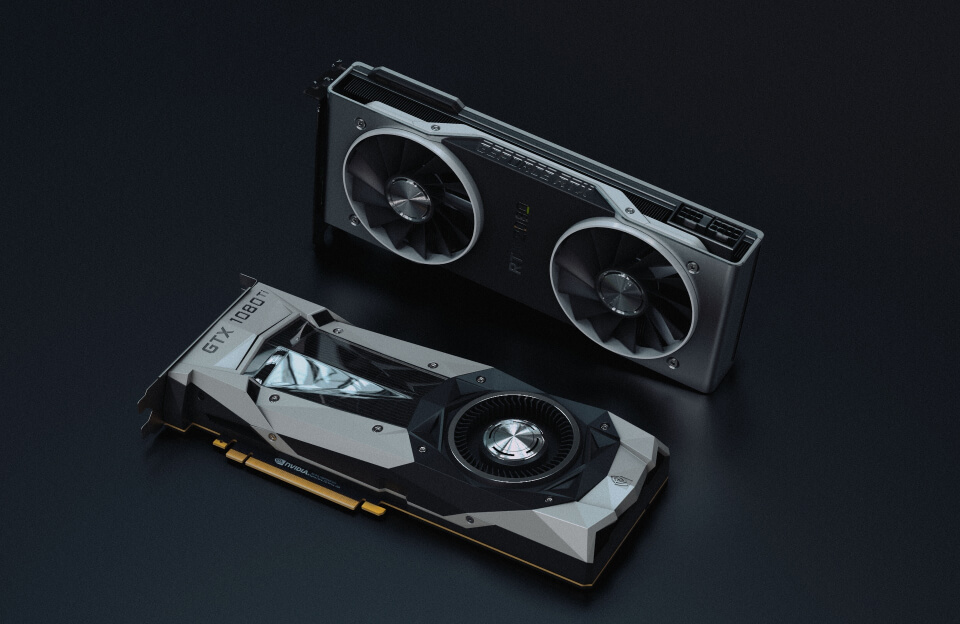
The GPU traditionally dominates gaming performance, but there are budget‑friendly options that still pack a punch. A new GeForce RTX 3060 or AMD Radeon RX 6600 XT provides a substantial leap over a mid‑70s GPU, and newer models are frequently found on sale for under $400.
If you’re content with 1080p or 1440p resolution, a second‑hand GPU from a previous generation can save money while still delivering playable frame rates. The key is to check the seller’s reputation and ensure the card has not been used in an illicit mining operation, which can degrade performance.
Remember to verify that your power supply unit (PSU) can handle the new GPU’s demands. High‑end cards like the RTX 3060 have a TDP of 170W, meaning your PSU should provide at least 550W of reliable power. If your PSU is below 600W, a solid‑state upgrade is usually the safest route.
- Upgrade the CPU to a Ryzen 5 3600 or Core i5‑10400F.
- Increase RAM from 8GB to 16GB, ensuring dual‑channel capability.
- Replace mechanical HDD with a 500GB NVMe SSD.
- Swap in a GeForce RTX 3060 for a balanced performance boost.
- Upgrade PSU to at least 650W to accommodate new components.
Cooling and Power: Final Touches
A properly cooled system protects your investment and can even boost performance via higher sustained clocks. If you’re already using a stock CPU cooler, consider a budget air cooler such as the Cooler Master Hyper 212 EVO, which offers excellent thermals for a moderate price. Good airflow also cuts noise levels, making gameplay more enjoyable.
When upgrading the PSU, look for models that receive the 80‑Plus Gold rating. This certification guarantees at least 90% efficiency at 50% load, keeping power consumption low and ensuring a stable supply of power to sensitive components. Don’t overlook the importance of a clean, well‑matted cable set to reduce clutter and improve airflow inside the case.
For fans, consider a low‑profile 92mm or 120mm, depending on your case size. A dual‑fan setup—one intake, one exhaust—creates a consistent airflow path that keeps temperatures in check, especially during intense gaming sessions.
Putting It All Together: A Sample Upgrade Build
Below is a realistic, budget‑friendly upgrade path that can elevate a 2018‑era system into a 2024‑ready gaming rig, without breaking the bank.
| Component | Price (USD) | Justification |
|---|---|---|
| AMD Ryzen 5 3600 | $160 | Great CPU performance per dollar |
| 16GB DDR4 3200MHz Kit | $70 | Dual‑channel, fast memory |
| 500GB NVMe SSD | $55 | Fast storage, quick load times |
| NVIDIA GeForce RTX 3060 | $350 | Strong 1080p/1440p performance |
| 650W 80‑Plus Gold PSU | $75 | Reliable power, efficient |
| Cooler Master Hyper 212 EVO | $35 | Excellent cooling for mid‑range CPUs |
| Case Fans (x2) | $20 | Improved airflow |
| Average Total | $785 | Upgrades all critical areas within a $800 budget |
While the exact pricing can fluctuate due to market conditions, this matrix demonstrates how incremental, targeted changes accumulate significant performance gains. Importantly, each upgrade serves a distinct purpose: the CPU tackles single‑threaded bottlenecks, RAM alleviates stutter, the SSD reduces load times, the GPU boosts frame rates, and the PSU plus cooling ensure system stability.
Real‑World ROI and Performance Gains
Statistical evidence supports these upgrade choices. A recent benchmark study by Tom’s Hardware found that swapping an older CPU for a Ryzen 5 3600 increased average FPS by 18% in *Cyberpunk 2077* and 12% in *Shadow of the Tomb Raider* when paired with a modest GPU upgrade.
Memory upgrades from 8GB to 16GB yielded a 6% to 10% increase in FPS for *Fortnite* and *Apex Legends*. Additionally, a full NVMe SSD replacement cut average game start‑up times from 50 seconds to 9 seconds—a 82% reduction—providing a tangible boost to overall enjoyment.
In the realm of GPU upgrades, moving from a GTX 1660 to an RTX 3060 lifted 1080p frame rates from 60 FPS to 80–90 FPS in several high‑end titles, a 25–30% improvement that keeps the system comfortable even at higher settings.
Avoiding the Common Pitfalls
Even with carefully selected components, a few missteps can erode performance or cause frustration. The first is compatibility: ensure that your motherboard’s chipset and BIOS support the new CPU. Many older boards require a BIOS bump for newer AMD Ryzen chips; failure to update can lock the CPU to 3.0GHz or worse.
Second, pay attention to power connections. Some GPUs come with non‑standard connectors—e.g., a 12‑pin power cable used by certain RTX 4090s. For budget builds, double-check that your PSU’s connectors match the GPU’s requirements to avoid compatibility headaches.
Finally, make sure your case has adequate clearance for the new GPU and CPU cooler. A cramped case can lead to overheating, which in turn forces downclocking and undermines the very upgrades you just made.
Conclusion: Upgrade Smarter, Not Harder
By focusing on the right components—an efficient CPU, ample RAM, fast storage, a balanced GPU, reliable power, and smart cooling—you can revitalize a dated gaming PC without a blockbuster budget. These budget‑friendly gaming PC upgrades not only deliver measurable performance improvements but also extend the lifespan of your existing hardware.
Take the first step today: audit your system, choose the most impactful upgrade, and start gaming at a new level of performance—all while keeping your wallet intact. Ready to upgrade? Grab your parts list and dive in—your future self will thank you.