When you set out to build a rig that consistently delivers smooth gameplay, the phrase Best Gaming PC Components for High FPS should guide every decision. High frame rates are not just a bragging right; they reduce motion blur, improve reaction time, and make competitive titles feel more responsive. In this guide we break down the essential hardware categories, explain why each matters, and provide concrete recommendations that have been verified by reputable benchmarks and industry experts.
GPU Selection: The Heart of Best Gaming PC Components for High FPS
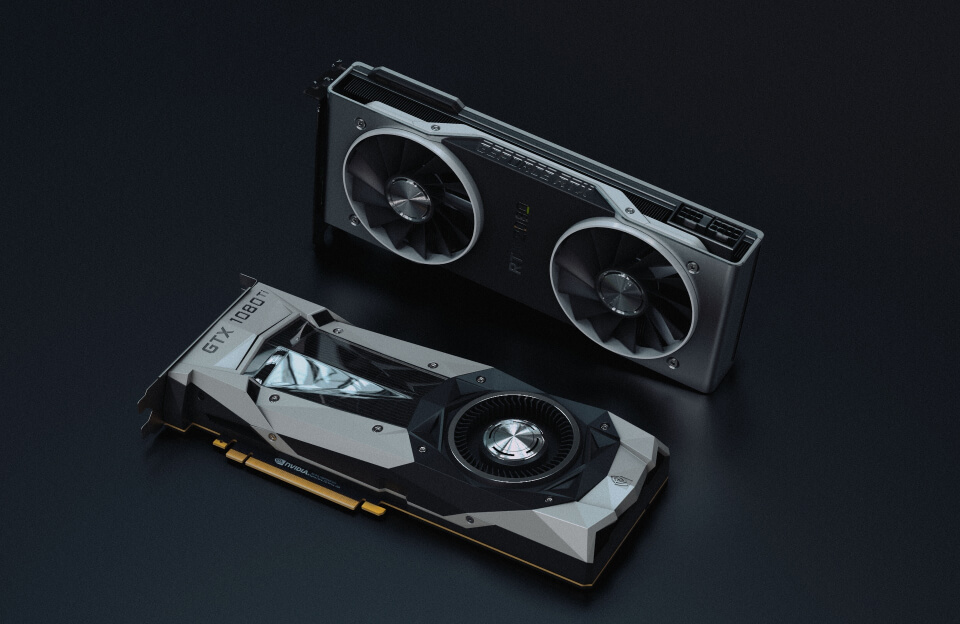
Modern graphics processing units GPU are the single biggest factor influencing frame output. For high‑FPS titles such as Valorant, Fortnite, or CS:2, you need a card that can sustain 144 fps at 1080p or push 240 fps at 1440p. Look for high core clock speeds, ample VRAM (6‑8 GB for 1080p, 10‑12 GB for higher resolutions), and architectures with efficient ray‑tracing cores if you plan to enable them.
Current top performers include the NVIDIA GeForce RTX 4070 Ti and the AMD Radeon RX 7900 XT. Both deliver >200 fps in most esports titles while staying within a reasonable power envelope. When budgeting, the RTX 3060 Ti still caps out at 144‑fps in many games and represents solid value.
CPU Choice: Preventing Bottlenecks in Best Gaming PC Components for High FPS
The central processing unit CPU determines how quickly game logic, AI, and physics are calculated. A weak CPU can throttle even the most powerful GPU, resulting in “CPU bottleneck” symptoms such as erratic FPS spikes.
For high‑FPS builds, aim for a processor with high single‑core performance. The Intel Core i5‑13600K and AMD Ryzen 5 7600X both offer excellent per‑core speeds and are priced competitively. If you also stream or run background applications, a 6‑core/12‑thread model provides enough headroom without excessive heat.
Memory and Storage: DDR5 RAM and NVMe SSDs Powering Best Gaming PC Components for High FPS
Fast memory and storage reduce load times and keep the CPU fed with data. DDR5 modules, beginning at 5600 MT/s, give a noticeable uplift over DDR4 in memory‑intensive titles. Aim for at least 16 GB of DDR5 RAM; 32 GB future‑proofs the system for upcoming releases.
On the storage side, an NVMe SSD can deliver sequential reads exceeding 5000 MB/s, slashing level‑load times to seconds. The Samsung 980 Pro and WD Black SN850 are reliable choices that also feature low latency, which can help maintain stable frame rates in open‑world games that stream assets continuously.
Power Supply and Cooling: Supporting Best Gaming PC Components for High FPS
A quality power supply unit (PSU) ensures stable voltage under heavy load. Look for an 80 PLUS Gold certification and a capacity that exceeds the combined TDP of your GPU and CPU by at least 20 %. For the RTX 4070 Ti + i5‑13600K combo, a 750 W PSU is a safe baseline.
Effective cooling prevents thermal throttling, which directly reduces FPS. An all‑in‑one (AIO) liquid cooler for the CPU, paired with a case that supports at least two 120 mm intake fans, maintains temperatures below 70 °C under load. High‑quality thermal paste, such as Arctic MX‑4, further improves heat transfer.
Peripheral Considerations: Monitor Refresh Rate and Frame Timing for Best Gaming PC Components for High FPS
The monitor is often overlooked when discussing FPS, yet it determines how many frames you actually see. A display with a 144 Hz or 240 Hz refresh rate pairs perfectly with high‑FPS rigs, delivering ultra‑smooth motion and reduced input lag.
Variable Refresh Rate (VRR) technologies such as NVIDIA G‑Sync or AMD FreeSync synchronize the screen’s refresh cycle with the GPU’s output, eliminating tearing. When buying a monitor, also consider response time (1 ms is ideal) and panel type—IPS gives better color accuracy, while TN can be marginally faster.
Recommended Component List
- GPU: NVIDIA GeForce RTX 4070 Ti or AMD Radeon RX 7900 XT
- CPU: Intel Core i5‑13600K or AMD Ryzen 5 7600X
- RAM: 16 GB (2 × 8 GB) DDR5‑5600
- Storage: 1 TB NVMe SSD (Samsung 980 Pro)
- PSU: 750 W 80 PLUS Gold
- Cooler: 240 mm AIO liquid cooler
- Case: Mid‑tower with good airflow (e.g., Fractal Design Meshify C)
- Monitor: 27‑inch 1440p 240 Hz IPS with G‑Sync
Conclusion
Achieving the Best Gaming PC Components for High FPS means balancing raw performance with reliability and future‑proofing. By selecting a powerful GPU, a high‑clock CPU, DDR5 memory, fast NVMe storage, and pairing them with a robust PSU, efficient cooling, and a high‑refresh monitor, you create a system that consistently hits 144 fps and beyond in today’s most demanding titles.
Ready to build your high‑FPS machine? Dive deeper into each component, read detailed benchmarks, and start assembling your dream rig today. Explore more guides and join the community of gamers who refuse to settle for anything less than fluid, responsive gameplay.
Frequently Asked Questions
Q1. Which GPU offers the best high‑FPS performance for 1080p gaming?
The NVIDIA GeForce RTX 4070 Ti currently leads the market, delivering well over 200 fps in popular esports titles at 1080p. It balances raw power with reasonable power consumption and supports DLSS 3 for extra frame boosts. AMD’s Radeon RX 7900 XT is a solid alternative, especially for users who prefer AMD drivers and features.
Q2. How do I know if my CPU is bottlenecking my GPU?
A CPU bottleneck appears when frame rates plateau despite a powerful GPU, often showing low CPU utilization while the GPU is under‑utilized. Monitoring tools like MSI Afterburner or Windows Task Manager can reveal high CPU usage spikes. Upgrading to a higher‑clocked CPU such as the Intel i5‑13600K or Ryzen 5 7600X usually resolves the issue.
Q3. Is DDR5 RAM worth the upgrade for a gaming PC?
DDR5 provides higher bandwidth and lower latency compared to DDR4, which can translate to modest FPS gains in memory‑heavy titles. At 5600 MT/s and beyond, you’ll notice smoother performance in large open‑world games. For most gamers, 16 GB of DDR5 is sufficient, though 32 GB future‑proofs the build.
Q4. What wattage PSU should I choose for a high‑FPS rig?
Calculate the combined TDP of your GPU and CPU, then add at least 20 % headroom. A system with an RTX 4070 Ti and i5‑13600K typically requires around 600 W, so a 750 W 80 PLUS Gold unit ensures stability and room for future upgrades. Always select a reputable brand with good modular cabling.
Q5. Why is monitor refresh rate important for high FPS gaming?
The refresh rate determines how many frames per second the screen can display; a 144 Hz or 240 Hz panel lets you see the full output of a high‑FPS PC. Coupled with G‑Sync or FreeSync, it eliminates screen tearing and reduces input lag. Pairing a high‑refresh monitor with the right GPU maximizes the smoothness of competitive titles.