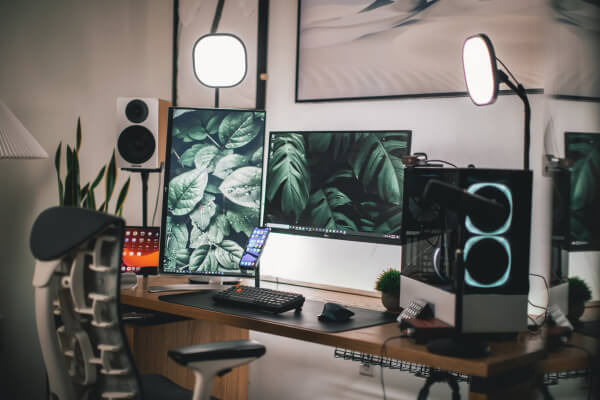
If you’re looking for a balanced system that delivers buttery‑smooth frame rates at 1440p without breaking the bank, the Best 1440p Gaming PC Build combines performance, future‑proofing, and value. In this guide we walk through each component, explain why it matters for high‑refresh‑rate gaming, and provide a clear, step‑by‑step parts list that can be assembled by beginners and seasoned builders alike.
Choosing the Right CPU
The processor sets the ceiling for how well a game can run, especially titles that are CPU‑bound or rely heavily on physics and AI. For a solid 1440p experience, you want a modern Zen 4 or Intel 13th‑gen chip that delivers strong single‑core performance while still offering enough cores for streaming or multitasking. The AMD Ryzen 5 7600X provides 6 cores and 12 threads at a 4.7 GHz boost, which is more than enough for most current AAA titles at 1440p. If you prefer Intel, the Core i5‑13600K offers a hybrid architecture with 6 performance cores and 8 efficiency cores, delivering similar performance in most benchmarks.
GPU: The Heart of 1440p Gaming
While the CPU handles game logic, the graphics card renders the images you see on screen. For the Best 1440p Gaming PC Build, the sweet spot lies around the NVIDIA GeForce RTX 4070. This card offers 12 GB of GDDR6 memory, ray‑tracing capabilities, and DLSS 3 support, which can push frame rates well above 100 fps in many titles at high settings. For players who favor AMD, the Radeon RX 7700 XT is a comparable alternative with similar VRAM and rasterization performance.
Memory, Storage, and Motherboard
High‑speed RAM and fast storage keep load times low and prevent bottlenecks. Aim for at least 16 GB of DDR5 memory running at 5600 MHz; this amount is sufficient for gaming and occasional content creation. If budget permits, 32 GB future‑proofs the system for upcoming titles that will demand more memory.
For storage, a NVMe SSD with PCIe 4.0 speeds ensures quick game installs and rapid texture streaming. A 1 TB drive such as the Samsung 980 Pro strikes a great balance between capacity and price.
The motherboard must support the chosen CPU, DDR5, and have enough PCIe lanes for the GPU. An X670‑E chipset board (for AMD) or Z790 (for Intel) provides the necessary connectivity, including USB‑4, Wi‑Fi 6E, and robust power delivery.
Cooling, Power, and Case
Effective cooling keeps components stable during long gaming sessions. An all‑in‑one (AIO) liquid cooler of 240 mm or larger is recommended for the Ryzen 5 7600X, while a high‑quality air cooler can also work if you prefer a quieter setup. The power supply unit (PSU) should be at least 650 W, 80+ Gold certified, to handle the RTX 4070’s peak draw with headroom for future upgrades.
Choosing the right case involves more than aesthetics; airflow, cable management, and internal space matter. A mid‑tower ATX case with mesh front panels, such as the Fractal Design Meshify C, provides excellent cooling potential while fitting all components comfortably.
Putting It All Together: Parts List
- CPU: AMD Ryzen 5 7600X or Intel Core i5‑13600K
- GPU: NVIDIA GeForce RTX 4070 (or AMD Radeon RX 7700 XT)
- Motherboard: X670‑E (for AMD) or Z790 (for Intel)
- Memory: 16 GB DDR5‑5600 MHz (2 × 8 GB) – upgrade to 32 GB if desired
- Storage: 1 TB NVMe PCIe 4.0 SSD (e.g., Samsung 980 Pro)
- Cooling: 240 mm AIO liquid cooler or premium air cooler
- Power Supply: 650 W 80+ Gold certified PSU
- Case: Mid‑tower ATX case with mesh front (e.g., Fractal Design Meshify C)
- Additional: Windows 11 Home, high‑refresh 1440p monitor (144 Hz+), mechanical keyboard, and gaming mouse
Performance Expectations and Benchmarks
At 1440p resolution, the RTX 4070 typically hits 100‑130 fps in demanding titles such as Cyberpunk 2077 and Red Dead Redemption 2 when DLSS or FSR is enabled. Less demanding games like Valorant or Fortnite routinely exceed 200 fps, allowing you to fully exploit a 144 Hz or 165 Hz monitor. The Ryzen 5 7600X pairs well with this GPU, delivering frame times consistently under 10 ms in most benchmarks, which translates to smooth, responsive gameplay.
Compared to a 1080p‑focused build, the Best 1440p Gaming PC Build offers roughly 30‑50 % higher pixel density and an immersive visual experience without the massive power draw of a top‑tier 4K rig. It also balances well against a pure 4K setup, which often requires a more expensive RTX 4090‑class GPU to maintain similar frame rates.
Future‑Proofing and Upgrade Paths
One of the strengths of this build is its flexibility. The X670‑E and Z790 platforms support PCIe 5.0, so when next‑generation GPUs arrive, you can upgrade without replacing the motherboard. Adding more RAM or swapping in a larger SSD is straightforward, and the PSU’s 650 W capacity leaves room for a future RTX 4080 or a dual‑GPU configuration if you ever venture into high‑end content creation.
Moreover, the DDR5 ecosystem continues to mature, offering higher frequencies and lower latencies at lower price points. Upgrading to 32 GB of DDR5‑6400 MHz memory in a few years will keep the system competitive without a full rebuild.
Conclusion
Building the Best 1440p Gaming PC Build equips you with a powerful, balanced system that delivers high frame rates, crisp visuals, and room to grow. By selecting a modern CPU, a capable RTX 4070 GPU, fast DDR5 memory, and a reliable AIO cooler, you’ll experience a smooth gaming experience on any high‑refresh 1440p monitor. Whether you’re a competitive shooter enthusiast, a fan of open‑world RPGs, or a streamer looking for solid performance, this configuration checks all the boxes.
Ready to assemble your dream rig? Click the link below to shop the full parts list and start building today!
Frequently Asked Questions
Q1. What components are essential for the best 1440p gaming PC build?
The core components include a modern CPU such as the AMD Ryzen 5 7600X or Intel i5‑13600K, a GPU like the NVIDIA RTX 4070, at least 16 GB of DDR5 RAM, a 1 TB PCIe 4.0 NVMe SSD, and a reliable 650 W 80+ Gold power supply. A quality motherboard (X670‑E or Z790) ensures compatibility and future‑proofing, while adequate cooling and a case with good airflow keep temperatures low. Together, these parts deliver high‑refresh 1440p performance with room for upgrades.
Q2. Is 16 GB of RAM enough for 1440p gaming?
Yes, 16 GB of DDR5 RAM running at 5600 MHz is sufficient for current AAA titles at 1440p and provides smooth multitasking. For future‑proofing you can upgrade to 32 GB if later games demand more memory.
Q3. Do I need a liquid cooler for the Ryzen 5 7600X?
A 240 mm AIO liquid cooler is recommended to keep the CPU temperatures low during long sessions, but a high‑end air cooler can also work if you prefer lower noise and simpler installation.
Q4. Can I upgrade to a higher‑end GPU later?
The X670‑E and Z790 motherboards support PCIe 5.0, so you can swap the RTX 4070 for an RTX 4080 or future RTX 4090 models without changing the board, provided your PSU has enough wattage.
Q5. What monitor refresh rate should I pair with this build?
A 144 Hz or higher 1440p monitor allows you to fully utilize the frame rates this system delivers, giving smooth and responsive gameplay in both competitive shooters and single‑player titles.