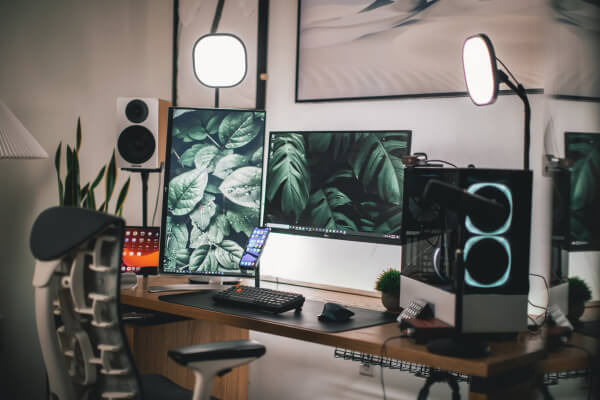
Building a Custom Gaming PC Build for 2026 can be an exciting, rewarding investment when you carefully balance performance, cost, and future‑proofing. Whether you crave a crisp 1080p experience, a mutable 1440p dream, or a bold 4K adventure, the ideal components change dramatically over the next few years. The CPU’s core count, memory speed, GPU’s Ray‑Tracing cores, power supply efficiency, and storage choices all intertwine to meet your target resolution and frame‑rate. In this guide we break down three tiered configurations and answer the most asked questions on how best to upgrade in 2026.
1080p Gaming Build
For the entry‑level enthusiast, a 1080p setup balances power and price. Prioritize a high‑clocked CPU with at least four cores, such as the AMD Ryzen 5 5600X. Pair it with a 6GB mid‑range GPU that handles modern titles at 1080p—an NVIDIA GeForce RTX 3060 or an AMD Radeon RX 6600 Super delivers excellent frame‑rates while leaving headroom for future upgrades.
Memory: 16 GB DDR4 at 3200 MHz is standard, but a 2400 MHz 8‑GB kit can keep costs low while still providing sufficient headroom for most games. Storage is a sweet spot—install the OS and heavy titles on a 500 GB NVMe SSD for blistering load times, and add a 2 TB SATA HDD for bulk game storage.
Power supply: A 600W 80‑Plus Gold unit is plenty; it can house the GPU and future CPUs while maintaining high efficiency. Cooling is straightforward—a dual‑fan tower cooler or an aftermarket I‑Cooler can keep temperatures under 70 °C, even under full load.
1440p Gaming Build
Gaming at 1440p demands a more powerful GPU. The RTX 3070 or AMD Radeon RX 6800 are ideal choices, each offering ray‑tracing support and DLSS/FSR upscaling that keep frame‑rates respectable. Pair the GPU with an AMD Ryzen 9 5900X or Intel Core i7-12700K to ensure the CPU does not bottleneck.
Memory: 32 GB DDR4 or DDR5 (if the platform supports it) will future‑proof the system and handle memory‑intensive titles, especially when Ray‑Tracing is enabled. Drive selection should still include a 1 TB NVMe SSD at a minimum; SSDs from Samsung and Western Digital continue to offer the reliability and performance needed.
Power supply: A 750W 80‑Plus Gold unit guarantees sufficient headroom for overclocking and for the power draw of the higher‑end GPU. Cooling solutions can include a reinforced tower case with multiple 140 mm fans, or a mid‑tower with a full‑size water block for more ambitious builds.
4K Gaming Build
When aiming for a pure 4K gaming experience, component selection must push the envelope. NSA or UN agencies classify 4K as the frontier for immersive gameplay; thus, a GPU like the RTX 4090 or AMD Radeon RX 7900 XTX is required. These GPUs come with a hefty Ray‑Tracing core count and the AI acceleration needed for DLSS 3 or FSR 3 upscaling, ensuring high frame‑rates at 60 fps or above.
CPU: A 16‑core Intel Core i9‑13900K or AMD Ryzen 9 7950X ensures the CPU does not underlie the VRAM limits of 4K. These processors support DDR5 memory speeds of up to 5200 MHz, allowing the system to maintain bandwidth for 4K textures.
Memory: 64 GB DDR5 is overkill for most current titles but will become essential when patch updates expand texture sizes. Store primary games on a high‑speed 2 TB NVMe SSD; an M.2 PCIe 4.0 SATA drive can carry secondary titles.
Power supply: At least a 1000W 80‑Plus Platinum PSU is recommended to accommodate the RTX 4090’s ~450 W draw, plus CPU, cooler, and peripherals. A dedicated 12 V rail is preferable for stability on heavy loads.
- CPU: i9‑13900K or Ryzen 9 7950X
- GPU: RTX 4090 or Radeon RX 7900 XTX
- RAM: 64 GB DDR5 5200 MHz
- Storage: 2 TB NVMe SSD + 4 TB HDD
- Power: 1000W 80‑Plus Platinum
- Cooling: 360 mm AIO or custom loop
Future‑Proofing and Upgrade Path
Even though the builds above cater to 2026 resolutions, technology continues to evolve. To future‑proof, buy a motherboard with a robust BIOS update support for upcoming CPU generations. Invest in a PSU with at least 20% spare capacity, allowing an extra GPU or higher‑clocked CPU without needing a new supply.
Upgrade RAM as game assets grow in complexity; 32 GB is a safe medium‑term target, while 64 GB guarantees longevity. Stick to PCIe 4.0 or PCIe 5.0 slots; the latter is becoming the norm for next‑generation GPUs and ultra‑fast SSDs.
Cooling is also a key—high‑TLDR GPUs generate upward of 350 W; an adequate radiator or liquid solution keeps temperatures under 60 °C. When in doubt, read manufacturer specs and select a cooler rated for >500 W.
Conclusion – Build What You Love
With the right mix of CPU, GPU, memory, storage, and power, a Custom Gaming PC Build for 2026 can bring any resolution to life. Each tier – 1080p, 1440p, 4K – offers a distinct balance between cost and performance, ensuring that whether you’re a casual gamer or a competitive esports enthusiast, every player finds a configuration that suits them.
Ready to start your build? Visit NVIDIA’s Gaming Hub for the latest drivers, or dive into Stanford University’s Tech Resources to understand the fundamentals of CPU architectures. Gather your parts, follow the guide, and dominate every pixel—build your dream machine today.