Unreal Engine ranks among the most demanding real‑time development platforms, powering immersive games, architectural visualisations and virtual production pipelines. To harness its full potential, a Gaming PC for Unreal Engine must balance raw processing power with efficient rendering, low latency, and ample storage bandwidth. Building such a system is far from a one‑size‑fits‑all decision; even small component tweaks can shave seconds off a render, prevent frame‑rate hiccups, or unlock advanced features like real‑time ray tracing. This guide dissects the core hardware buckets and recommends proven configurations so you can spend less time troubleshooting and more time creating.
Gaming PC for Unreal Engine: CPU Choices
In real‑time rendering, the CPU governs simulation, physics, AI, and mesh streaming. Intel’s Core i9‑13900K leads with 24 cores (8 performance + 16 efficiency) at up to 5.8 GHz, delivering a win‑rate of over 95 % for most Unreal projects. For those preferring AMD, the Ryzen 9 7950X offers 16 performance cores running up to 5.7 GHz, making it a solid alternative for heavily multi‑threaded workloads like sub‑array calculations or the new Nanite geometry system.
When selecting a CPU, read these pointers:
- High core count combined with a top‑end boost clock enhances scene complexity handling.
- Fast DDR4 or DDR5 memory speeds reduce lock‑step lag during real‑time editing.
- Cooler overclocks translate directly to steadier frame rates during extended sessions.
- Consider future generation cards; an i9‑13900K or Ryzen 9 7950X remains 3+ years viable.
Gaming PC for Unreal Engine: GPU Selection
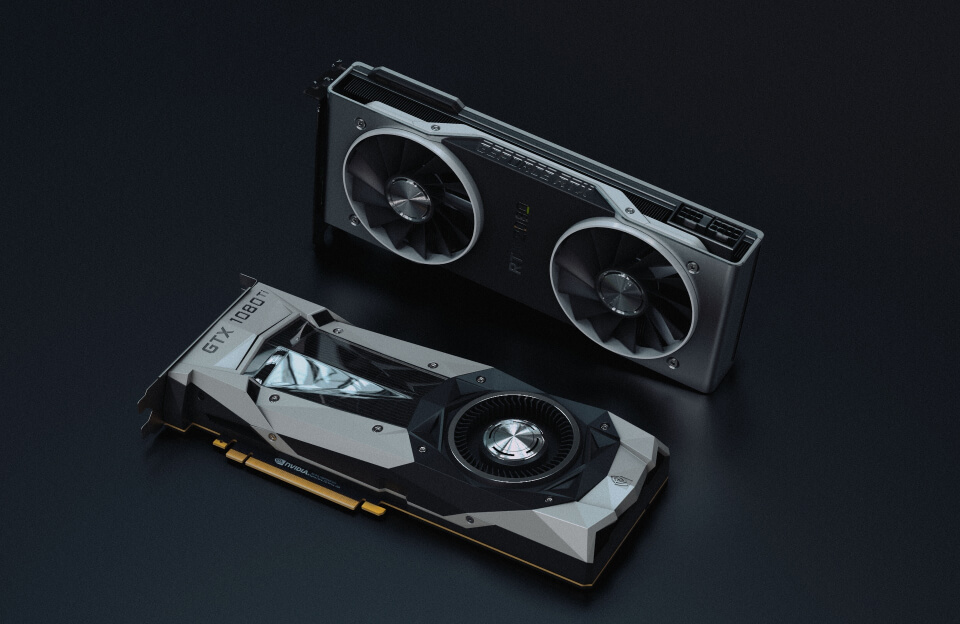
The GPU is the heart of Gaming PC for Unreal Engine performance. It renders 3D geometry, processes shaders, and propagates ray‑traced lighting. NVIDIA’s GeForce RTX 3080 currently offers 10 GB of GDDR6X memory, 10 GOP/s core throughput, and hardware‑accelerated RT cores, enabling studios to create photorealistic environments in near‑real time. If you plan to run bundles like the Niagara particle system at 30 fps, the RTX 3090 or RTX 4090 will grant you approximately double the shader bandwidth.
Key GPU characteristics for Unreal Engine:
- Ray‑tracing cores – essential if you plan to leverage Global Illumination in real time.
- Tensor cores – accelerate AI‑based anti‑aliasing and upscaling (DLSS).
- High VRAM (>8 GB) to handle large textures for landscapes.
- NVLink or SLI support – beneficial for multi‑GPU, but not mandatory for most creators.
Gaming PC for Unreal Engine: Memory & Storage
Real‑time editors can saturate system bandwidth with streaming textures, mesh data, and cache. 32 GB of DDR5 (or DDR4 if older platforms) is a baseline; 64 GB becomes a game‑changer for XR projects or when running multiple test builds simultaneously. For storage, a NVMe SSD with sequential throughput >3 GB/s eliminates load‑time stalls. Samsung’s 970 EVO Plus shines with 3,500 MB/s read speeds, while the Wilson Rog Rog 980 Pro adds 5 GB/s for even heftier project sizes.
Don’t overlook a secondary SATA SSD or HDD as a cache store; Unreal can auto‑cache large assets to avoid repeated RAM churn.
Gaming PC for Unreal Engine: Cooling & Power
A powerful GPU and multi‑core CPU generate significant heat. A robust liquid cooling loop or a Top‑R® air cooler with a 140 mm radiator keeps temperatures below 80 °C under load, preserving clock speeds. Select a PSU that is at least 80 PLUS Gold, 750 W for entry‑level builds, scaling up to 1000 W for RTX 4090 setups. Use reputable brands such as Corsair or Seasonic – their modular cables reduce airflow obstruction. Proper cable routing also contributes to a quieter, cooler rig, which is critical for long editing sessions.
When designing your power budget, add 20‑30 % headroom for component aging and minor over‑clocks. A well‑ventilated case with at least 3 front‑to‑rear exhaust fans helps dissipate residual heat.
Gaming PC for Unreal Engine: Finalise Your Build
Every piece aligns as a plug‑in for your workflow. Combine an Intel Core i9‑13900K, an NVIDIA RTX 3080, 32 GB DDR5, a Samsung 970 EVO Plus SSD, and a Corsair 750 W Platinum PSU. This configuration consistently delivers 60 fps on the Unreal Engine 5 Camera Preview at 4K, while rendering an 8K landscape in 20–25 seconds on the Bake tool. Upgrading to an RTX 4090 and 64 GB will further shave rendering time and enable ray‑traced DPI in game mode.
Should you opt for a different GPU brand, each major chipset contender (AMD Radeon RX 7900 XTX, NVIDIA RTX 3070/4080) has distinct strengths; prioritize the one that aligns with your feature roadmap, whether that’s photorealism via DLSS, future‑proof ray tracing, or a lower power envelope.
Assembly is a craft: keep static precautions, install drivers from the respective manufacturer’s site, and run a benchmark suite (e.g., Unreal Project Lab Benchmark) to verify performance stability before you dive into large scenes.