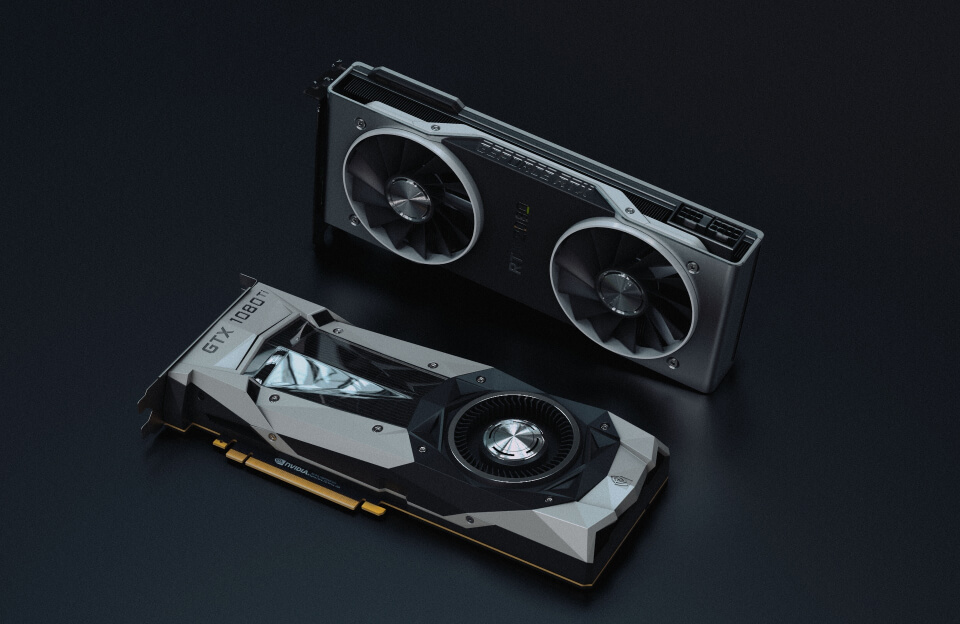
If you’re planning to upgrade your gaming rig or content creation workstation in 2026, the Future Proof GPU buying guide will help you navigate the fast‑moving landscape of graphics technology. Modern GPUs evolve quickly, and investing in a card that will remain powerful for years can save you time, money, and headaches. This guide focuses on the key factors—budget, performance, power, cooling, and future‑proofing features—so you’ll end up with a graphics card that serves you well for the next five to seven years.
Choosing a Future Proof GPU: Budget & Goals
Start by defining what you need the GPU for. Are you a gamer chasing 4K frame rates, a video editor rendering 8K footage, or a machine‑learning enthusiast working on GPU‑accelerated models? Each scenario has different performance thresholds. For most gamers and content creators, a price range of $400–$800 is reasonable for a high‑end card that can handle current games at 1440p or 4K with high settings while still being flexible enough for upcoming titles.
Allocate a portion of your budget for a dedicated power supply unit (PSU) because newer GPUs demand more power. Look for modded or semi‑modded PSUs that provide better airflow and cable management for a cleaner build. Don’t forget to reserve a few extra dollars for a new motherboard if your current one doesn’t support PCIe 4.0 or 5.0, as these slots are essential for maximum throughput with the latest GPUs.
Future Proof GPU: Power & Cooling
High‑performance GPUs generate significant heat, so cooling is critical. NVLink and SLI are fading; instead, focus on the TDP (thermal design power) rating, which indicates the power a cooling solution must dissipate. Modern cards like the RTX 4060 Ti have a TDP of 160 W, while the RTX 4090 reaches 450 W.
- Air cooling: Dual‑fan or quad‑fan designs with large heatsinks work for most builds.
- Liquid cooling: All‑in‑one (AIO) solutions are popular for higher‑end models that push 400–600 W, providing lower noise and better headroom.
- Case airflow: Ensure at least 120 mm front intake and rear exhaust for balanced ventilation.
Consult the GPU’s official specifications for the optimal cabling and power connector type. NVIDIA’s Ray‑Tracing documentation provides guidelines on recommended PSU ratings, while AMD’s RDNA architecture page lists power requirements for each generation.
Features that Future Proof a GPU
When shopping, consider features that will keep a GPU relevant as software evolves:
- Ray tracing and DLSS/HDRS: Ray tracing increases visual fidelity, and DLSS (Deep Learning Super Sampling) helps maintain frame rates. NVIDIA’s RTX 40 series and AMD’s RX 7000 series support these modes.
- VRAM capacity: At least 8 GB of GDDR6 or GDDR6X memory is essential for 4K gaming and high‑resolution video editing. More memory (12–16 GB) future‑proofs the card for upcoming titles that push VRAM usage.
- PCIe 4.0/5.0 compatibility: PCIe 5.0 offers double the bandwidth of PCIe 4.0, reducing bottlenecks in high‑performance scenarios. GPUs from the RTX 40 series and RX 7000 series are PCIe 5.0‑ready.
- Software ecosystem: Keep an eye on driver updates and platform support. NVIDIA’s GPU drivers receive regular performance patches for new games, while AMD’s Radeon Software modernizes features over time.
Read reviews and benchmark comparisons from reputable tech sites to confirm whether a GPU’s performance meets your needs. Look for metrics like frame rates at 1440p and 4K, power draw under load, and noise levels. A card that performs well in real‑world tests is more likely to remain competitive as new titles launch.
Future Proof GPU: Shopping Tips
To make an informed purchase, follow these steps:
- Compare benchmarks: Use reputable sources such as TechSpot or Tom’s Hardware for side‑by‑side performance tables.
- Check compatibility: Verify that your motherboard’s BIOS supports the newest PCIe version and that the PSU has the right connectors (8‑pin, 12‑pin).
- Timing the release: Manufacturers normally launch new GPUs in the spring and fall. Buying a few months after release gives you access to updated drivers and ensures you’re not buying an older model.
- Price‑performance ratio: Look for sales events such as Black Friday or back‑to‑school deals. Use price‑tracking tools to watch for dips in cost.
- Warranty and support: A 3‑year warranty is typical. Check the manufacturer’s return policy and confirm that driver support is long‑term.
Finally, consider second‑hand or refurbished options if the price gap is significant. However, ensure the seller is reputable and the GPU is returned covered for a limited period.
Conclusion: Invest in a Future Proof GPU Today
Choosing a GPU that keeps pace with evolving games, creative software, and AI workloads saves you from frequent upgrades. By evaluating your budget, power needs, cooling solution, and the GPU’s future‑proofing features—such as ray tracing, DLSS, ample VRAM, and PCIe 5.0 support—you’ll pick a card that grants you years of performance.
Start shopping now: NVIDIA RTX 40 Series, AMD Radeon Cards, and other 2026‑ready models will be available at best prices. Upgrade confidently and enjoy spectacular visuals without breaking the bank.