Building a gaming PC can feel like navigating a maze of components, but with the right compatibility checks, you’ll avoid costly pitfalls and achieve peak performance. This guide centers on the core of that maze: building a gaming PC that plays smoothly, stays stable, and scales with future upgrades.
Choose the Right Motherboard and Socket
The motherboard is the backbone of your system; every other component plugs into it. Check the motherboard socket to confirm it supports the CPU you plan to use. For instance, an AMD Ryzen 5 5600X requires an AM4 socket, while an Intel Core i9‑12900K demands an LGA 1700. Pairing the wrong socket with your processor will render both components unusable.
Next, verify the chipset. The chipset determines the number of PCI‑Express lanes, USB ports, and SATA connectors available. If you plan on installing a high‑end graphics card, ensure the motherboard includes an x16 PCI‑Express 4.0 or 5.0 slot for maximum bandwidth. Moreover, some chipsets – like the X570 or Z690 – support overclocking, which is critical if you intend to push your CPU and GPU to their limits.
Pairing the CPU with the GPU
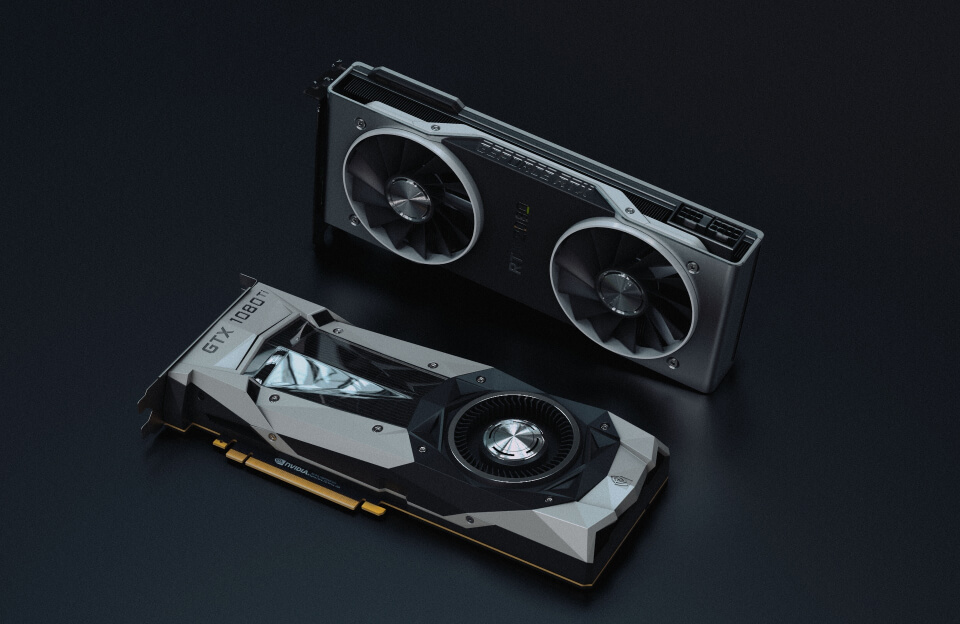
Matching your CPU and GPU is a balancing act. A bottleneck occurs when one component limits the performance of the other. Use CPUBenchmark to compare CPU scores and graphics processing units (GPUs) to find a sweet spot. For example, pairing an RTX 4060 with a Core i7‑13700K offers excellent 1440p performance without one part stalling the other.
Always consider the memory speed the GPU expects. Some modern GPUs, especially those tuned for ray tracing, benefit from higher‑speed DDR5 RAM. If your motherboard supports DDR5, ensure that the module’s CL (CAS latency) aligns with the GPU’s recommended specifications. A mismatch can lead to sub‑optimal frame times.
Power Supply and Cable Management
Your power supply unit (PSU) is more than just wattage; it’s about stability and efficiency. A 750W PSU can comfortably power a mid‑range build, but a higher‑end GPU like the NVIDIA GeForce RTX 4080 may require 850W or more. Always check the manufacturer’s TDP (thermal design power) recommendation for both CPU and GPU, then add a 20–30% buffer to accommodate future upgrades.
Choose an 80 PLUS Gold or Platinum rating to reduce voltage ripple and heat, which protects sensitive components such as the CPU cooler. Cable management freezes loose cables from pulling on connectors during case ventilation. Use braided or color‑coded cables to keep the interior tidy and airflow unimpeded.
Memory, Storage, and Cooling
RAM must match the motherboard’s supported frequency and capacity. If you’re gaming at 1440p, 16GB of DDR4 or DDR5 at 3200–3600 MHz suffices, but 32GB is ideal for future proofing or streaming. Storage blends speed and capacity: an NVMe SSD under the motherboard’s M.2 slot offers the fastest load times, whereas a 1TB SATA SSD provides ample space for game libraries.
Cooling is critical for longevity. Air cooling works for most builds, but high‑clocked CPUs often require a premium all‑in‑one liquid cooler or custom loop. Verify the cooler’s dimensions against your case; a towering cooler can occupy the motherboard slot designed for large RAM modules. If you opt for an RGB cooler, remember to align it with your power supply’s available 12‑V rail to prevent voltage drops.
Final Compatibility Checklist
- Confirm the motherboard socket matches the chosen CPU.
- Ensure the chipset supports the desired PCI‑Express lane count.
- Match the GPU’s gaming resolution to the CPU’s performance tier.
- Verify PSU wattage exceeds total TDP, plus a safety margin.
- Check RAM speed, capacity, and clearance for your cooler.
- Confirm storage type (NVMe vs. SATA) and form factor fit.
- Inspect case airflow and dimensions for all components.
- Cross‑reference driver versions for CPU, GPU, and chipset.
- Double‑check all thermal paste applications and fan orientation.
- Perform a final power‑on test without overclocking.