
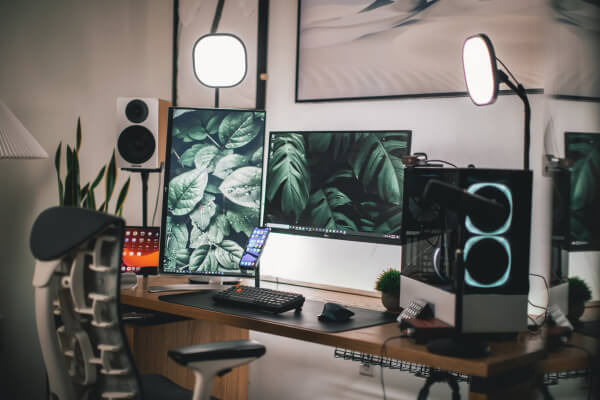
If you’re looking to achieve high‑quality gaming performance without breaking the bank, a Mid Range Gaming PC Build is the perfect solution. By selecting components that offer a smooth 1440p experience or a solid 1080p performance, you can enjoy most modern titles with high frame rates, all while staying within a reasonable budget. This guide will walk you through the essential parts, recommended specifications, budget‑friendly options, cooling solutions, and upgrade paths to maximize your gaming experience.
Choosing the Right Core: CPU & GPU Pairing
When assembling a Mid Range Gaming PC Build, the CPU and GPU are the heart of the system. A balanced pair prevents bottlenecks and delivers a consistent gaming flow.
- CPU: Look for a processor with at least 6 cores and 12 threads—examples include the Intel Core i5‑13600K or the AMD Ryzen 5 7600X. These chips provide excellent single‑core performance for FPS titles and strong multi‑core scores for streaming or content creation.
- GPU: In the mid‑range tier, the RTX 3060, AMD Radeon RX 6600 XT, or $400‑$500 tier GPUs deliver smooth 1080p/1440p gameplay with ray‑tracing support on a generous budget.
- Maintain a 1:1 CPU‑GPU ratio; pairing a high‑end GPU with a mid‑tier CPU normalizes performance and extends the build’s lifespan.
Motherboard & RAM: Winning the Battle of Compatibility
To avoid future headaches, choose a motherboard that supports your chosen CPU’s socket, has PCIe 4.0 slots for the latest GPUs, and offers robust VRMs for overclocking potential. Balanced budgets often favor B‑ or X‑series boards with decent power delivery. For instance, the MSI B660 Taiga Gaming Plus for Intel or the ASUS TUF Gaming B650-Plus for AMD offer future‑proofing and reliable BIOS updates.
Pair this with at least 16 GB of DDR4 or DDR5 RAM (3200 MHz or 3600 MHz). Gaming rigs benefit from dual‑channel configurations, so a 2‑X8 GB kit ensures smoother multitasking and lowers load times. If budget allows, 32 GB can be a good future‑proof move for creative workloads.
Storage: Speed Matters on the Mid Range
Modern games load too quickly for mechanical drives; an SSD is non‑negotiable. A 500 GB to 1 TB NVMe SSD—such as the Samsung 980 Pro or the WD Black SN750—provides lightning‑fast boot and load times. For larger libraries, add a 1‑2 TB SATA SSD or an external HDD as secondary storage.
Consider read/write speeds in your budget: 3,500 MB/s or higher for NVMe drives keeps games from stuttering during rapid texture swaps or patch loading.
Powersupply & Case: The Foundations of Stability
Before adding flashy RGB lights or a custom water loop, choose a power supply unit (PSU) that offers at least 80 Plus Gold efficiency and 650 Watts or more, depending on your GPU. Brands such as Corsair, EVGA, and Seasonic have proven expertise in delivering clean power, reducing noise and protective feedback.
For the case, mid‑range fans and good airflow are crucial. The Mid Tower form factor with mesh front panels, such as the NZXT H510 or the Phanteks Eclipse P400A, balances cable management, expansion slots, and aesthetics. Ensure the motherboard size fits—ATX, micro‑ATX, or mini‑ITX—depending on the desired flexibility.
Cooling: Keeping Performance Steady
Overheating throttles performance. Default chassis fans typically suffice for a balanced build, but adding a reliable CPU cooler—be it a high‑end air cooler like the Noctua NH‑U12S or a 240mm AIO cooler—keeps temperatures under 70 °C even during extended sessions.
Exhaust fans on the rear and top of the case, coupled with front intake fans, create a positive airflow environment. If you opt for a graphics card with a mounted cooler, ensure it does not obstruct fan curves. Many mid‑tier GPUs come with 2–3‑fan setups that are efficient yet quiet.
Upgrade Paths: Maximize Longevity without Breaking the Bank
Buying a Mid Range Gaming PC Build doesn’t mean you have to stick with one configuration forever. Anticipate future upgrades: add an extra 8 GB RAM or upgrade the SSD as titles grow larger. As GPU technology evolves, a 600‑800 USD upgrade mid‑range card will keep your system relevant for the next high‑end release cycle.
When budget allows, choosing a “future‑proof” motherboard with the latest chipset (such as B650 for AMD or B660 for Intel) ensures support for DDR5 memory and PCIe 5.0 in the next year. A higher core count CPU can also extend your life expectancy, smoothing not only games but also content creation workloads.
Final Takeaway: Get the Balance, Not the Peak
Building a mid‑range system is about achieving the highest performance for the best price. Embrace a balanced CPU‑GPU pair, invest in a solid motherboard and memory, keep storage fast, and provide good cooling—all while leaving room for future upgrades. Remember, the goal is to get 144 fps in most titles at 1080p or 1080 fps at 1440p as you enjoy the next blockbusters and esports tournaments.
