The pursuit of smoother gameplay and sharper visuals has led many enthusiasts to turn their attention to 1440p gaming. When paired with a high refresh rate, a 1440p monitor delivers a level of detail that bridges the gap between 1080p and 4K, offering a wealth of pixels without the VRAM demands of ultra‑high resolution. This article walks you through a carefully balanced build designed for 1440p high refresh gaming – from selecting the right display to choosing a GPU and optimizing the entire system for maximum frame rates and visual fidelity.
Choosing the Right Monitor
In the 1440p ecosystem, the monitor you pick controls both the clarity of your image and the smoothness of your motion. A high‑refresh 1440p screen ranges from 144 Hz to 240 Hz, and the best monitors combine a native 2560×1440 resolution with a refresh rate that matches—or exceeds—the framerates your GPU can sustain. Key specs to focus on include:
- Refresh rate: 144 Hz is a solid baseline; 165 Hz or 240 Hz can be worth the extra investment if your graphics card can push the targets.
- Panel type: IPS panels deliver wide viewing angles and accurate colors, whereas VA panels provide deeper blacks, and TN panels offer the fastest response times.
- Adaptive sync: NVIDIA G-Sync or AMD FreeSync technology reduces tearing and stuttering, especially crucial when you’re chasing high frame rates.
- …time-to-live and input lag, with a target of <10 ms for competitive play.
- … response time, typically around 1–5 ms on gaming monitors.
- … G-Sync or FreeSync compatibility based on your GPU.
For example, a recent review of the 1440p resolution shows that a 144‑Hz IPS monitor with G-Sync can maintain a responsive experience while delivering crisp detail. When you factor in NVIDIA GeForce RTX 4070 Super or an AMD Radeon RX 6700 XT, both models can sustain 144 Hz or higher at 1440p for most titles, making these pairings ideal for a high‑refresh build.
Selecting the Perfect GPU
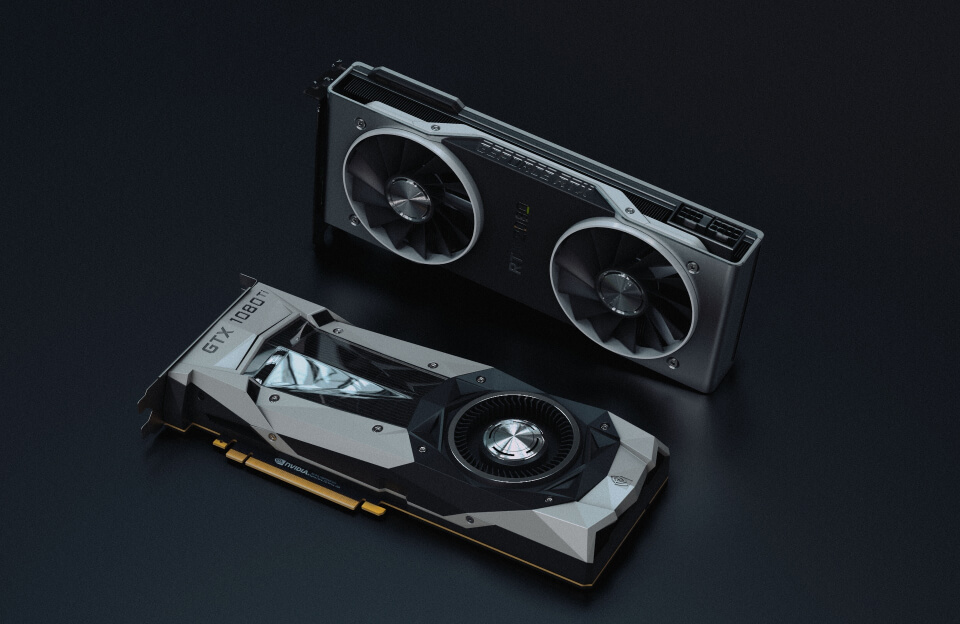
GPU selection is the linchpin for a 1440p high refresh build. With the rise of the RTX 40 series and AMD’s Radeon RX 7000 series, you have more options to hit 144–240 Hz while maintaining 60 fps or higher. Here are the core considerations:
- VRAM: A 8 GB GDDR6 or higher memory allocation ensures you can run modern titles at 1440p without sacrificing texture quality.
- CUDA or Stream Cores: These cores drive real‑time ray tracing; if you plan on enabling ray tracing, look for a GPU with a generous core count.
- DLSS or FSR: Both NVIDIA’s DLSS and AMD’s FSR technologies allow you to upscale lower resolutions internally to boost frame rates while preserving sharpness.
- …cooling solutions – A top‑tier model with a robust heatsink can prevent thermal throttling during extended sessions.
The RTX 4070 Super strikes an excellent balance: it consistently outputs 140 fps or higher on titles like Elden Ring or Cyberpunk 2077 at 1440p with 144 Hz refresh. It also supports DLSS 3 to push frame rates even further. If you prefer AMD, the Radeon RX 6800 XT or 7900 XT deliver comparable performance in most scenarios, especially when paired with FSR 2 or 3.
CPU, Motherboard, and Cooling Considerations
While the GPU often steals the spotlight for frame‑rate heavy workloads, the CPU and supporting hardware play a vital role in ensuring those frame rates translate into a smooth experience. Here’s what to aim for:
- CPU: A mid‑range to high‑end processor such as the AMD Ryzen 7 7800X3D, or NVIDIA’s equivalent in the GeForce RTX lineup, brings ample cores and high single‑thread performance, reducing bottlenecks when your GPU is pushed to its limits.
- Motherboard: Choose a board with the latest chipset (e.g., X670 for AMD or Z790 for Intel) to support PCIe 5.0 and fast SSDs, plus robust power delivery for overclocking potential.
- RAM: 16 GB of DDR5 6000 MHz is a sweet spot, but 32 GB is advisable for future‑proofing and heavy multitasking or content creation.
- Cooling: A high‑efficiency AIO (120mm or 140mm) or a high‑grade air cooler keeps thermal headroom large enough to allow sustained gaming bursts without throttling.
The synergy between these components ensures that the GPU can unlock its full potential and that the game receives maximum input efficiency. Moreover, a well‑ventilated case with a good airflow pattern mitigates any temperature spikes that could otherwise spill over into the GPU or CPU.
Assembly Tips and Performance Optimization
Building the hardware is just the first step; fine-tuning the system is where the real performance comes out. Consider these assembly and settings tweaks:
- Cable management: Proper routing reduces airflow obstruction and keeps the interior tidy, facilitating better heat dissipation.
- BIOS updates: Ensure your motherboard firmware and GPU BIOS firmware are up‑to‑date for compatibility and performance tweaks.
- Driver maintenance: Regularly update GPU drivers; most vendors provide performance packages for current esports titles.
- In‑game settings: Balance visual fidelity with frame rates: disable or lower settings like Vignette or Ambient Occlusion; enable DLSS/FSR; use G-Sync/FreeSync; adjust resolution scaling if needed.
- …thermal paste on the GPU/CPU to ensure historically low input lag.
With the right setup, you’ll notice a clear difference in motion smoothing, reduced micro‑stutter, and a perceptible sense of depth on a high‑refresh screen. Performance will vary per title; however, staying within the 144–165 Hz window across most games ensures consistent responsiveness and sharpness.
Conclusion
Constructing a 1440p high refresh gaming build is a strategic investment in visual clarity and gameplay fluidity. By selecting a monitor that balances resolution and refresh rate, pairing it with a GPU that delivers long‑term performance, and rounding out the configuration with a capable CPU, cutting‑edge cooling, and meticulous assembly, you create a PC that feels present in every match and looks stunning across all media. Your next build does not need to be an all‑out 4K endeavor; 1440p with high refresh offers the best of both worlds—crisp graphics and buttery smooth motion—without the demand on budget or VRAM.
Frequently Asked Questions
Q1. Why is 1440p considered the sweet spot for high‑refresh gaming?
1440p (2560×1440) offers more detail than 1080p without the VRAM demand of 4K. It pairs nicely with 144‑240 Hz monitors, delivering smooth motion and crisp visuals. Most modern GPUs can sustain high frame rates at this resolution, making it perfect for competitive and immersion‑heavy games.
Q2. How much VRAM do I need for a smooth 1440p high‑refresh experience?
A minimum of 8 GB GDDR6 is recommended for most titles. However, 10–12 GB provides headroom for future games, higher texture resolutions, and ray tracing workloads. GPUs like the RTX 4070 Super or Radeon RX 6800 XT fall into this sweet spot.
Q3. Is a mid‑range CPU sufficient when pushing a GPU to 144 Hz at 1440p?
Yes, if you pair a powerful GPU with a strong CPU, bottlenecks are minimized. Processors such as the Ryzen 7 7800X3D or Intel Core i7‑13700K deliver ample single‑thread and multithread performance to support high frame rates.
Q4. What cooling solution gives the best longevity for a high‑refresh build?
A 120‑ or 140‑mm AIO liquid cooler or a high‑grade air cooler with a 200‑mm fan provides consistent thermal headroom. Proper installation and clean thermals avoid throttling during long sessions, preserving performance.
Q5. Can I enable ray tracing while still hitting 144 Hz at 1440p?
With DLSS 3 (NVIDIA) or FSR 3 (AMD) you can off‑load ray tracing and use frame‑generation to keep frame rates high. This allows you to enjoy visually rich experiences without sacrificing smoothness.