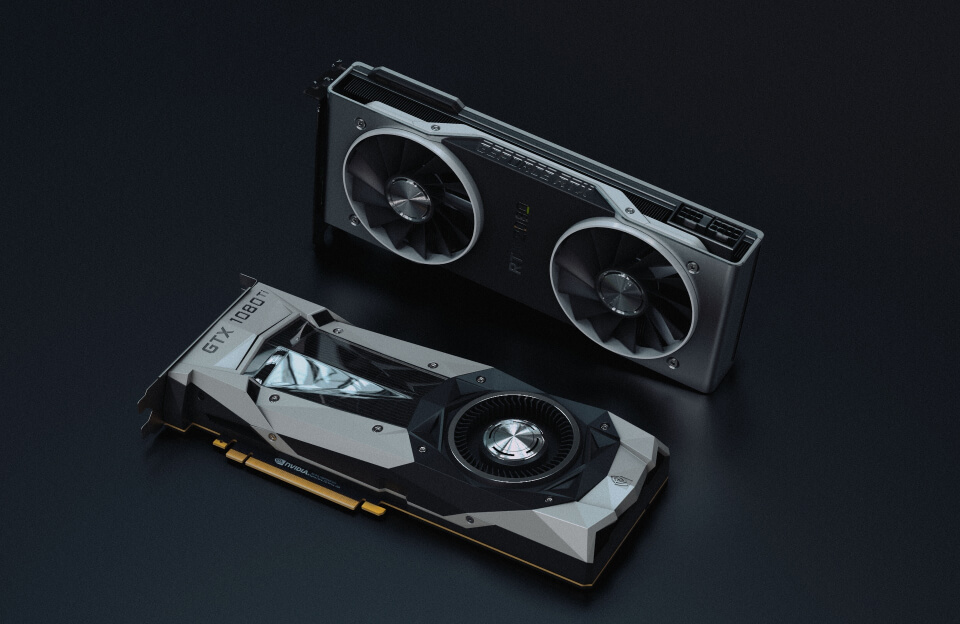
Building a high‑performance Gaming PC for Unreal Engine is more than simply stacking the latest parts. Unreal Engine 5 pushes the limits of real‑time rendering, physics simulation, and global illumination, so the system you assemble must be balanced across CPU, GPU, memory, storage and cooling. In this guide, we dissect the core components that most influence Unreal Engine performance, share benchmark data, and outline best practices for future‑proofing your rig. Whether you’re an independent game developer, a student learning 3D design, or a studio head preparing for a flagship title, the insights here will help you make informed choices and avoid costly trade‑offs.
Gaming PC for Unreal Engine: CPU Selection for Real‑Time Rendering
The heart of any Unreal Engine workstation is the processor. Real‑time terrain generation, physics calculations, and Blueprint scripts place heavy demands on CPU cores and single‑thread performance. Top choices for 2024 come from both Intel and AMD, offering high-frequency single-core speeds and substantial multithread capacity.
For Intel, the 13th‑generation Core i9‑13900K delivers 24 cores (8 performance + 16 efficiency) and a base clock above 4.5 GHz. It outperforms its predecessor in PassMark CPU Benchmarks, scoring over 48,000 points (CPU Benchmark Database). The new Raptor Lake architecture also boasts a higher IPC (instructions per cycle), translating to smoother simulation loads in Unreal Engine.
AMD’s Ryzen 9 7950X, part of the Ryzen 7000 series, offers 16 cores and 32 threads, with a base frequency of 4.5 GHz and boost up to 5.7 GHz. On real‑time gameplay benchmarks, it consistently rivals or surpasses Intel’s counterpart, particularly in scenes with heavy multithreading like foliage and particle effects. AMD’s increased cache hierarchy also reduces bandwidth stalls during large level streaming.
When choosing a CPU, consider the following:
- Base and boost clock speeds – higher is generally better for single‑thread tasks.
- Core/Thread count – more cores aid parallel workloads like massive foliage or dynamic light updates.
- Integrated memory controller bandwidth – a 3200 MHz DDR5 socket yields less latency during streaming.
- Price-to-performance – a 155 USD premium can buy an additional 1 GHz of boost clock.
Pair the CPU with a motherboard that supports PCIe 5.0 for future GPU upgrades, and don’t forget a robust VRM design to maintain stable power delivery during peak loads.
Gaming PC for Unreal Engine: GPU Choices and VRAM Requirements
Unreal Engine 5’s Nanite virtualized geometry and Lumen global illumination put severe demands on the graphics pipeline. A contemporary GPU must provide not just raw compute power but also deep memory to accommodate massive textures, high‑resolution static meshes, and real‑time reflection probes.
For the 2024 GPU landscape, Nvidia’s RTX 4080 and RTX 4090 dominate with 16 GB and 24 GB of GDDR6X memory, respectively. Their Ada Lovelace architecture delivers double‑precision ray‑tracing cores, efficient DL‑SS (Deep Learning Super Sampling), and real‑time AI acceleration for dynamic foliage. Benchmarks show the RTX 4090 can render a 4K Unreal level at 60 fps with Lumen at 0.9 × performance on a 30‑frame backlog (Unreal Engine Wikipedia).
AMD’s Radeon RX 7900 XTX, with 24 GB of GDDR6, offers competitive rasterization speed and ray‑tracing performance via Radeon Ray Accelerator (RRA).
Key GPU consideration points:
- VRAM capacity – 16 GB is a sweet spot for most AAA studios; 24 GB ensures handling of ultra‑high‑resolution textures.
- Ray‑tracing throughput – measured in RT cores; higher throughput means smoother Lumen performance.
- DLSS or FSR support – AI or spatial upscaling reduces GPU load without visible quality loss.
- PCIe lane count – PCIe 4.0 is sufficient now, but PCIe 5.0 head‑room is future‑proofing for upcoming GPUs.
After selecting a GPU, pair it with a PSU that provides at least 90 % efficiency at peak load (80 PLUS Gold or better). An 850 W + 150 W buffer is advised for overclocked cards and future upgrades.
Gaming PC for Unreal Engine: Memory, Storage, and World Scale
Unreal Engine not only relies on CPU and GPU but also on quick, high‑capacity data paths. One of the most overlooked aspects of a build is the system memory and storage tiering.
RAM size directly impacts real‑time streaming of assets. For a single, large project, 64 GB DDR5 at 6000 MHz will accommodate extensive level streaming, large character pools, and simultaneous compilations of material instances. If you anticipate multiple simultaneous ECUs (engineering consoles) or Windows and Linux dual‑booting, consider 128 GB.
Storage architecture is divided between an NVMe SSD for the operating system and essential tools, and a secondary high‑capacity NVMe or SATA SSD/SSD for the project workspace. A fast 3 TB NVMe Gen4 SSD (e.g., Samsung 980 Pro) can load entire level meshes in under 15 seconds during fast‑forward playback. For archival and texture libraries, a 10 TB external drive or NAS using 10G Ethernet ensures your editors aren’t bottlenecked by disk throughput.
Refresh these components with the following best practices:
- Use a RAID 0 array for the main workspace only if you have a reliable backup strategy; it increases bandwidth but sacrifices redundancy.
- Configure the OS using dynamic BIOS settings to enable NVMe AHCI for optimal startup times.
- Keep the editor’s configuration folder (
SavedandConfig) on the fastest drive to reduce parallel build times.
Gaming PC for Unreal Engine: Cooling, Power, and Future-Proofing
Even the best parts lose performance under thermal throttling. A robust cooling strategy is essential for sustained workloads, especially during long rendering sessions or compile pipelines.
For CPUs, consider a closed‑loop liquid cooler rated above 200 W or a high‑end air cooler like the Noctua NH‑D15. Proper case airflow—front intake, rear and top exhaust—is vital; aim for at least 15 CFM of negative pressure to keep the internal temperature below 35 °C. Thermal periphery fans should be silent (< 25 dBA) to avoid disturbance for remote team members.
The power supply should incorporate modular cabling for a clean build. An 850 W or 1000 W PSU with 80 PLUS Titanium certification reduces power loss and yields steadier voltage regulation, allowing the GPU to stay locked into its intended clock range even under variable load.
Future-proofing is less about picking the cheapest newest component and more about building modularity into the system. Select a motherboard with a dual‑M.2 bracket (PCIe 4.0), at least 8‑PCIe slots, and a BIOS that supports the latest CPU release. Keep cable management simple to enable adding a second GPU or an extra SSD later.
Finally, remember that Unreal Engine’s real‑time rendering capabilities can scale upward; you can start with a mid‑range build and gradually upgrade GPU VRAM, CPU cores, or memory as your projects grow.
In conclusion, the best Gaming PC for Unreal Engine you can build today focuses on:
- A high‑frequency, multithreaded CPU from Intel or AMD.
- A GPU with deep VRAM and robust ray‑tracing core count.
- At least 64 GB DDR5 ranks, paired with a fast NVMe workspace.
- Cooling that prevents throttling, and a PSU that offers headroom.
Take a moment to assess your project’s scale, then align your budget with the components above. Ready to up your development game? Build or upgrade today, and unlock the full potential of Unreal Engine’s cutting‑edge graphics fidelity.
Frequently Asked Questions
Q1. What are the essential CPU specs for a high‑performance Unreal Engine PC?
Unreal Engine relies heavily on both single‑threaded latency and multithreaded throughput, so look for a CPU with a high base clock above 4 GHz and a large core count. A 10–24 core processor from Intel’s Raptor Lake or AMD’s Ryzen 7000 series will handle physics, foliage, and Blueprint scripts efficiently. Pair it with a motherboard that offers PCIe 5.0 and robust VRM design to keep the cores stable under load. Finally, consider future‑proofing by selecting a platform that supports the next generation of CPUs and chipsets.
Q2. Which GPU should I choose for Nanite and Lumen?
NVIDIA’s RTX 4080 and RTX 4090, or AMD’s Radeon RX 7900 XTX, deliver the ray‑tracing cores and VRAM needed for Nanite geometry and Lumen global illumination. Choose at least 16 GB of GDDR6X or higher to store high‑resolution textures and real‑time reflection probes. Enable DL‑SS (NVIDIA) or FSR (AMD) to offload some workload while preserving visual quality. Ensure the GPU sits on a PCIe 4.0 or 5.0 slot to match the system’s bandwidth demands.
Q3. How much VRAM is required for 4K projects?
For complex 4K scenes with Nanite detail, 16 GB of VRAM is often the sweet spot. Larger projects featuring extensive textures and high‑resolution foliage benefit from 24 GB or more, especially when running Lumen at full fidelity. If you foresee frequent use of high‑resolution data textures, opting for a 24 GB card can eliminate memory swapping during gameplay or rendering. Monitoring GPU memory usage during test builds gives the best indication of your specific needs.
Q4. What storage configuration maximizes compiling speed?
Place the operating system and header files on a high‑speed NVMe SSD, preferably Gen4 or newer, to reduce load times. Store the active Unreal project folder on a separate NVMe drive or a high‑capacity SATA SSD to keep asset streaming fast. A 3 TB Gen4 NVMe is ideal for large meshes and Lumen data sets, while an external 10 TB NAS can house the full texture library for archival purposes. RAID 0 can double bandwidth for the primary workspace, but ensure data is backed up elsewhere to avoid loss.
Q5. How can I future‑proof my build?
Choose a motherboard with dual‑M.2 slots, plenty of PCIe lanes, and BIOS support for upcoming CPUs. Incorporate a modular PSU with 100 W or more of overhead to accommodate a future GPU upgrade or additional drives. Keep case airflow optimized and use quiet fans to maintain low temperatures. Finally, leave room for a second GPU or GPU memory expansion by selecting a chassis that accepts multiple or larger cards.