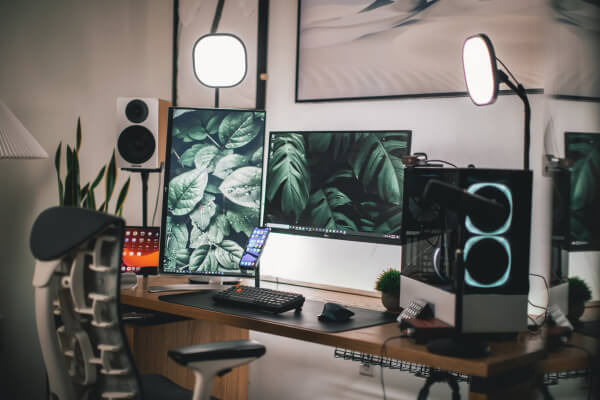
When it comes to a gaming PC build for creators, the goal is to balance raw power with versatility. You want a machine that can handle demanding games while also providing the polish and reliability needed for video editing, 3‑D rendering, and live streaming. The reality is that a good build isn’t just about the most expensive components; it’s about the right combination of CPU, GPU, memory, storage, and cooling to keep everything running smoothly under both creative and gaming workloads.
Gaming PC Build: Selecting the CPU
The core of any creative workstation is the processor. Modern video editors and design software like Adobe Creative Cloud thrive on multi‑core performance. A high‑clocked, 8‑ to 12‑core CPU from Intel’s Core i9 or AMD’s Ryzen 9 series offers the best throughput for rendering and compiling while still delivering household gaming performance.
Take the Intel Core i9‑13900K or the AMD Ryzen 9 7950X; both deliver 16 core‑threads and boost frequencies above 5 GHz. These chips handle 4K video processing almost as naturally as 1080p and support the latest instruction sets for accelerated graphics pipelines.
When sourcing the CPU, consider a motherboard that supports PCIe 5.0—future‑proofing for upcoming graphics cards and NVMe drives. A robust BIOS update is also recommended to keep compatibility with newer DDR4 or DDR5 modules.
Gaming PC Build: Upgrading Memory
Memory bandwidth is often the silent bottleneck in content creation. Most editors recommend 32 GB as a baseline, but 64 GB provides the cushion for 4K timelines and large compositing projects. In a gaming context, 16 GB is typically enough for the latest titles, but creative tasks may grind down RAM during export.
Choosing DDR5-5200 or DDR4-3600 modules depends on motherboard compatibility. Pair them with a dual‑channel kit for maximum throughput, and use the speed specified by the chip manufacturer to keep stability optimal.
After installing RAM, verify that the operating system recognizes the total capacity in the BIOS and that the memory is running at the advertised frequency.
Why Build with DDR5?
DDR5 offers a 2x jump in data rate, translating into higher frame rates during video playback and fewer stalls during rendering. The lower power envelope also reduces thermal load, allowing the cooling system to remain quieter.
Gaming PC Build: Graphics and Rendering
For creators, the GPU is sometimes the most critical component. While an entry‑level GPU like the GeForce RTX 3060 can comfortably run most games at high settings, a workstation often needs a card that supports CUDA and OpenCL acceleration for applications like Blender or DaVinci Resolve.
- NVIDIA GeForce RTX 4090 – 48 GB GDDR6X, ideal for 4K gaming and GPU‑accelerated rendering.
- AMD Radeon RX 7900 XTX – 24 GB GDDR6, strong performance in Vulkan and OptiX engines.
- NVIDIA Quadro RTX 6000 – 24 GB GDDR6, optimized drivers for professional software.
Storage also plays a pivotal role: a 1 TB NVMe SSD for the OS and frequently used applications, paired with a 2‑TB SATA SSD as a staged working drive for footage, ensures ultra‑fast load times and a smooth workflow.
Here’s a handy list where to start your component research:
CPU‑GPU Synergy
Matching the CPU and GPU in performance—often called a “balance point”—ensures neither component lags behind the other. A laptop can easily run at 2% GPU utilization on a weak CPU, but in a gaming PC build for creators, both should work in tandem to avoid bottlenecks during rendering or heavy multitasking.
Gaming PC Build: Cooling and Power Setup
Power delivery and thermal management are the unseen heroes behind any solid build. A 750‑W or 850‑W modular PSU from a reputable brand like Corsair or EVGA guarantees stable voltage under sustained loads. Look for 80 Plus Gold or Platinum efficiency for long‑term power savings.
Cooling strategies depend on your case size:
• Use a 120‑mm or 140‑mm axial‑flow cooling fan for air travel.
• Install a 280‑mm or 360‑mm radiator with a closed‑loop liquid cooler if you plan overclocking or a quiet setup.
For creators who often run content pipelines overnight, having a low‑noise, high‑efficiency cooling solution protects the GPU and CPU longevity.
Custom vs. Stock
A custom water loop can reduce noise and push temperatures lower than stock fans in most cases, but it comes with higher upfront cost and complexity. The choice hinges on how critical system uptime is and whether you’re comfortable troubleshooting advanced setups.
Gaming PC Build: Final Assembly Tips
Before you seal the case, remember to set up updated drivers for the GPU, chipset, and integrated audio. Install the latest BIOS to support any new hardware, and test the system with both a benchmark suite (e.g., 3DMark for GPU, Cinebench for CPU) and a real creative workflow to validate performance.
After setup, tweak the power profile in Windows or your operating system: precision boosting for everyday usage, and a gaming profile for extended rendering sessions.
User Experience
Make sure the file system is formatted with NTFS on Windows or exFAT if you plan to use the drive across macOS. Set up automatic backups using cloud services or an external NAS to safeguard work and license files.
Conclusion and Next Steps
Building a gaming PC for creators is a thoughtful exercise that balances gaming demand with professional workload needs. By focusing on a powerful multi‑core CPU, ample high‑speed RAM, a GPU that supports professional acceleration, and a resilient cooling and power supply—while also using the latest SSDs for speed—you can create a machine that excels at both immersive gaming and demanding creative software.
Don’t settle for a one‑size‑fits‑all solution. Invest in components that will grow with your projects, and keep your system updated with the latest drivers and firmware. Ready to build?
Frequently Asked Questions
Q1. What factors should I consider when selecting the CPU for a gaming PC build that will also handle video editing?
A high core count paired with strong single‑thread performance ensures smooth gaming and quick render times. Multi‑thread IPC and large L3 cache improve productivity in software like Adobe Premiere and Blender. Pick a processor that supports PCIe 5.0 to future‑proof the platform. Make sure the cooler can handle the Thermal Design Power (TDP) for sustained workloads.
Q2. How much RAM do I really need for content creators?
At minimum, 32 GB is recommended for most editors working in 1080p to 2K. For 4K timelines, moving to 64 GB provides a comfortable buffer and reduces thrashing. Dual‑channel kits with the highest advertised speed give the best throughput for large media files. Verify the total capacity and speed through BIOS and OS tools after installation.
Q3. Is DDR5 worth the extra cost for gaming and creative workloads?
DDR5 offers up to twice the data rate of DDR4, boosting rendering speed and reducing latency. Its lower voltage can translate to cooler CPUs, helping sustain high clocks. However, DDR5 requires a compatible motherboard and newer CPUs, adding to the overall cost. For most creative workflows, DDR5 provides tangible benefits if your budget allows the upgrade.
Q4. Which GPU is best for both 4K gaming and GPU‑accelerated editing?
The NVIDIA GeForce RTX 4090 excels in 4K titles and offers CUDA acceleration for software like DaVinci Resolve. AMD’s Radeon RX 7900 XTX is a strong alternative with Vulkan and OptiX support. The NVIDIA Quadro RTX 6000 provides optimized drivers for professional suites, though it carries a premium price. Choose based on your software stack, budget, and preferred driver ecosystem.
Q5. What cooling – air or liquid – should I choose for long creative sessions?
High‑performance air coolers with multiple axial fans are simpler to install and maintain. A closed‑loop liquid cooler can keep temperatures lower and reduce fan noise, which is valuable during overnight encoding. Liquid systems require more upkeep and carry a higher upfront cost. Baseline your choice on your workload type, noise tolerance, and willingness to troubleshoot advanced setups.