
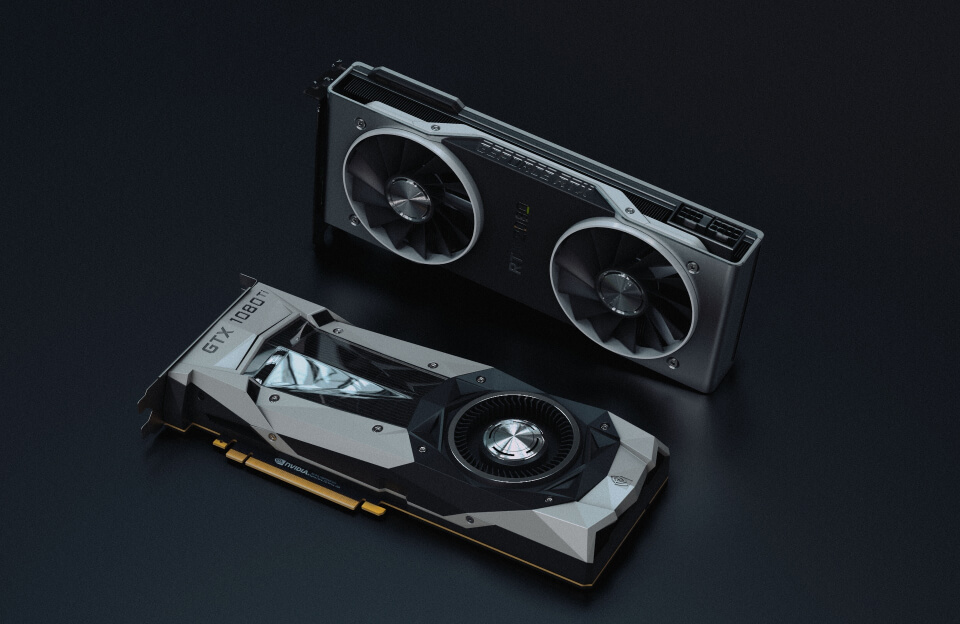
Finding a reliable budget gaming GPU can feel like navigating a maze of specifications, price tags, and ever‑shifting market trends. Whether you’re aiming for smooth 1080p gaming, dabbling in indie titles, or looking to stretch a modest budget without sacrificing performance, the right graphics card can make all the difference. In this guide we break down the essential factors—VRAM, GPU architecture, and price‑to‑performance ratio—so you can confidently choose an affordable graphics card that meets your gaming goals while staying within your financial limits.
Understanding Core Specifications
Before you compare price points, it’s crucial to grasp the fundamental specs that drive a Graphics Processing Unit’s gaming capability. The most important metrics are the number of CUDA cores or stream processors, base and boost clock speeds, and, for most gamers, the amount and type of VRAM. Modern titles at 1080p typically run comfortably with 6‑8 GB of GDDR6 memory, but a card with higher memory bandwidth can deliver smoother frame rates in texture‑heavy environments. Pay attention to the GPU’s architecture generation (e.g., NVIDIA’s Ada Lovelace or AMD’s RDNA 3) because newer designs often bring efficiency gains that translate into better performance per dollar.
Setting a Realistic Budget
What qualifies as “budget” varies by region and market conditions, but a practical sweet spot for a capable gaming experience in 2024 sits between $150 and $300 USD. In this range you’ll find cards that comfortably handle most esports titles at high settings and a solid portion of AAA games at medium settings. It’s wise to allocate a small portion of your total budget for a quality power supply and adequate cooling, as power draw and thermals become critical when pushing a budget card to its limits.
Evaluating Performance for 1080p Gaming
1080p remains the most popular resolution for gamers on a budget, and the performance ceiling is well‑defined. Look for benchmark scores that consistently exceed 60 FPS in titles like Fortnite, Apex Legends, and Shadow of the Tomb Raider when settings are tuned to medium‑high. Websites such as NVIDIA GeForce GPUs and AMD Radeon GPUs publish official performance tables that can be cross‑referenced with independent reviews. Prioritize cards that demonstrate a strong price‑to‑performance ratio, meaning the performance boost justifies the incremental cost over the previous generation.
Choosing Between AMD and NVIDIA
Both manufacturers offer compelling options, but the decision often hinges on ecosystem features and driver stability. NVIDIA’s budget lineup, such as the GTX 1650 Super and the RTX 3050, includes dedicated ray‑tracing cores, which can future‑proof a system at a modest extra cost. AMD’s equivalents, like the Radeon RX 6500 XT and RX 6600, typically deliver higher raw rasterization performance for the same price point but lack robust ray‑tracing support. Consider also the availability of software tools: NVIDIA’s GeForce Experience simplifies driver updates, while AMD’s Radeon Software offers fine‑grained performance tweaking without additional cost.
Top Picks for 2024
Below is a curated list of the best budget gaming GPUs that balance performance, power efficiency, and feature sets. Prices are approximate and reflect typical retail listings in the United States as of early 2024.
- NVIDIA GeForce GTX 1650 Super – ~6 GB GDDR6, excellent for 1080p esports titles, power draw under 75 W.
- AMD Radeon RX 6600 – 8 GB GDDR6, strong rasterization performance, supports AMD FidelityFX Super Resolution (FSR) for upscaling.
- NVIDIA GeForce RTX 3050 – 8 GB GDDR6, entry‑level ray tracing, DLSS 2.0 support improves frame rates in supported games.
- AMD Radeon RX 6500 XT – 4 GB GDDR6, very low power consumption, suitable for light 1080p gaming and HTPC builds.
When selecting from this list, match the card’s VRAM and architecture to the games you play most often. For titles that rely heavily on texture detail, the 8 GB models (RX 6600 and RTX 3050) will provide a smoother experience.
Environmental and Longevity Considerations
Choosing a budget GPU also means thinking about the product’s lifecycle. Many manufacturers offer recycling programs that comply with EPA Electronic Waste Recycling guidelines, ensuring that outdated cards are disposed of responsibly. Selecting a card with a reputable warranty (typically three years) can protect your investment and reduce the temptation to replace hardware prematurely.
Conclusion
Investing in a budget gaming GPU doesn’t mean settling for subpar performance; it means making strategic choices that align with your gaming style, resolution target, and financial constraints. By evaluating core specifications, setting a realistic budget, and comparing the top contenders from both AMD and NVIDIA, you can secure a graphics card that delivers enjoyable 1080p gaming without breaking the bank. Ready to upgrade your rig? Explore the options listed above, check current prices, and start building the gaming experience you deserve today.
Frequently Asked Questions
Q1. What VRAM size is ideal for a budget gaming GPU?
For most 1080p games, 6‑8 GB of GDDR6 VRAM offers a good balance between performance and price. It handles texture‑heavy titles without stuttering, while cards with less VRAM may struggle in newer releases. However, some esports titles run fine with 4 GB.
Q2. Can a budget GPU support ray tracing?
Entry‑level ray tracing is possible on cards like the NVIDIA RTX 3050, which includes dedicated RT cores. The performance impact is noticeable, so you may need to lower settings or use DLSS. AMD’s budget options generally lack robust ray‑tracing support.
Q3. How important is the power supply for a budget GPU?
A reliable PSU ensures stability, especially when the GPU is pushed near its power limit. Most budget cards draw under 150 W, but you should still use a quality 450‑550 W unit with the proper connectors. Underspec’d power supplies can cause crashes or reduced performance.
Q4. Should I buy a used GPU to stay within budget?
Buying used can stretch your budget, but it carries risks like unknown wear, limited warranty, and potential driver issues. Check the card’s condition, verify it runs correctly, and prefer reputable sellers or platforms with return policies. For first‑time builds, a new card often provides better peace of mind.
Q5. Is there a noticeable difference between AMD and NVIDIA at the low‑end?
At similar price points, AMD cards usually deliver higher raw rasterization FPS, while NVIDIA offers features like DLSS and ray tracing. Your choice should depend on whether you value performance per dollar or future‑proofing with advanced features. Both ecosystems have solid driver support.
