When you set out to assemble a high‑performance gaming PC, the choice of hardware determines everything from frame rates to future‑proofing. This Gaming PC Hardware Buying Guide walks you through each component, explains how they interact, and offers practical tips for every budget.
Understanding the Core Components
Every Gaming PC Hardware build rests on four pillars: the processor (CPU), the graphics card (GPU), system memory (RAM), and storage. The CPU handles general calculations and game logic, while the GPU renders images to your monitor. Modern games often demand at least 8 GB of RAM, but 16 GB or more ensures smooth multitasking and future‑ready performance. Storage choices—solid‑state drives (SSDs) versus traditional hard‑disk drives (HDDs)—affect load times and overall responsiveness. By mastering the role of each pillar, you can allocate funds where they matter most.
Selecting the Right CPU
The CPU is the brain of your rig. For the latest titles, a mid‑range to high‑end model from AMD’s Ryzen 5/7 line or Intel’s Core i5/i7 series provides ample headroom. When comparing options, examine core count, clock speed, and cache size. A higher core count benefits streaming or content creation alongside gaming, while a higher boost frequency improves single‑threaded performance, which many games still rely on. Be sure to pair your CPU with a compatible motherboard chipset; for example, an AMD X670 or Intel Z790 board ensures you can leverage PCIe 5.0 and DDR5 memory later on.
Choosing a Powerful GPU
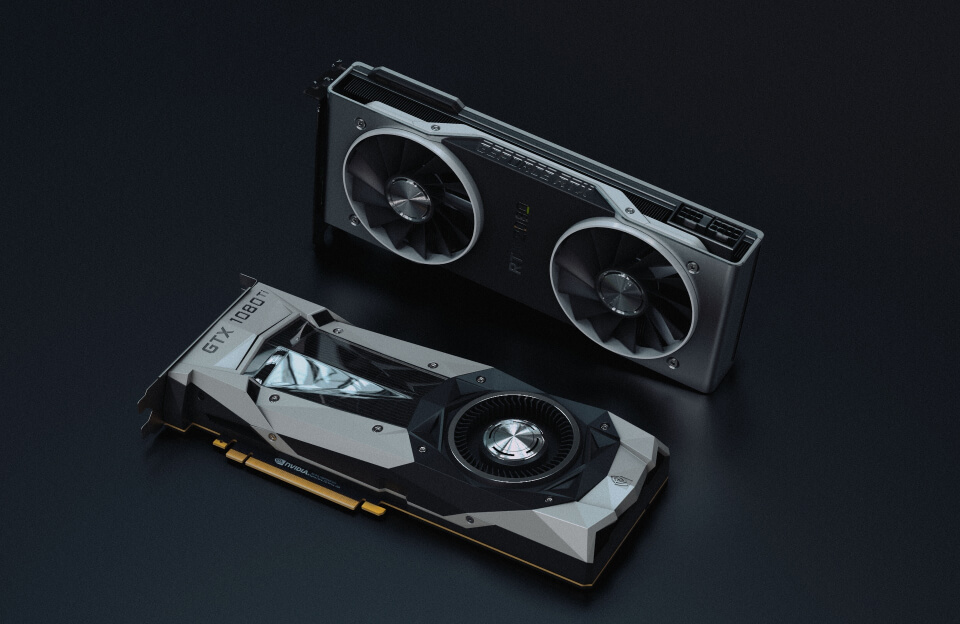
The graphics card is the most visible factor for gamers. Look for a model that matches your target resolution and refresh rate. For 1080p at 144 Hz, a NVIDIA GeForce RTX 3060 or AMD Radeon RX 6600 XT often suffices. For 1440p or 4K, aim for an RTX 4070 Ti, RTX 4080, or AMD Radeon RX 7900 XT. Pay attention to VRAM; 8 GB is the bare minimum for modern titles, while 12 GB–16 GB provides better texture handling at higher settings. Review benchmarks on reputable sites and verify that the card fits within your case dimensions and power‑supply capacity.Graphics Processing Unit
Memory, Storage, and Cooling Solutions
RAM speed influences both CPU and GPU performance. DDR5 modules, operating at 5600 MT/s or higher, are becoming the standard for new builds, but DDR4 remains a cost‑effective alternative when paired with older chipsets. Aim for at least 16 GB of RAM; 32 GB offers headroom for demanding mods and future titles.
Storage should be a blend of speed and capacity. SSDs deliver instant load times, while larger HDDs serve for media libraries. Below is a typical configuration:
- Primary 1 TB NVMe SSD for the OS and games – Solid State Drive
- Secondary 2 TB SATA SSD or 4 TB HDD for bulk storage
- Optional external SSD for backup and portable library
Effective cooling maintains performance under load. Air coolers from Noctua or be quiet! provide quiet, reliable thermal management for most CPUs. For overclocked builds, an all‑in‑one (AIO) liquid cooler with a 240 mm or 360 mm radiator helps keep temperatures low without excessive noise.
Balancing Budget and Performance
Even seasoned builders face trade‑offs. Identify your primary gaming goals—whether you target ultra‑high settings at 4K or high refresh rates at 1080p—and allocate spend accordingly. A practical rule of thumb is to invest roughly 40 % of the budget in the GPU, 25 % in the CPU, 15 % in RAM, 10 % in storage, and the remaining 10 % in power supply, case, and cooling. Look for sales on reputable retailers and consider last‑generation components that still deliver strong performance. For example, an RTX 3060 Ti often matches the performance of an early‑era RTX 3070 at a fraction of the price.
Don’t overlook the power supply unit (PSU). A high‑efficiency 80 PLUS Gold rating ensures stable power delivery and leaves headroom for future upgrades. Additionally, choose a case with good airflow and cable‑management options to keep the interior tidy and thermally efficient.
Putting It All Together
Once you have selected each component, double‑check compatibility using online PC‑building tools or manufacturer Q&A pages. Verify that the motherboard BIOS supports your CPU out of the box, that the GPU fits within the case’s GPU clearance, and that the PSU provides sufficient wattage for the entire system (typically 650 W–850 W for mid‑to‑high‑end builds). After assembly, install the latest drivers from the GPU vendor, enable XMP profiles for RAM, and run stress‑testing utilities like Prime95 and 3DMark to confirm stability.
Conclusion
Building the right Gaming PC Hardware setup is a rewarding blend of research, planning, and hands‑on work. By focusing on the core pillars—CPU, GPU, memory, storage, and cooling—and matching them to your gaming objectives and budget, you’ll enjoy smoother frames, quicker load times, and a system that stays relevant for years. Ready to build your ultimate gaming rig? Contact us today for personalized component recommendations and exclusive discounts.
Frequently Asked Questions
Q1. How do I choose between AMD and Intel CPUs for gaming?
Both AMD Ryzen and Intel Core processors offer excellent gaming performance. Look at single‑core boost clocks, core count, and compatibility with your motherboard chipset. For most titles, a Ryzen 5/7 or Intel i5/i7 of the current generation provides similar frame rates, so base your decision on budget, platform features, and personal preference.
Q2. What GPU should I buy for 1080p gaming at 144 Hz?
A card that can consistently deliver 144 fps at high settings is ideal. The NVIDIA GeForce RTX 3060 or AMD Radeon RX 6600 XT are good choices, offering enough VRAM (8 GB) and rasterization power for smooth 1080p gameplay. Pair it with a monitor that supports 144 Hz and enable G‑Sync or FreeSync for tear‑free output.
Q3. Is 16 GB of RAM enough for modern games?
Yes, 16 GB is the sweet spot for current AAA titles and allows some multitasking. It provides enough capacity for the game itself plus background applications like Discord or web browsers. If you plan on heavy streaming, video editing, or future‑proofing, upgrading to 32 GB can give extra headroom.
Q4. Should I prioritize SSD capacity over speed?
Speed matters more for load times and system responsiveness, so a fast NVMe SSD (PCIe 3.0 or 4.0) should be your primary drive. Capacity can be managed by adding a larger SATA SSD or HDD for less‑frequent data. A typical build uses a 1 TB NVMe for OS and games and a secondary 2 TB HDD for media.
Q5. How much wattage do I need for a high‑end gaming PC?
Calculate the total power draw of your components and add a 20‑30 % safety margin. Most mid‑to‑high‑end builds with an RTX 3070/3080 and a high‑end CPU require a 650 W to 850 W PSU. Choose an 80 PLUS Gold unit for efficiency and future upgrade flexibility.