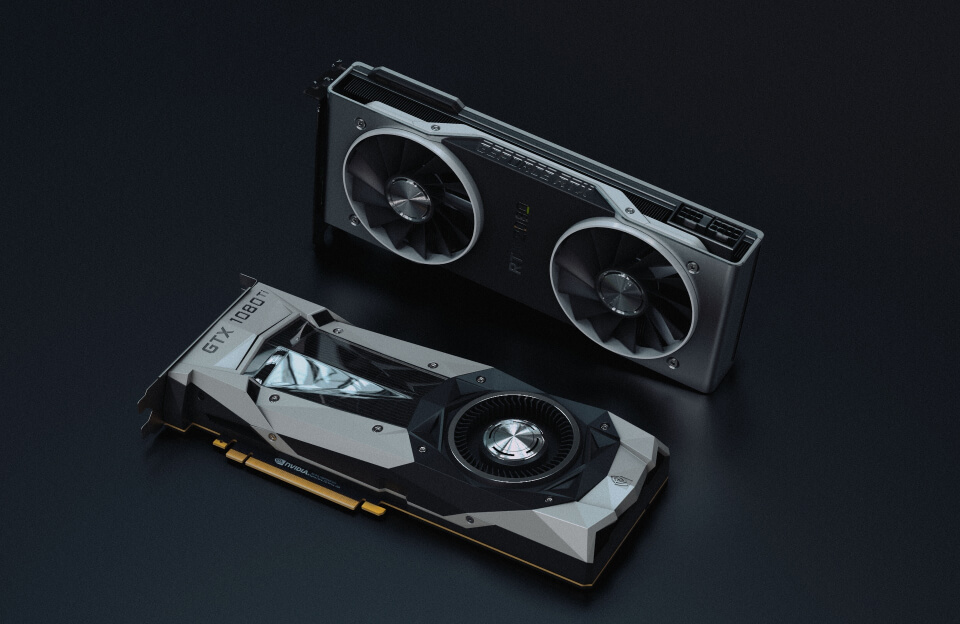
When it comes to building a gaming rig or upgrading your graphics card, GPU benchmarks have become the compass that guides decisions. They translate raw hardware specifications into real‑world performance numbers, letting gamers understand how a card will handle demanding titles, high frame rates, and emerging technologies like ray tracing. This guide breaks down the most reliable benchmarking methods, the metrics that truly matter, and the latest results that can help you choose the best GPU for your gaming experience.
Understanding GPU Benchmarks
At their core, GPU benchmarks are standardized tests that stress a graphics processor under controlled conditions. By running the same workload across different cards, benchmarks produce comparable data points such as frames per second (FPS), average frame time, and power consumption. The most respected benchmark suites—like 3DMark, Unigine Heaven, and SPECviewperf—are regularly updated to reflect modern game engines and APIs, ensuring relevance for current titles.
Key GPU Benchmarks Metrics That Matter
Not all numbers are created equal. Understanding the key metrics helps you interpret benchmark scores and relate them to your gaming goals.
- FPS (Frames Per Second): The most obvious indicator of smooth gameplay. Higher FPS means less motion blur and a more responsive feel, especially important for fast‑paced shooters.
- 1% Low and 0.1% Low FPS: These values reveal how often a game dips below the average frame rate, which directly impacts perceived smoothness.
- Ray Tracing Performance: Measured in FPS while ray‑traced effects are enabled; critical for titles like Control or Cyberpunk 2077.
- Power Draw and Thermals: Higher performance often comes with increased wattage and heat. Knowing these limits helps you plan cooling and PSU sizing.
- VRAM Utilization: Determines how well a GPU can handle high‑resolution textures and large frame buffers, especially at 4K.
When reviewing benchmark reports, focus on the combination of average FPS, low‑percentile FPS, and power efficiency to get a holistic picture of performance.
Top GPU Benchmarks Tools for Gamers
Choosing the right benchmarking tool is essential for accurate, repeatable results. Here are the most widely‑used suites, each offering unique strengths.
- 3DMark Time Spy: DirectX 12‑focused, perfect for assessing modern API performance. Includes a graphics score that correlates well with gaming FPS.
- Unigine Superposition: Provides both GPU stress testing and a realistic gaming mode that mimics complex lighting and particle effects.
- GFXBench Manhattan: Offers cross‑platform tests (Windows, macOS, Android) and includes Vulkan and OpenGL benchmarks.
- SPECviewperf: An industry standard used by hardware manufacturers; while more technical, it gives insight into workstation‑class workloads that translate to heavy gaming scenarios.
All of these tools are updated regularly; for instance, the latest 3DMark version aligns its scenes with the rendering techniques found in recent AAA games, providing a trustworthy proxy for real‑world performance.3DMark Overview
Real‑World GPU Benchmarks Performance Comparison
Below is a snapshot of the most relevant GPU benchmarks for the current generation of consumer graphics cards. Scores are taken from the latest 3DMark Time Spy tests (released Q4 2024) and corroborated by independent reviewers.
- NVIDIA GeForce RTX 4090: Graphics Score 36,800, average FPS 144 in Shadow of the Tomb Raider Ultra settings at 4K, 1% Low 84 FPS.
- AMD Radeon RX 7900 XTX: Graphics Score 30,200, average FPS 124 in the same title, 1% Low 71 FPS.
- NVIDIA GeForce RTX 4080: Graphics Score 28,900, average FPS 112, 1% Low 65 FPS.
- AMD Radeon RX 7800 XT: Graphics Score 25,400, average FPS 102, 1% Low 58 FPS.
- Intel Arc A770: Graphics Score 22,100, average FPS 93, 1% Low 52 FPS.
These numbers illustrate the performance hierarchy but also highlight power efficiency differences. The RTX 4090, while the fastest, draws roughly 450 W under load, whereas the RX 7800 XT stays under 250 W, offering a more balanced power‑to‑performance ratio for mid‑range builds.NVIDIA GTC Resources
For gamers prioritizing ray tracing, the RTX series still leads. In a ray‑traced benchmark of Cyberpunk 2077 with DLSS 3 enabled, the RTX 4090 achieved 78 FPS at 4K, while the RX 7900 XTX managed 55 FPS using AMD’s FidelityFX Super Resolution 2 (FSR2).Ray Tracing Explained
When evaluating performance for eSports titles such as Valorant or Counter‑Strike: Global Offensive, the primary goal is to exceed 240 FPS on a 144 Hz monitor. Even the mid‑tier RTX 4080 comfortably tops 240 FPS at 1080p Ultra settings, making it a compelling choice for competitive players who also want future‑proofing for higher resolutions.
How to Interpret Benchmarks for Your Build
Benchmarks are tools, not prescriptions. Here are three practical steps to translate GPU benchmarks into a decision that matches your budget and gaming preferences.
- Identify Your Target Resolution and Refresh Rate: If you game at 1440p with a 165 Hz monitor, aim for GPUs that sustain at least 165 FPS in your preferred titles.
- Consider Feature Sets: Ray tracing, DLSS (Deep Learning Super Sampling), and FSR2 can dramatically boost perceived performance. Evaluate how much you value these technologies.
- Balance Power and Thermals: Ensure your PSU and cooling solution can handle the GPU’s draw. For example, a 450 W PSU is the minimum for an RTX 4090, while a 300 W unit suffices for an RX 7800 XT.
By aligning benchmark data with your specific use case, you avoid overpaying for performance you’ll never use.
Conclusion: Choose the Right GPU Benchmarks for Your Gaming Edge
Accurate GPU benchmarks empower you to cut through marketing hype and focus on measurable performance. Whether you chase ultra‑high‑resolution ray‑traced experiences, competitive eSports frame rates, or a balanced power‑efficient build, the data presented here offers a clear roadmap. Stay updated by revisiting benchmark databases each quarter, as driver optimizations and new titles can shift the performance landscape.
Ready to upgrade? Explore the latest graphics cards, compare benchmark scores, and build a rig that delivers the gaming performance you deserve. Browse GPU Reviews today and turn those benchmark numbers into real‑world victories.Computer Science Research
Frequently Asked Questions
Q1. What are GPU benchmarks and why are they important?
GPU benchmarks are standardized tests that measure a graphics card’s performance under controlled workloads. They translate raw specs into real‑world numbers like FPS, frame times, and power draw, helping gamers compare cards objectively. By using the same scenes and settings, benchmarks remove marketing hype and show how a GPU will handle modern titles.
Q2. Which benchmark suite should I use for DirectX 12 games?
3DMark Time Spy is the most widely recommended tool for DirectX 12 performance because its tests mimic the rendering techniques of current AAA games. It provides a graphics score that correlates closely with in‑game FPS, and it’s updated each year to stay relevant. For additional perspective, you can also run Unigine Superposition’s DX12 mode.
Q3. How do 1% Low and 0.1% Low FPS values affect my gaming experience?
The 1% Low and 0.1% Low FPS metrics show the worst‑case frame rates during short spikes of heavy load. Low values indicate occasional stutter, even if the average FPS looks high. Focusing on these numbers ensures smoother gameplay, especially in fast‑paced shooters where consistency matters.
Q4. Is ray tracing performance a reliable metric for choosing a GPU?
Ray tracing performance matters if you plan to enable hardware‑accelerated effects in titles like Cyberpunk 2077 or Control. GPUs with dedicated RT cores, such as the RTX 40 series, typically deliver higher FPS when ray tracing is on, especially when paired with DLSS. If ray tracing isn’t a priority, you can prioritize raw rasterization scores and power efficiency.
Q5. What power supply capacity do I need for high‑end GPUs?
The power requirement varies by model; an RTX 4090 can draw up to 450 W under load, so a 850 W PSU is recommended for headroom. Mid‑range cards like the RX 7800 XT stay under 250 W, making a 600 W unit sufficient. Always check the manufacturer’s recommendations and leave a safety margin for other components.