FidelityFX Super Resolution (FSR) has quickly become a pivotal upscaling technology for PC gamers seeking higher frame rates without sacrificing visual fidelity. Developed by AMD, FSR competes directly with NVIDIA’s DLSS and offers a hardware‑agnostic solution that works across a broad range of graphics cards. This guide walks you through what FSR is, how it works, which games support it, and how to configure it for the best possible gaming performance.
What Is FidelityFX Super Resolution?
At its core, FidelityFX Super Resolution is an image‑reconstruction algorithm that renders games at a lower internal resolution and then upscales the frame to match your monitor’s native resolution. The technique leverages spatial upscaling, edge reconstruction, and contrast‑aware sharpening to retain sharpness and detail while dramatically reducing the GPU load. Unlike deep‑learning based solutions, FSR does not require dedicated AI hardware, making it accessible on both AMD and NVIDIA GPUs.
FidelityFX Super Resolution How It Works
The FSR pipeline consists of three primary stages: the first stage renders the game at a reduced internal resolution (often 50‑75% of the target resolution). The second stage applies a high‑performance edge‑enhancement filter that detects and reconstructs fine details. Finally, the third stage adds a contrast‑adaptive sharpening pass to mitigate any softness introduced during upscaling. The result is an image that closely resembles native rendering while delivering higher frame rates.
Because the algorithm is entirely shader‑based, it can be implemented via Vulkan, DirectX 11/12, and even OpenGL, which is why we see FSR appearing in titles across multiple platforms.
FidelityFX Super Resolution Compatibility and Setup
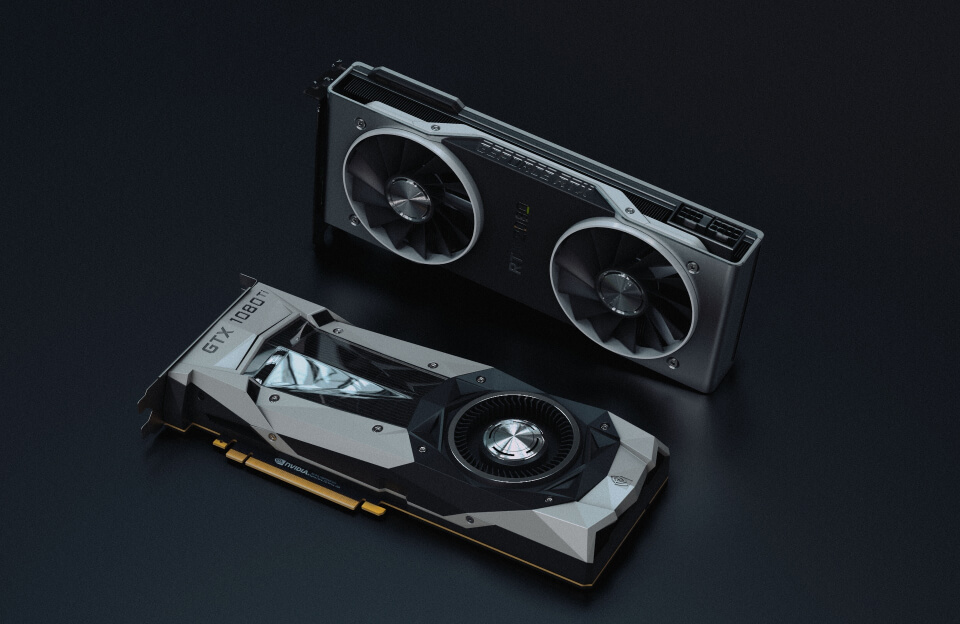
One of FSR’s biggest selling points is its broad compatibility. It works on AMD Radeon RX 5000 series and newer, as well as NVIDIA GeForce GTX 10xx and RTX 20xx/30xx cards. To enable FSR, you typically follow these steps:
- Open the in‑game settings menu and locate the graphics or display tab.
- Select “FidelityFX Super Resolution” from the upscaling options.
- Choose a preset—”Ultra Quality,” “Quality,” “Balanced,” or “Performance”—based on your desired balance between image clarity and frame rate.
- Apply the changes and restart the game if required.
Many modern titles also expose FSR options directly within the AMD Radeon Software overlay, allowing you to toggle the feature without restarting the game. For a deeper dive on AMD’s implementation, refer to the official AMD FidelityFX Super Resolution documentation.
FidelityFX Super Resolution Performance Benchmarks
Real‑world performance gains vary by title, resolution, and hardware configuration, but the consensus across independent testing shows a 30‑50% increase in average frame rate when using the “Balanced” preset on a 1080p display with an AMD Radeon RX 6600 XT. In games that are heavily shader‑bound, such as “Cyberpunk 2077,” the uplift can be even more pronounced.
Below is a condensed snapshot of benchmark data from reputable sources:
- Shadow of the Tomb Raider – 1080p, Ultra Quality: +28% FPS.
- Resident Evil Village – 1440p, Performance: +45% FPS.
- Fortnite – 4K, Balanced: +35% FPS.
For a broader perspective, you can compare FSR to NVIDIA’s DLSS via the Deep Learning Super Sampling Wikipedia page, which outlines the technical differences and typical performance gaps.
Best Practices for Gamers Using FidelityFX Super Resolution
To maximize the benefits of FSR, consider the following recommendations:
- Choose the right preset. “Ultra Quality” offers the most faithful image but yields smaller performance gains, while “Performance” sacrifices detail for maximum FPS.
- Pair with in‑game sharpening. Turning off the game’s native sharpening can avoid double‑sharpening artifacts.
- Monitor your frame rate. Use tools like MSI Afterburner (or an equivalent) to ensure the FPS increase is consistent.
- Update drivers regularly. AMD frequently releases driver updates that fine‑tune FSR performance and add support for new titles.
Additionally, keep an eye on community forums and the official FidelityFX Super Resolution Wikipedia entry for the latest compatibility lists and optimization tips.
Conclusion
FidelityFX Super Resolution delivers a compelling blend of accessibility, performance, and visual quality that makes it a must‑have feature for modern PC gamers. Whether you’re playing on a modest GTX 1050 or a high‑end Radeon RX 7900 XTX, FSR can help you push higher frame rates while preserving the crispness that immersive titles demand. By understanding how the technology works, configuring the optimal preset, and staying up‑to‑date with driver updates, you can ensure a smoother, more responsive gaming experience.
Ready to boost your gaming performance? Install the latest AMD Radeon Software, enable FidelityFX Super Resolution in your favorite titles, and feel the difference today!
Frequently Asked Questions
Q1. What is FidelityFX Super Resolution?
FidelityFX Super Resolution (FSR) is AMD’s spatial upscaling technology that renders games at a lower internal resolution and then upscale them to your monitor’s native resolution. It uses edge‑reconstruction and contrast‑adaptive sharpening to retain visual fidelity while reducing GPU load. Because it is shader‑based, it works on a wide range of AMD and NVIDIA GPUs.
Q2. How does FSR differ from DLSS?
FSR relies on traditional spatial upscaling and does not need AI hardware, while DLSS uses deep‑learning algorithms that require NVIDIA’s Tensor cores. This makes FSR compatible with more graphics cards, but DLSS can provide higher image quality at similar performance levels.
Q3. Which GPUs support FSR?
FSR works on AMD Radeon RX 5000 series and newer, as well as on NVIDIA GeForce GTX 10xx, RTX 20xx, and RTX 30xx cards. Even older GPUs can run FSR, though the performance gains may be modest.
Q4. What are the FSR presets and how should I choose one?
The presets are Ultra Quality, Quality, Balanced, and Performance. Choose Ultra Quality for maximum sharpness, Performance for the biggest FPS boost, and the middle options for a balance between the two.
Q5. Can I enable FSR without restarting the game?
Many titles expose FSR controls through the AMD Radeon Software overlay, allowing you to toggle presets on the fly. If the game’s own settings are used, a quick restart may be required for the change to take effect.