
As the gaming landscape races toward photorealistic visuals, AI-driven upscaling, and ever‑larger worlds, gamers need hardware that can keep pace. Future-Ready PC Builds are designed to deliver next‑gen gaming performance today while staying relevant for years to come. This guide walks you through the critical decisions—CPU, GPU, memory, storage, power, and cooling—so you can assemble a system that handles 4K ray tracing, high frame‑rate VR, and upcoming titles without costly upgrades.
Future-Ready PC Builds: Choosing the CPU
When you think about processing power, the CPU is the backbone that determines how well a game runs under complex AI, physics, and simulation loads. For a truly future‑ready platform, look for a processor with high core counts, strong single‑thread performance, and support for the latest instruction sets.
- Intel 13th‑Gen Core i7‑13700K – 16 cores (8 Performance + 8 Efficient) with a boost clock up to 5.4 GHz, offering excellent single‑thread speed for titles that haven’t fully embraced multithreading.
- AMD Ryzen 9 7950X – 16 cores, 32 threads, and a 5.7 GHz boost, ideal for heavily threaded workloads like game streaming, content creation, and AI‑enhanced rendering.
Both options support PCIe 5.0 and DDR5 memory, ensuring they won’t bottleneck the rest of your system. Check the motherboard’s compatibility and BIOS support before purchase.
Future-Ready PC Builds: GPU Considerations
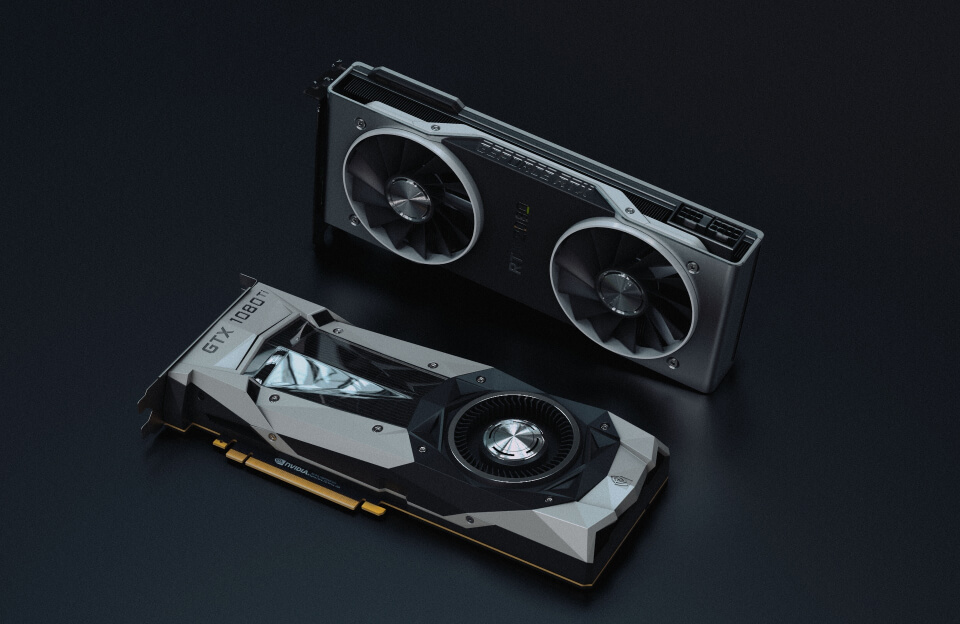
The graphics card defines how immersive your gaming experience will be. Modern titles leverage real‑time ray tracing, DLSS, and other AI‑driven upscaling techniques that demand a GPU with ample VRAM and powerful tensor cores. For a future‑ready rig, prioritize the latest RTX 40‑series or AMD Radeon RX 7000 series models.
Key factors to evaluate:
- Ray tracing performance – Look for higher RT core counts or AMD’s Ray Accelerators.
- VRAM capacity – Minimum 12 GB; 16 GB or more provides headroom for 4K textures.
- AI upscaling support – NVIDIA DLSS 3 or AMD FidelityFX Super Resolution (FSR) 2.2.
- Power draw – Ensure your PSU can handle peak consumption.
Popular choices include the NVIDIA GeForce RTX 4090 and the AMD Radeon RX 7950 XT, both delivering top‑tier performance and future‑proof features.
Future-Ready PC Builds: Memory and Storage
High‑speed memory and fast storage are essential for reducing load times and maintaining smooth frame rates, especially as games adopt larger asset pipelines.
Memory:
- Capacity – 32 GB DDR5 is the sweet spot for most next‑gen games and multitasking scenarios.
- Speed – Aim for 5600 MT/s or higher to maximize bandwidth.
- Latency – Lower CL values (e.g., CL36) improve responsiveness.
Storage:
- Primary – A 2 TB NVMe SSD leveraging PCIe 5.0 for read/write speeds exceeding 10 GB/s.
- Secondary – A 4 TB SATA SSD or HDD for bulk game libraries and media.
Brands such as Samsung (970 Evo Plus) and Western Digital (Black SN850) consistently rank high in independent benchmarks.
Future-Ready PC Builds: Power and Cooling
A robust power supply and effective cooling solution protect your components and sustain performance under sustained loads.
Power Supply Unit (PSU):
- Wattage – 850 W to 1000 W for RTX 4090 builds; add headroom for overclocking.
- Efficiency – Look for 80+ Gold or Platinum certification to reduce heat and electricity consumption.
- Modularity – Fully modular units simplify cable management and airflow.
Cooling:
- CPU – A 360 mm AIO liquid cooler (e.g., Corsair iCUE H150i) provides consistent temperatures during long gaming sessions.
- Case airflow – Choose a mid‑tower with front mesh intake and top exhaust fans; aim for a positive pressure environment.
- GPU – Most high‑end cards feature robust blower or hybrid cooling; consider aftermarket solutions if you plan extreme overclocking.
Ensuring that your power and thermal solutions meet or exceed component specifications is crucial for a truly future‑ready build.
Future-Ready PC Builds: Future‑Proofing Tips
Even with top‑tier parts, technology evolves quickly. Here are three practical strategies to extend the lifespan of your rig.
- Modular motherboard – Opt for a board with extra M.2 slots and PCIe lanes, allowing you to add faster SSDs or expansion cards later.
- Upgradeable PSU – A high‑capacity unit lets you swap in a more power‑hungry GPU without replacing the PSU.
- Software readiness – Keep drivers updated via official manufacturer portals and enable Windows Game Mode for optimized resource allocation.
By planning for modular upgrades, you protect your investment and stay competitive as developers push the envelope of visual fidelity.
Conclusion
Building a Future-Ready PC Build means marrying cutting‑edge components with a forward‑thinking design philosophy. By selecting a high‑core‑count CPU, a next‑gen GPU, fast DDR5 memory, PCIe 5.0 storage, and reliable power and cooling, you position yourself to enjoy the most demanding titles today and the innovations of tomorrow.
Ready to assemble your future‑ready rig? Dive into the component list above, compare prices on reputable retailers, and start building a system that will dominate the gaming landscape for years. Don’t wait for the next hardware cycle—future‑proof your gaming experience now.
Frequently Asked Questions
Q1. What makes a PC build “future‑ready”?
A future‑ready build uses the latest generation components, such as a PCIe 5.0‑compatible motherboard, DDR5 memory, and a high‑end GPU with AI upscaling. It also provides headroom in power and cooling so you can upgrade parts later without replacing the whole system.
Q2. Should I prioritize a higher core‑count CPU or single‑thread speed?
Both matter, but for gaming the single‑thread boost is critical because many titles still rely on it. Choose a CPU that balances a strong boost clock (5 GHz+) with ample cores (8‑16) to stay efficient in multi‑task scenarios like streaming.
Q3. Is 12 GB of VRAM enough for 4K gaming?
12 GB is the minimum for smooth 4K performance with current titles, but 16 GB or more future‑proofs you against upcoming games that use larger texture packs and higher‑resolution assets. Opting for 16 GB ensures you won’t need to upgrade the GPU soon.
Q4. How important is PCIe 5.0 SSD storage?
PCIe 5.0 SSDs deliver read/write speeds exceeding 10 GB/s, cutting load times dramatically and keeping up with the massive data rates of next‑gen games. While a PCIe 4.0 drive still performs well, PCIe 5.0 offers the most longevity.
Q5. What cooling solution is best for a high‑end build?
A 360 mm AIO liquid cooler provides excellent CPU temperature control during long sessions and overclocking. Pair it with a case that has front mesh intake and top exhaust fans to maintain positive airflow and keep the GPU cool.