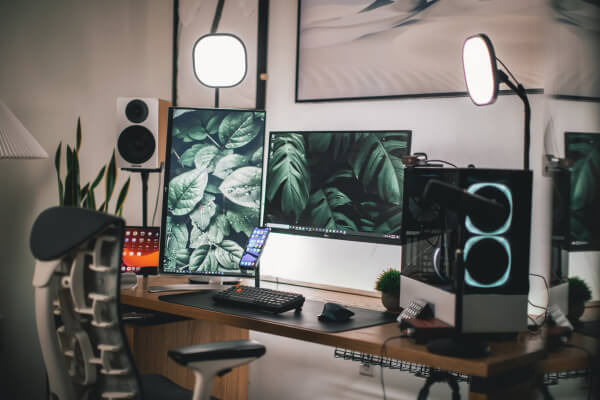
When you set out to build a machine that consistently delivers high FPS in the latest titles, a well‑structured Custom Gaming PC Cost Planning process becomes essential. It isn’t just about splurging on the most expensive parts; it’s about allocating your budget strategically to maximize gaming performance while keeping upgrade paths open. In this guide we’ll walk through the key decisions, from choosing a budget GPU that still crushes frame rates to balancing CPU, RAM, and storage for a smooth PC build. By the end you’ll have a clear roadmap that aligns your financial goals with the high‑performance experience you expect from a modern gaming rig.
Custom Gaming PC Cost Planning: Understanding High FPS Requirements
High FPS (frames per second) is the hallmark of a responsive gaming experience, especially in competitive titles where every millisecond counts. While a minimum of 60 FPS offers smooth gameplay, many gamers target 144 FPS or higher to match the refresh rates of premium monitors. Achieving these frame rates hinges on several factors: a fast GPU, a capable CPU, sufficient RAM, and a storage solution that eliminates bottlenecks. Understanding how these components interact helps you allocate funds where they matter most, ensuring that you don’t waste money on overspecifying one part while neglecting another.
Custom Gaming PC Cost Planning: Budget Allocation Across Core Components
Dividing your total spend into logical buckets prevents costly missteps. Below is a typical percentage‑based split for a $1500 build aimed at high FPS gaming:
- GPU – 35‑40%: The graphics card drives frame rates. Prioritize the best GPU you can afford within this range.
- CPU – 20‑25%: A strong processor prevents bottlenecks, especially in CPU‑intensive games.
- RAM – 10‑15%: 16 GB is the sweet spot for most modern titles; 32 GB future‑proofs your rig.
- Storage – 10‑12%: Combine an SSD for the OS and games with a larger HDD for media.
- Motherboard, PSU, and Case – 10‑15%: Choose reliable components that support your future upgrades.
These percentages are flexible; if you already own a case or power supply, reallocate those funds to the GPU or CPU to boost gaming performance. Remember, the exact costs can vary by market conditions, so keep an eye on sales and price drops.
Custom Gaming PC Cost Planning: Choosing the Right GPU for High Frame Rates
The GPU is the engine behind high FPS. When assessing options, look beyond raw benchmark scores and consider the following:
- VRAM Capacity: At least 8 GB for 1440p gaming; 12 GB+ for 4K.
- Ray‑Tracing Support: If you enjoy realistic lighting, choose a card with dedicated RT cores, but be aware this can reduce raw FPS.
- Power Consumption: Match the card’s TDP with a quality PSU to avoid stability issues.
For a balanced budget, the Graphics Processing Unit (GPU) category offers several options that deliver 144 FPS at 1080p or 1440p. Pairing a mid‑range card such as the NVIDIA RTX 3060 Ti with a capable CPU often yields the best price‑to‑performance ratio for high FPS gaming.
Custom Gaming PC Cost Planning: Balancing CPU, RAM, and Storage
While the GPU steals the spotlight, a mismatched CPU can cripple frame rates. Modern titles benefit from higher core counts, so aim for a processor with at least six cores and strong single‑core performance. The Central Processing Unit (CPU) also influences how quickly the system can handle game logic, AI, and physics simulations.
Regarding RAM, 16 GB of DDR4 at 3200 MHz is widely regarded as the sweet spot for high FPS gaming today. If you dabble in content creation or stream while playing, consider upgrading to 32 GB to keep multitasking smooth.
Storage speed directly impacts load times, which, while not a frame‑rate factor, heavily influences overall gaming satisfaction. A 500 GB NVMe SSD for the operating system and most played titles, paired with a 2 TB HDD for secondary storage, offers a balanced approach without inflating the budget.
Custom Gaming PC Cost Planning: Future‑Proofing and Upgrade Paths
Investing wisely now can save you money later. Here are three strategies to keep your rig relevant:
- Choose a motherboard with extra PCIe slots: This allows you to add a second GPU or upgrade to newer interfaces without a complete overhaul.
- Select a PSU with headroom: A quality 650‑W unit provides room for future GPU upgrades and additional accessories.
- Opt for RAM that supports higher speeds: Even if you start with 16 GB at 3200 MHz, you’ll be able to increase frequency or capacity when prices drop.
By following these guidelines, you maintain a clear upgrade path that aligns with your evolving gaming ambitions. The key is to avoid “hard‑locking” yourself into components that become obsolete before you’re ready to replace the entire system.
Custom Gaming PC Cost Planning: Conclusion and Call to Action
Effective Custom Gaming PC Cost Planning transforms the daunting task of building a high‑FPS machine into a structured, financially sound project. By understanding the performance demands of high frame rates, allocating your budget wisely across GPU, CPU, RAM, and storage, and keeping future upgrades in mind, you set the stage for a gaming experience that feels both powerful and future‑ready.
Ready to start your build? Use the insights from this guide to draft your component list, compare prices, and watch your custom gaming PC come to life. Click the link below to access a detailed spreadsheet template that simplifies your cost planning and keeps you on track for high FPS success.
Download the Custom Gaming PC Cost Planning Template
For deeper technical insight, explore resources like the Frames per second article on Wikipedia, which explains how FPS impacts visual smoothness, or review the PCMag guide for additional build tips.
Frequently Asked Questions
Q1. How much of my budget should go to the GPU?
The GPU typically consumes 35‑40% of a high‑FPS build budget. Prioritising the graphics card ensures you hit target frame rates, especially at 1080p or 1440p. If you already own a suitable case or PSU, you can shift some funds to the GPU for extra performance.
Q2. Can I achieve 144 FPS with a $1500 budget?
Yes, a $1500 budget can comfortably reach 144 FPS at 1080p and even 1440p in many titles. Choose a mid‑range card like the RTX 3060 Ti and pair it with a six‑core CPU. Balancing RAM and fast SSD storage will keep the system responsive.
Q3. What RAM size is optimal for gaming and streaming?
16 GB of DDR4 at 3200 MHz is the sweet spot for most modern games. If you plan to stream or run content‑creation software simultaneously, upgrading to 32 GB prevents bottlenecks. Faster RAM speeds also help marginally with CPU‑bound titles.
Q4. How do I future‑proof my custom build?
Pick a motherboard with extra PCIe slots and a recent chipset, use a PSU with at least 650 W headroom, and select RAM kits that can be upgraded in capacity or speed later. These choices allow you to add newer GPUs or faster storage without replacing the entire system. Regularly check for firmware updates to keep compatibility fresh.
Q5. Is an NVMe SSD necessary for a gaming PC?
An NVMe SSD dramatically reduces game load times and OS boot speed, improving overall experience. It’s more expensive than SATA SSDs, but a 500 GB NVMe for your primary games is a worthwhile investment. Pair it with a larger HDD for bulk storage to stay within budget.