When the next wave of AAA titles drops, you’ll want your system to run them at high frame rates and crisp visuals. That means it’s time to Upgrade Gaming PC for next‑gen titles. The process isn’t just about buying the newest GPU; it’s a holistic approach that balances CPU, memory, storage, and cooling to keep your rig humming under heavy load. Below is a step‑by‑step guide that covers everything from assessing your current build to choosing the right components for a future‑proof gaming experience.
Assess Your Current Build
Before you start shopping, take inventory of what you already have. A quick audit will reveal bottlenecks and help you decide where to allocate your budget. Check the following:
- CPU – Is it a recent model or a decade‑old processor? Older CPUs can throttle performance even with a top‑tier GPU.
- GPU – Look at the model and VRAM. A 4‑GB card will struggle with 4K textures in modern games.
- RAM – 8 GB is the bare minimum; 16 GB is recommended for smooth multitasking.
- Storage – SSDs deliver faster load times. If you’re still on a mechanical drive, consider an NVMe SSD.
- Power Supply – Verify wattage and efficiency rating (80+ Bronze, Silver, Gold, or Platinum).
- Cooling – Stock coolers may not keep a high‑end CPU within safe temperatures.
Use a tool like CPU Benchmark or GPU Benchmark to compare your components against current standards. This data will guide your upgrade path.
Choose the Right GPU
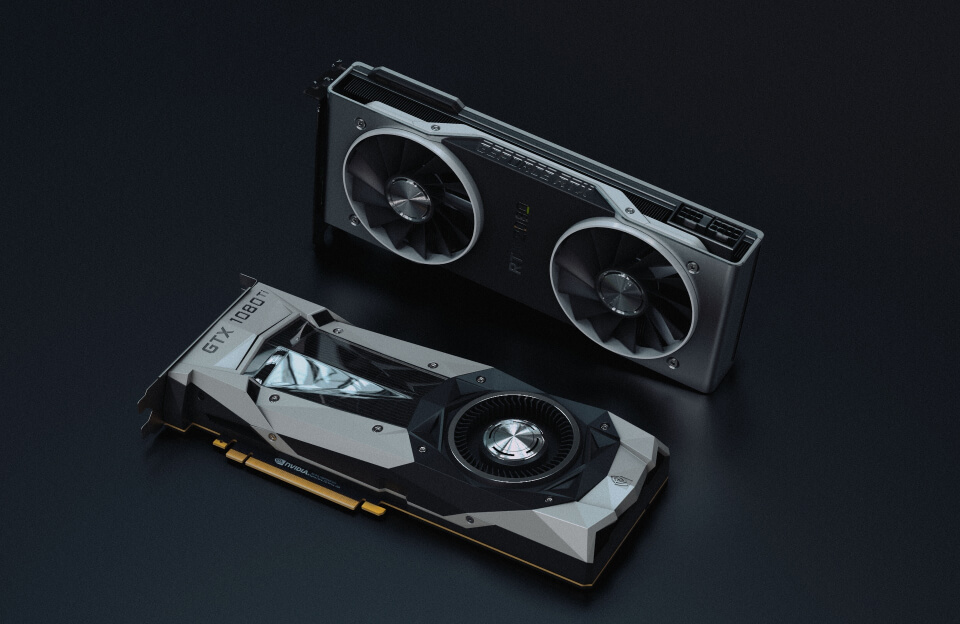
The graphics card is the heart of any gaming PC. For next‑gen titles, you’ll want a GPU that supports ray tracing, DLSS/FSR, and high refresh rates. Here are key factors to consider:
- Performance Tier – NVIDIA’s RTX 30 series and AMD’s RX 6000 series are the most common choices. For 1440p gaming, an RTX 3060 Ti or RX 6700 XT is sufficient; for 4K, look at RTX 3080 or RX 6800 XT.
- VRAM – 8 GB is the minimum for 1440p; 10–12 GB is ideal for 4K.
- Ray Tracing & Upscaling – NVIDIA’s DLSS and AMD’s FSR can boost frame rates while maintaining visual fidelity.
- Power Draw – Check the TDP and ensure your power supply can handle the extra load.
For a deeper dive into GPU architecture, see GPU on Wikipedia. If you’re leaning toward NVIDIA, the RTX 30 Series page offers detailed specs and benchmarks.
CPU and Motherboard Considerations
A powerful GPU can be hampered by a weak CPU, especially in CPU‑bound games. When upgrading, pair your GPU with a compatible CPU and motherboard that support the latest standards:
- Socket Compatibility – Intel’s LGA 1200/1700 and AMD’s AM4/AM5 sockets are common. Ensure your motherboard supports the chosen CPU.
- PCIe Version – PCIe 4.0 offers double the bandwidth of PCIe 3.0, which can benefit high‑end GPUs.
- VRM Quality – A robust voltage regulator module (VRM) keeps the CPU stable under load.
- Future‑Proofing – Look for motherboards with extra M.2 slots, USB‑C, and support for DDR5 if you plan to upgrade RAM later.
For technical details on CPU architecture, consult the CPU page on Wikipedia. Academic research on CPU performance can be found at Carnegie Mellon University, which frequently publishes studies on processor efficiency.
Memory, Storage, and Cooling
RAM, SSDs, and cooling are often overlooked but critical for a smooth gaming experience.
- RAM – Upgrade to 16 GB of DDR4 or DDR5, depending on your motherboard. Aim for a dual‑channel kit with a speed of at least 3200 MHz.
- Storage – Replace mechanical drives with NVMe SSDs. A 1 TB NVMe drive offers ample space for modern titles and fast load times.
- Cooling – High‑end CPUs benefit from aftermarket air coolers or AIO liquid coolers. Good airflow also keeps GPU temperatures low.
- Power Efficiency – A high‑efficiency PSU (80+ Gold or Platinum) reduces heat and saves electricity. The U.S. Department of Energy provides guidelines on power consumption.
When selecting a cooler, read reviews from TechRadar or Tom’s Hardware for real‑world performance data.
Upgrade Checklist
- Audit current components.
- Set a budget and prioritize GPU, CPU, and PSU.
- Choose a GPU that meets next‑gen requirements.
- Select a compatible CPU and motherboard.
- Upgrade RAM to 16 GB or more.
- Install an NVMe SSD for OS and games.
- Replace or upgrade cooling solutions.
- Verify power supply capacity and efficiency.
- Update BIOS and drivers.
- Test with benchmark tools and play a few titles.
Conclusion and Call to Action
Upgrading a gaming PC for next‑gen titles is a strategic investment that pays off in smoother gameplay, higher frame rates, and future‑proofing against upcoming releases. By carefully assessing your current build, selecting the right GPU, pairing it with a capable CPU and motherboard, and ensuring ample memory, fast storage, and efficient cooling, you’ll create a system that can handle the demands of modern gaming.
Ready to Upgrade Gaming PC and experience next‑gen titles at their best? Start your upgrade journey today and unlock the full potential of your gaming rig.
Frequently Asked Questions
Q1. Which component should I upgrade first for next‑gen gaming?
The GPU is usually the most critical upgrade for next‑gen titles, as it directly impacts frame rates and visual fidelity. However, if your current CPU is older than 5–7 years, it can bottleneck even a high‑end GPU. A balanced approach—upgrading the GPU first and then addressing any CPU or memory bottlenecks—yields the best performance gains.
Q2. How much RAM is recommended for 4K gaming?
For 4K gaming, 16 GB of DDR4 or DDR5 is the minimum, but 32 GB is ideal for future‑proofing and multitasking. Many modern AAA titles and streaming software benefit from the extra memory, reducing stutter and allowing more background processes.
Q3. Should I upgrade to an NVMe SSD?
Yes—NVMe SSDs provide significantly faster load times and higher bandwidth than SATA SSDs or mechanical drives. A 1 TB NVMe drive is a good starting point for storing your OS, games, and frequently used applications.
Q4. Do I need a new PSU when upgrading my GPU?
It depends on the power draw of your new GPU and CPU. Check the TDP of the new components and compare it to your current PSU’s wattage and efficiency rating. If the total power requirement exceeds 80% of your PSU’s capacity, consider upgrading to a higher‑wattage, 80+ Gold or Platinum unit.
Q5. How do I ensure compatibility between a new CPU and motherboard?
Verify the socket type (e.g., LGA 1700, AM5) and chipset support on the motherboard. Check the manufacturer’s CPU compatibility list and ensure the BIOS is updated to the latest version. Also confirm that the motherboard’s VRM and power delivery can handle the new CPU’s power demands.