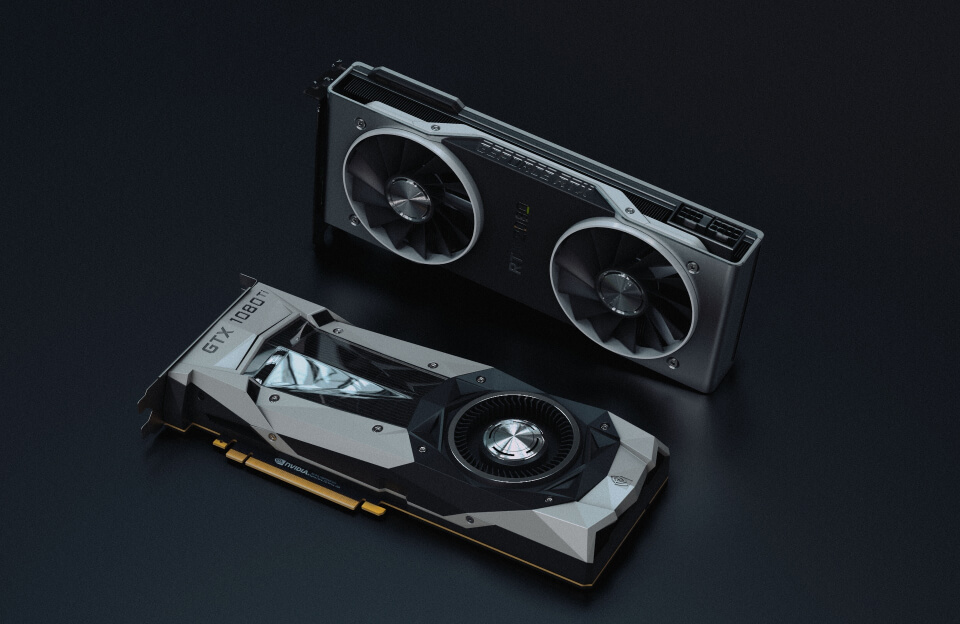
Gaming PCs have evolved from simple hobbyist rigs to sophisticated, purpose‑built machines that can keep pace with the rapid advancements in modern game engines. As engines like Unreal Engine 5, Unity 2023, and CryEngine 5 push the boundaries of visual fidelity, physics simulation, and AI, the hardware that powers these experiences must adapt accordingly. In this article, we explore how gaming PCs are evolving to meet the demands of today’s engines, focusing on GPU performance, memory bandwidth, ray‑tracing capabilities, and thermal management.
1. GPU Architecture: From Fixed‑Function to AI‑Accelerated Rendering
Modern engines rely heavily on the GPU for real‑time shading, geometry processing, and post‑processing effects. The shift from fixed‑function pipelines to programmable shaders has made GPU architecture a critical factor. NVIDIA’s Ampere and AMD’s RDNA 2/3 architectures introduce dedicated RT cores and Tensor cores, enabling hardware‑accelerated ray tracing and AI upscaling. These features are now integral to engines that support realistic lighting, reflections, and dynamic shadows.
Engine developers have begun to expose APIs that allow developers to tap directly into these hardware features. For example, Unreal Engine 5’s Lumen system uses real‑time global illumination that can be accelerated by NVIDIA’s DLSS (Deep Learning Super Sampling) and AMD’s FidelityFX Super Resolution. By leveraging AI, engines can render at lower resolutions and upscale to native resolution, reducing the load on the GPU while maintaining visual quality.
2. Memory Bandwidth and VRAM: The New Bottleneck
High‑resolution textures, complex particle systems, and large world data sets require substantial VRAM. Modern engines often demand 8 GB or more of dedicated memory for a single game at 4K resolution. Consequently, gaming PCs are incorporating GPUs with 12 GB or 16 GB of GDDR6X memory, and some high‑end models now feature 24 GB of HBM2e. The increased bandwidth also supports faster texture streaming and reduces stutter.
In addition to VRAM, system memory (RAM) and storage speed have become critical. PCIe 4.0 and PCIe 5.0 NVMe SSDs provide the high throughput needed for rapid asset loading, while DDR5 RAM offers higher bandwidth for CPU‑bound tasks such as physics calculations and AI pathfinding. These upgrades ensure that the CPU and GPU can communicate efficiently, preventing bottlenecks that would otherwise limit frame rates.
3. Thermal Design and Power Efficiency: Keeping the Engine Running
As GPUs become more powerful, they also generate more heat. Modern gaming PCs are adopting advanced cooling solutions, including liquid cooling loops, vapor‑phase coolers, and high‑efficiency fans. Thermal paste upgrades and improved case airflow designs help maintain optimal temperatures, which is essential for sustaining high frame rates during extended play sessions.
Power efficiency has also improved. NVIDIA’s Turing and Ampere GPUs feature dynamic power management, allowing the GPU to down‑clock during less demanding scenes. Similarly, AMD’s RDNA 2 architecture includes a “Smart Access Memory” feature that lets the CPU access the entire GPU memory, reducing latency and improving performance. These efficiencies translate into lower power consumption and reduced heat output, which are critical for maintaining system stability.
4. Software Ecosystem: Drivers, APIs, and Engine Updates
Hardware alone is not enough; software must keep pace. GPU driver updates now include optimizations for specific engines, ensuring that new features like ray tracing or AI upscaling are fully supported. DirectX 12 Ultimate and Vulkan 1.3 provide low‑level access to GPU features, allowing engine developers to write code that takes full advantage of the hardware.
Engine updates often introduce new rendering pipelines that require specific GPU capabilities. For instance, Unity’s HDRP (High Definition Render Pipeline) relies on real‑time ray tracing and DLSS, while Unreal Engine 5’s Nanite virtualized geometry system demands high memory bandwidth and efficient tessellation. As a result, gamers who want the best experience must keep their hardware and drivers up to date.
Key Takeaways
- Modern engines demand GPUs with dedicated ray‑tracing and AI cores.
- Increased VRAM and memory bandwidth are essential for high‑resolution textures and large worlds.
- Advanced cooling and power‑management features keep systems stable under load.
- Regular driver and engine updates unlock new performance gains.
Conclusion: Future‑Proof Your Gaming PC
Gaming PCs are no longer just about raw horsepower; they must be finely tuned to match the evolving capabilities of modern game engines. By investing in GPUs with ray‑tracing cores, ample VRAM, and efficient cooling, and by staying current with driver and engine updates, you can ensure that your system remains capable of delivering stunning visuals and smooth gameplay for years to come.
Ready to upgrade? Explore the latest GPUs, motherboards, and cooling solutions that are engineered to keep up with the next generation of game engines. Visit GPU Wikipedia for a deep dive into GPU technology, check out NVIDIA DLSS for AI upscaling details, and learn about ray tracing at NVIDIA Ray Tracing. Upgrade today and experience the future of gaming!
Frequently Asked Questions
Q1. What hardware changes are most critical for running Unreal Engine 5?
Unreal Engine 5 relies heavily on GPU power, especially for its Nanite virtualized geometry and Lumen global illumination. Dedicated ray‑tracing cores and AI upscaling units (DLSS or FSR) are now essential to keep frame rates high. Additionally, ample VRAM (12 GB+ for 4K) and fast memory bandwidth help prevent texture stalls. A modern CPU with multiple cores and high clock speeds also supports the engine’s physics and AI workloads.
Q2. How does ray tracing affect GPU performance in modern games?
Ray tracing simulates realistic light paths, which is computationally intensive. GPUs with dedicated RT cores can handle these calculations more efficiently, but the overall impact still depends on scene complexity. Many games use hybrid approaches, combining ray tracing for key effects with rasterization for the rest, to balance quality and performance. Developers often provide adjustable ray‑tracing settings to accommodate a range of hardware.
Q3. Why is VRAM capacity important for 4K gaming?
Higher resolutions require larger textures and more detailed assets, which consume VRAM. At 4K, a single game can easily need 8–12 GB of dedicated memory, especially when using ray tracing or high‑resolution assets. Insufficient VRAM forces the GPU to swap data with system memory, causing stutters and frame‑rate drops. Therefore, GPUs with 12 GB or more of GDDR6X/HBM2e are recommended for smooth 4K play.
Q4. What cooling solutions are recommended for high‑end gaming PCs?
High‑end GPUs and CPUs generate significant heat, so advanced cooling is essential. Liquid cooling loops, vapor‑phase coolers, and high‑efficiency air coolers with large heatsinks are common choices. Proper case airflow, quality thermal paste, and cable management also help maintain low temperatures. Consistent cooling keeps components stable and prolongs their lifespan.
Q5. How often should I update drivers and engine patches?
Regular updates are crucial for performance and compatibility. GPU drivers are typically released every few weeks, often with optimizations for new engines or features. Engine patches (e.g., Unreal Engine 5 updates) may introduce new rendering pipelines that require specific GPU capabilities. Aim to update drivers at least once a month and install engine patches as soon as they become available.