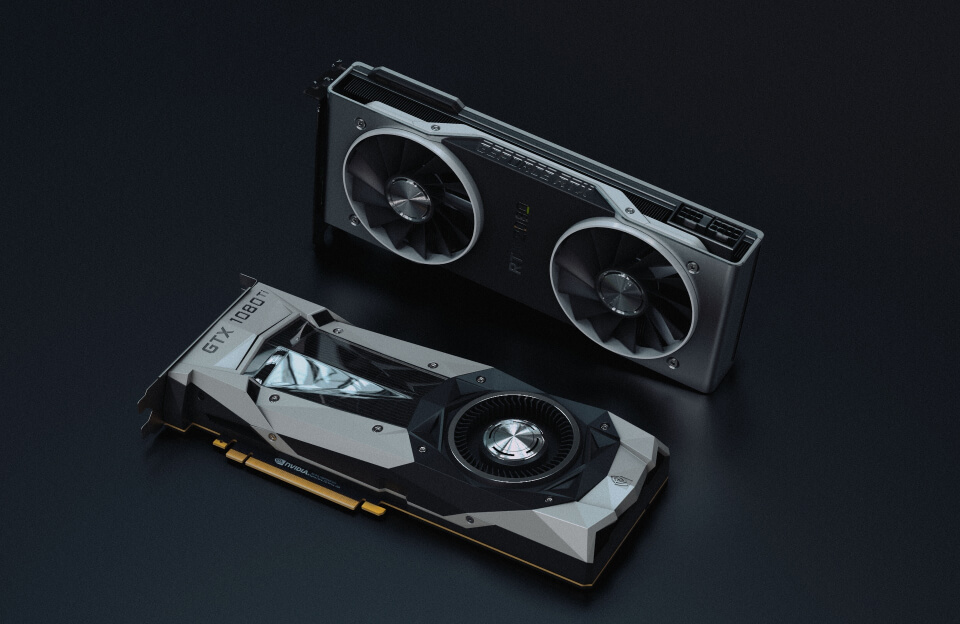
When you’re building or upgrading a machine to run the latest titles on modern game engines, the term Gaming PC Upgrade is more than a buzzword—it’s a roadmap to performance. In this guide, we’ll walk through the core components that matter most, explain how each interacts with game engines like Unreal Engine 5 and Unity 2023, and give you a clear path to a smoother, more immersive gaming experience. Whether you’re a casual player or a competitive esports enthusiast, the right upgrade strategy can turn a laggy session into a fluid, cinematic adventure.
Gaming PC Upgrade: CPU Selection
The central processing unit (CPU) is the brain of your system, and modern game engines rely heavily on multi‑core performance. When choosing a CPU for a Gaming PC Upgrade, consider the following:
- Core Count & Threading – Engines like Unreal Engine 5 can utilize up to 32 cores for tasks such as AI, physics, and asset streaming. A 12‑core or 16‑core processor (e.g., AMD Ryzen 9 7950X or Intel Core i9‑13900K) offers a good balance between single‑threaded and multi‑threaded workloads.
- Clock Speed – Higher base and boost clocks translate to faster frame rates, especially in CPU‑bound scenarios. Look for CPUs with a boost clock above 5 GHz.
- Cache Size – Large L3 cache (e.g., 64 MB on the Ryzen 9 7950X) reduces memory latency, which is critical for real‑time rendering pipelines.
- Platform Compatibility – Ensure your motherboard supports the chosen socket (AM5 for Ryzen, LGA1700 for Intel) and has enough PCIe lanes for future GPU upgrades.
For more technical details on CPU architecture, see the CPU Wikipedia page.
Gaming PC Upgrade: Graphics Card (GPU)
The GPU is the heart of visual fidelity. Modern engines use advanced shading, ray tracing, and AI upscaling, all of which demand powerful GPUs. When planning a Gaming PC Upgrade, evaluate:
- Memory (VRAM) – 8 GB is the minimum for 1080p, but 12 GB or more is recommended for 1440p and 4K gaming with ray tracing enabled.
- Ray Tracing & DLSS/FSR – NVIDIA’s RTX 30‑series and AMD’s RX 7000 series support hardware‑accelerated ray tracing. DLSS (Deep Learning Super Sampling) or FSR (FidelityFX Super Resolution) can boost frame rates without sacrificing visual quality.
- PCIe Generation – PCIe 4.0 or 5.0 offers higher bandwidth, which is beneficial for future GPUs and high‑resolution textures.
- Power & Cooling – Ensure your power supply can deliver at least 650 W for a single high‑end GPU, and that your case has adequate airflow.
For a deeper dive into GPU technology, visit the GPU Wikipedia page.
Gaming PC Upgrade: Memory (RAM) & Storage
Modern game engines load massive asset bundles and perform real‑time calculations. Adequate RAM and fast storage are essential for a Gaming PC Upgrade that feels responsive.
- RAM Capacity – 16 GB is the baseline for 1080p gaming, but 32 GB or more is advisable for 1440p/4K or for developers working with large scenes.
- Speed & Latency – DDR5 modules at 6000 MHz or higher provide better bandwidth, reducing bottlenecks in memory‑intensive tasks.
- Storage Type – NVMe SSDs (PCIe 4.0 or 5.0) deliver read/write speeds above 5000 MB/s, drastically cutting load times and improving asset streaming.
- Capacity – A 1 TB SSD for the OS and primary games, plus a secondary 2 TB drive for additional titles or development projects.
Learn more about SSD performance on the SSD Wikipedia page.
Gaming PC Upgrade: Cooling & Power Efficiency
High‑performance components generate heat. Efficient cooling ensures sustained performance and longevity, especially during long sessions or when pushing the system to its limits.
- CPU Cooler – A high‑quality air cooler or AIO liquid cooler (240 mm or larger) keeps temperatures below 80 °C under load.
- Case Airflow – Position intake fans at the front and exhaust fans at the rear or top. Use a case with mesh panels for optimal airflow.
- Power Supply Unit (PSU) – Choose a modular PSU with an 80+ Gold or Platinum rating to reduce power loss and heat.
- Thermal Monitoring – Software like HWMonitor or MSI Afterburner can track temperatures and fan speeds in real time.
For guidelines on building a thermally efficient system, consult the NVIDIA RTX Technology page.
Gaming PC Upgrade: Software & Driver Optimization
Hardware is only part of the equation. Proper driver updates and software settings can unlock hidden performance gains.
- Driver Updates – Keep GPU drivers current via NVIDIA GeForce Experience or AMD Radeon Software. New releases often include engine‑specific optimizations.
- Game Engine Settings – Adjust settings such as texture quality, anti‑aliasing, and ray tracing levels to match your hardware profile.
- Operating System – Windows 11 offers better support for DirectX 12 Ultimate, which many modern engines target.
- Background Processes – Disable unnecessary services and applications to free CPU and memory resources.
For academic insights on game engine optimization, see the Carnegie Mellon Game Engines research page.
Gaming PC Upgrade: Final Checklist & Next Steps
Before you hit the shop, run through this quick checklist to ensure your upgrade plan is solid:
- Confirm motherboard compatibility with chosen CPU and GPU.
- Verify PSU wattage and connector types.
- Check case dimensions for GPU length and cooler height.
- Plan cable management for optimal airflow.
- Set a budget that balances performance with future scalability.
With the right components and a clear upgrade path, your Gaming PC Upgrade will not only keep up with the latest game engines but also future‑proof your rig for years to come.
Ready to Start Your Gaming PC Upgrade?
Take the first step toward a smoother, more immersive gaming experience. Shop the best components now and elevate your play.
Frequently Asked Questions
Q1. What is the most important component for a Gaming PC Upgrade?
The GPU typically has the biggest impact on visual fidelity, but a strong CPU is essential for overall performance. Modern engines like Unreal Engine 5 and Unity 2023 rely heavily on multi‑core processing, so a balanced upgrade is key. Choosing a high‑end GPU paired with a capable CPU ensures smooth gameplay and future‑proofing.
Q2. How much RAM should I install for 4K gaming?
For 4K gaming with ray tracing, 32 GB of DDR5 RAM is recommended to handle large textures and complex scenes. While 16 GB can run many titles, 32 GB provides headroom for multitasking and development workloads. Future game releases will increasingly benefit from larger memory pools.
Q3. Should I choose PCIe 5.0 or 4.0 for my new GPU?
PCIe 5.0 offers double the bandwidth of PCIe 4.0, but current GPUs do not fully utilize the extra lanes. PCIe 4.0 is sufficient for most high‑end cards and is more widely supported by motherboards. If you plan to upgrade to next‑generation GPUs, PCIe 5.0 may offer a small performance edge.
Q4. What cooling solution is best for high‑end CPUs?
A 240 mm or larger AIO liquid cooler provides excellent thermal performance for overclocked CPUs. High‑quality air coolers can also keep temperatures low if you prefer a quieter setup. Ensure the cooler fits your case and motherboard clearance.
Q5. How often should I update GPU drivers?
Updating drivers at least once a month keeps your GPU optimized for new games and engine updates. Many manufacturers release performance patches with each driver release, so staying current can unlock higher frame rates and stability.