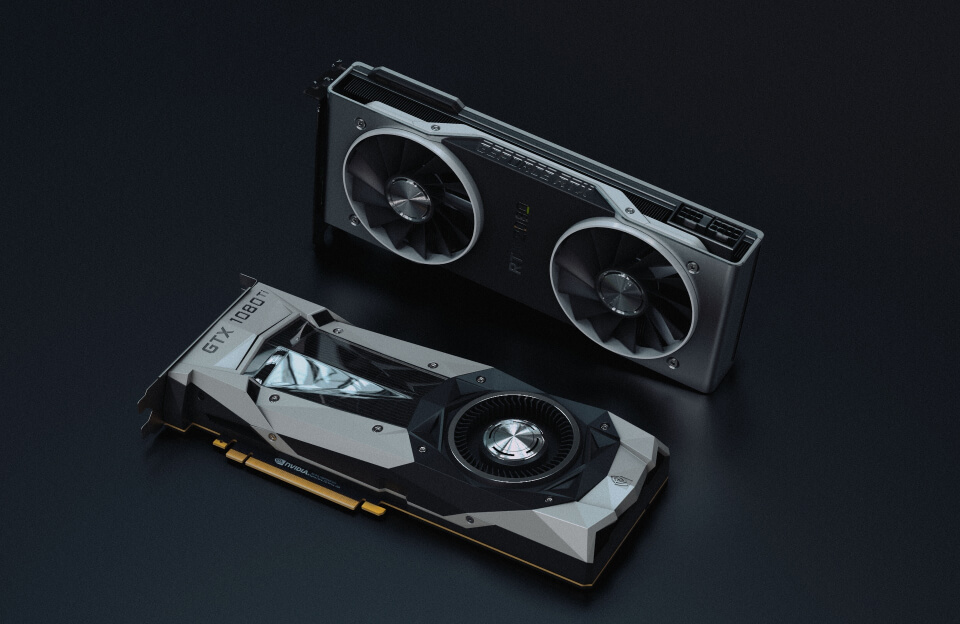
GPU Architecture has become the cornerstone of modern gaming PCs, shaping everything from frame rates to visual fidelity. As developers push the limits of realism, the underlying hardware must evolve to deliver higher throughput, lower latency, and smarter power management. In this article, we dissect the latest architectural shifts—such as ray tracing cores, AI‑accelerated rendering, and heterogeneous compute—and explain how they translate into tangible benefits for gamers. Whether you’re building a new rig or upgrading an existing one, understanding these trends will help you make informed decisions that keep your system future‑proof.
1. Dedicated Ray Tracing Cores: The Visual Revolution
Ray tracing simulates light paths to produce lifelike reflections, shadows, and global illumination. Traditional rasterization approximates these effects, but the new generation of GPUs embeds dedicated ray tracing cores that accelerate the heavy math involved. NVIDIA’s Ampere architecture, for example, introduced second‑generation RT cores that deliver up to 10× faster ray tracing performance compared to its predecessor. AMD’s RDNA 2 architecture offers similar capabilities with its Ray Accelerators, enabling real‑time ray tracing in titles like NVIDIA Ampere and AMD RDNA 2 GPUs.
2. AI Acceleration: From Upscaling to Adaptive Sampling
Artificial Intelligence has moved beyond image classification into the realm of graphics. Tensor cores—originally designed for deep learning—are now repurposed for AI‑driven tasks such as DLSS (Deep Learning Super Sampling) and FSR (FidelityFX Super Resolution). These technologies upscale lower‑resolution frames to higher resolutions with minimal loss of detail, effectively boosting frame rates without compromising visual quality. The integration of AI acceleration into GPU architecture means that gaming PCs can deliver smoother gameplay even on demanding titles, while also reducing power draw during intensive scenes.
3. Heterogeneous Compute: CPUs, GPUs, and Beyond
Modern GPU designs increasingly embrace heterogeneous compute, allowing CPUs, GPUs, and specialized accelerators to collaborate seamlessly. Intel’s Xe architecture, for instance, introduces a unified driver model that lets developers target both integrated and discrete GPUs with a single codebase. This convergence reduces development overhead and enables more efficient use of system resources. For gamers, heterogeneous compute translates to better multitasking—streaming, recording, and gaming can coexist without significant performance penalties.
4. Power Efficiency and Thermal Management
As graphics performance scales, so does power consumption. New GPU architectures employ advanced power gating, dynamic voltage and frequency scaling (DVFS), and improved silicon process nodes (e.g., 7nm, 5nm) to curb heat output. NVIDIA’s Ampere GPUs feature a 12 W idle power consumption, a significant drop from the 20 W of the previous generation. AMD’s RDNA 2 also emphasizes power efficiency, targeting 150 W TDP for high‑end cards while maintaining competitive performance. These innovations mean that gaming PCs can run cooler, quieter, and with lower electricity bills.
5. Key Architectural Trends in a Nutshell
- Dedicated ray tracing cores for realistic lighting.
- AI‑accelerated upscaling (DLSS, FSR) for higher frame rates.
- Heterogeneous compute for seamless CPU‑GPU collaboration.
- Advanced power management to reduce heat and energy use.
- Improved memory bandwidth with GDDR6X and HBM2e.
Conclusion: Choosing the Right GPU for Your Gaming PC
GPU Architecture trends are no longer optional—they’re essential for delivering the next level of gaming experience. Whether you prioritize ray tracing fidelity, AI‑driven performance, or power efficiency, the latest architectures provide a roadmap for selecting the right hardware. When building or upgrading a gaming PC, consider the following:
- Identify the games you play most often and check their GPU requirements.
- Balance performance with power consumption to match your cooling solution.
- Look for GPUs that support the latest APIs (DirectX 12 Ultimate, Vulkan).
- Ensure your power supply and case can accommodate the chosen GPU’s TDP.
By aligning your build with current GPU Architecture trends, you’ll future‑proof your system and enjoy smoother, more immersive gameplay for years to come.
Ready to upgrade? Explore the latest GPUs and build a gaming PC that stays ahead of the curve. Shop NVIDIA GPUs or AMD GPUs today!
Frequently Asked Questions
Q1. What are dedicated ray tracing cores and why are they important?
Dedicated ray tracing cores are specialized hardware units that accelerate the complex calculations required for ray tracing. They offload this work from the main GPU pipelines, allowing games to render realistic reflections, shadows, and global illumination in real time. By providing dedicated throughput, they enable higher frame rates and lower latency compared to software‑based ray tracing. This results in smoother gameplay and more immersive visuals.
Q2. How does AI acceleration like DLSS and FSR improve gaming performance?
AI acceleration uses tensor cores to upscale lower‑resolution frames to higher resolutions with minimal loss of detail. DLSS and FSR can boost frame rates by 30–50% while maintaining visual fidelity, especially on demanding titles. They also reduce the GPU’s workload, which can lower power consumption and heat output. Gamers benefit from smoother motion and higher refresh rates without needing a more powerful card.
Q3. What is heterogeneous compute and how does it benefit gamers?
Heterogeneous compute allows CPUs, GPUs, and specialized accelerators to work together using a unified driver model. This collaboration reduces bottlenecks and improves overall system efficiency. For gamers, it means that streaming, recording, and gaming can run concurrently with minimal performance loss. It also simplifies development, leading to better-optimized games.
Q4. How do modern GPUs manage power and heat?
New architectures use power gating, dynamic voltage and frequency scaling (DVFS), and advanced silicon processes like 7nm or 5nm to cut power draw. They also incorporate better thermal design, such as improved heat sinks and fan curves. These measures keep idle power low and reduce peak temperatures during intense scenes. As a result, gaming PCs run cooler, quieter, and with lower electricity bills.
Q5. Which GPU architecture should I choose for future‑proofing my build?
Consider your priorities: if realistic lighting is key, look for GPUs with second‑generation RT cores or Ray Accelerators. For the best upscaling performance, choose cards that support DLSS 3 or FSR 2.0+. Ensure the GPU supports DirectX 12 Ultimate or Vulkan for future game compatibility. Finally, verify that the card’s power consumption and thermal output match your cooling solution and power supply.