When you’re ready to give your gaming rig a fresh boost, a well‑structured Gaming PC Upgrade Checklist can save you time, money, and frustration. Before you start hunting for the latest graphics card or overclocking your CPU, you need a clear plan that covers every component, from power supply to cooling. This guide walks you through the essential steps, ensuring you make informed decisions that align with your budget and performance goals.
Gaming PC Upgrade Checklist: CPU Selection
The central processing unit (CPU) is the brain of your system. A powerful CPU not only handles game logic but also supports high‑resolution textures and streaming. When evaluating a new processor, consider:
- Core count and clock speed: Modern games benefit from 6–8 cores at 3.5 GHz or higher.
- Compatibility: Verify that your motherboard’s socket and chipset support the chosen CPU.
- Thermal design power (TDP): A higher TDP often means better performance but requires stronger cooling.
- Future‑proofing: Look for CPUs that support PCI‑e 4.0 or 5.0 to keep your system ready for next‑gen GPUs.
For a deeper dive into CPU architecture, see the CPU Wikipedia page.
Gaming PC Upgrade Checklist: GPU and Memory
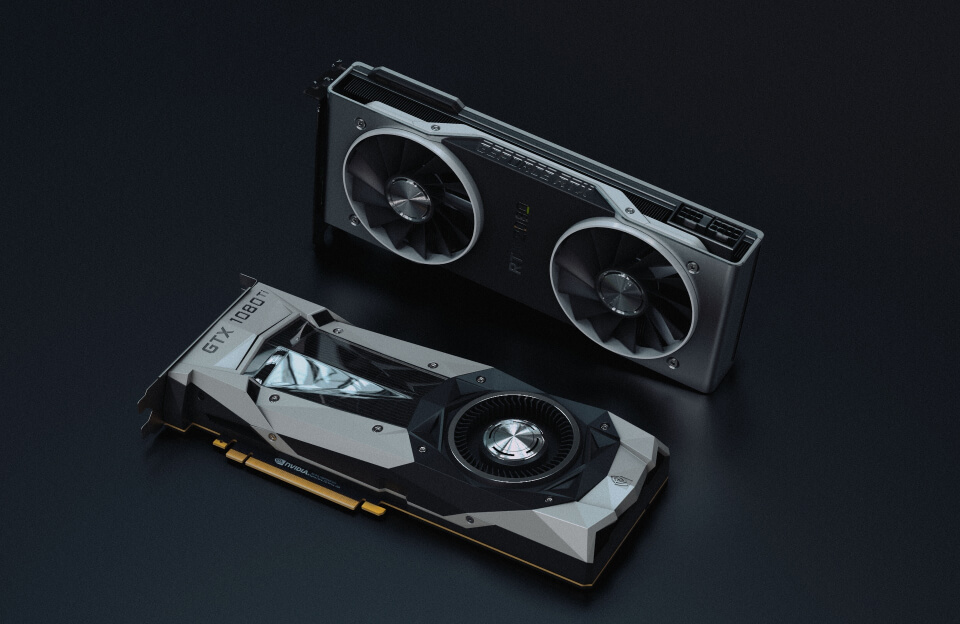
Graphics cards are the most visible upgrade for gamers. Pairing a high‑end GPU with sufficient RAM ensures smooth gameplay at 1440p or 4K. Key factors include:
- VRAM: 8 GB is the baseline for 1080p; 10–12 GB is recommended for 1440p, and 16 GB for 4K.
- Ray tracing and DLSS: If you want realistic lighting, choose a card that supports these features.
- Power draw: Check the GPU’s TDP and ensure your power supply can handle it.
- Cooling solution: Dual‑fan or triple‑fan designs keep temperatures low during extended sessions.
Explore NVIDIA’s RTX 30 Series for cutting‑edge performance, or read the GPU Wikipedia entry for technical background.
Gaming PC Upgrade Checklist: Motherboard and Cooling
A robust motherboard and efficient cooling system are the backbone of any upgrade. When selecting a board, confirm:
- Form factor: ATX, micro‑ATX, or mini‑ITX depending on case size.
- Expansion slots: Enough PCI‑e slots for future GPUs or sound cards.
- VRM quality: Strong voltage regulators support overclocking.
- Connectivity: USB‑C, Wi‑Fi 6, and M.2 slots for SSDs.
For cooling, consider air coolers with a 120 mm or 140 mm fan, or liquid cooling loops for high‑end builds. The TechRepublic guide offers practical tips on selecting the right cooler.
Gaming PC Upgrade Checklist: Power Supply and Storage
A reliable power supply unit (PSU) is critical. Look for:
- Wattage: 650 W is a safe baseline for mid‑range GPUs; 850 W or more for high‑end cards.
- Efficiency rating: 80 PLUS Gold or Platinum ensures lower power draw and heat.
- Modular cables: Reduce clutter and improve airflow.
Storage upgrades can dramatically reduce load times. SSDs are a must; NVMe drives offer the fastest speeds. Pair a 500 GB NVMe for the OS and key titles with a 1 TB SATA SSD for additional games.
Gaming PC Upgrade Checklist: Peripherals and Software
Don’t overlook the peripherals that complete the experience. A high‑refresh‑rate monitor (144 Hz or higher), a responsive mechanical keyboard, and a low‑latency gaming mouse can elevate gameplay. Additionally, keep your drivers and firmware up to date. Use manufacturer tools like GeForce Experience for NVIDIA GPUs or AMD Radeon Software for AMD cards.
Checklist Summary: Your Upgrade Roadmap
Below is a concise checklist you can print or save for quick reference:
- Define your budget and performance goals.
- Choose a CPU that matches your gaming resolution.
- Select a GPU with adequate VRAM and ray‑tracing support.
- Pick a motherboard that supports future upgrades.
- Ensure the PSU provides enough wattage and efficiency.
- Upgrade to NVMe SSD for OS and key titles.
- Install proper cooling (air or liquid).
- Update drivers and firmware.
- Test stability with stress‑testing tools.
- Enjoy your enhanced gaming experience.
Conclusion: Upgrade with Confidence
Armed with this Gaming PC Upgrade Checklist, you can confidently navigate the complex world of PC components. By methodically evaluating each part—CPU, GPU, motherboard, PSU, cooling, storage, and peripherals—you’ll build a system that delivers peak performance and longevity. Remember, the right upgrade strategy not only boosts frame rates but also protects your investment for years to come.
Ready to level up? Start your upgrade journey today and transform your gaming experience!
Frequently Asked Questions
Q1. How do I determine my budget for a gaming PC upgrade?
Start by listing the performance goals you want to achieve, such as 1440p at 120 fps or 4K at 60 fps. Allocate a portion of your budget to the GPU, as it typically consumes the most cost, followed by the CPU, motherboard, and PSU. Don’t forget to include cooling, storage, and peripherals, and add a 10–15% buffer for unexpected price changes or future upgrades.
Q2. Which CPU should I choose for 1440p gaming?
For 1440p, a 6–8 core CPU with a base clock of 3.5 GHz or higher is ideal. AMD Ryzen 5 7600X or Intel Core i5‑13600K provide excellent single‑thread performance and future‑proofing with PCI‑e 5.0 support. Pairing these CPUs with a capable cooler ensures stable performance during long sessions.
Q3. Is a higher VRAM always better for gaming?
More VRAM helps when playing at higher resolutions or using texture‑heavy mods. 8 GB is sufficient for 1080p, 10–12 GB for 1440p, and 16 GB for 4K. However, if you’re not gaming at 4K, a 10 GB card can still deliver excellent performance while saving cost.
Q4. How do I choose the right PSU wattage?
Calculate the total TDP of your GPU and CPU, then add 20–30% headroom for other components and future upgrades. A 650 W PSU is safe for mid‑range GPUs, while 850 W or more is recommended for high‑end cards. Always opt for an 80 PLUS Gold or Platinum rating for efficiency and lower heat.
Q5. What are the benefits of NVMe SSD over SATA?
NVMe drives connect directly to the PCI‑e bus, offering read/write speeds up to 5 GB/s, far surpassing SATA’s 550 MB/s limit. This translates to faster OS boot times, quicker game load screens, and smoother overall system responsiveness. For the best experience, use an NVMe SSD for your OS and key titles, and a SATA SSD for bulk storage.