Competitive shooters demand razor‑sharp precision, low latency, and consistent frame rates. If you’re looking to stay ahead of the curve, upgrading your gaming PC is the most effective way to shave milliseconds off your input lag and boost your in‑game performance. In this guide, we’ll walk through the key components that matter most for shooters, explain how to balance performance and cost, and give you a clear upgrade path that keeps your rig future‑proof.
1. Prioritize the CPU for Low Latency
The central processing unit (CPU) is the brain of your shooter rig. Modern competitive titles like Valorant, Counter‑Strike: Global Offensive, and Call of Duty rely heavily on CPU power for hit detection, physics calculations, and AI. A fast, multi‑core processor reduces input lag and ensures that your actions are registered instantly.
- Choose a high‑clocked, low‑TDP model: Look for CPUs with a base clock of 3.5 GHz or higher and a boost clock above 4.5 GHz. Examples include the AMD Ryzen 7 7700X or Intel Core i7‑13700K.
- Opt for a 6‑core or 8‑core design: Even though shooters are often single‑threaded, modern engines benefit from additional cores for background tasks and future titles.
- Consider the socket and chipset: Ensure your motherboard supports the latest PCIe 4.0 or 5.0 for maximum bandwidth.
According to the CPU Wikipedia page, clock speed and core count directly influence frame pacing, which is critical for competitive shooters.
2. Upgrade the GPU for Smooth Frame Rates
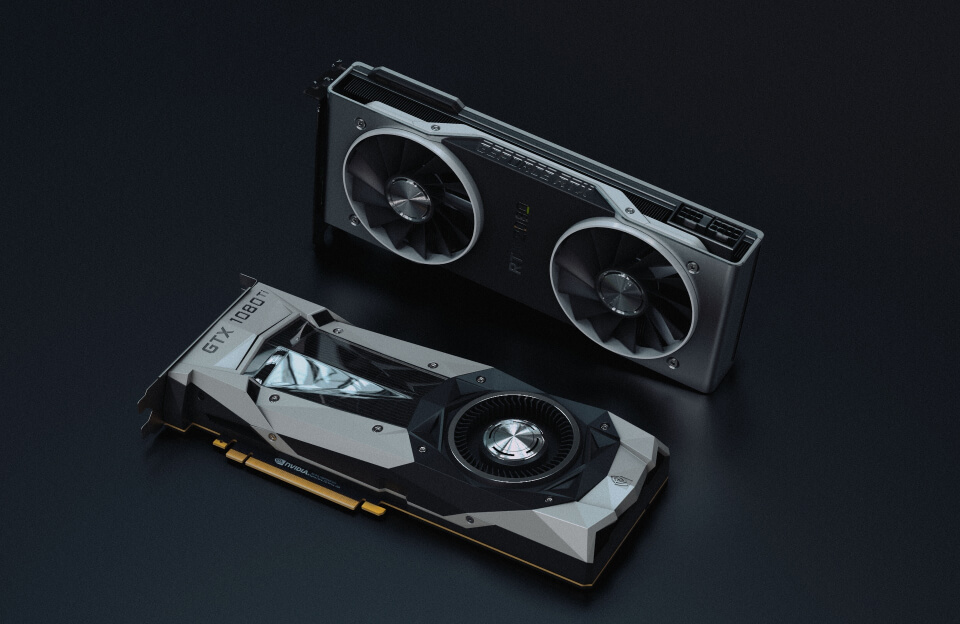
While the CPU handles logic, the GPU renders the world. A powerful graphics card guarantees high frame rates at 1080p or 1440p, which is essential for maintaining situational awareness and reaction time.
- Target 144 Hz or higher refresh rates: Pair a GPU that can deliver 120–144 fps at 1080p with a monitor that supports the same refresh rate.
- Choose the right brand: NVIDIA’s RTX 40 series and AMD’s RX 7000 series both offer excellent performance, but NVIDIA’s DLSS can help maintain high FPS with lower settings.
- Check VRAM: 6 GB is the minimum for 1080p; 8 GB or more is recommended for 1440p.
The GPU Wikipedia entry explains how modern GPUs handle parallel processing, which is why they excel at rendering complex scenes quickly.
3. Maximize Memory and Storage for Speed
RAM and storage play a subtle but vital role in competitive play. Fast memory reduces load times and keeps the CPU from stalling, while a solid‑state drive (SSD) ensures that game assets load instantly.
- RAM: 16 GB DDR5 at 6000 MHz is a sweet spot for shooters. If you plan to stream or run multiple applications, consider 32 GB.
- SSD: A 1 TB NVMe drive offers quick load times and ample space for your game library. Look for drives with read/write speeds above 3500 MB/s.
- Consider a secondary HDD: For archival storage, a 2 TB HDD can house older titles without taking up SSD space.
Research from the NVIDIA website shows that SSDs with PCIe 4.0 provide the best performance for modern games.
4. Optimize Cooling and Power for Reliability
Competitive shooters often run for hours, and thermal throttling can kill your frame rates. A robust cooling solution and a reliable power supply keep your system stable.
- CPU cooler: A high‑quality air cooler or AIO liquid cooler (120 mm or 240 mm) keeps temperatures below 70 °C under load.
- Case airflow: Ensure at least two intake fans and one exhaust fan. A mesh front panel improves airflow.
- Power supply: A 650 W or higher 80+ Gold PSU provides headroom for overclocking and future upgrades.
The U.S. Department of Energy recommends 80+ Gold or better for efficient power delivery.
5. Fine‑Tune Settings for Competitive Edge
Hardware upgrades are only part of the equation. Tweaking in‑game settings can further reduce latency and improve clarity.
- Turn off V‑Sync: Eliminates input lag but may cause tearing; use G-Sync or FreeSync if available.
- Set resolution to 1080p: Lower resolution reduces GPU load, allowing higher FPS.
- Enable “Low Latency” mode: Many GPUs offer a low‑latency setting that prioritizes frame pacing.
- Adjust DPI and sensitivity: Find a balance that feels natural; many pro players use 800–1600 DPI.
For deeper insights, the esports.net guide provides detailed configuration tips for competitive shooters.
Conclusion: Build the Shooter’s Dream Rig
Upgrading a gaming PC for competitive shooters is a strategic investment that pays dividends in reaction time, clarity, and overall confidence. By focusing on a high‑clocked CPU, a powerful GPU, fast memory, and reliable cooling, you create a platform that can handle today’s titles and tomorrow’s innovations.
Ready to take your competitive edge to the next level? Start your upgrade today and dominate the battlefield.
Frequently Asked Questions
Q1. What is the most important component to upgrade for competitive shooters?
The CPU is the most critical component because it handles hit detection, physics, and AI calculations. A high‑clocked, low‑TDP processor reduces input lag and ensures instant action registration. Even though many shooters are single‑threaded, modern engines benefit from multiple cores for background tasks.
Q2. Should I prioritize the GPU over the CPU?
It depends on your current setup. If you already have a decent CPU, a GPU upgrade can deliver higher frame rates at 1080p or 1440p. However, if your CPU is bottlenecking, a new processor will provide a more noticeable improvement in overall performance.
Q3. How much RAM do I need for shooters?
Sixteen gigabytes of DDR5 at 6000 MHz is the sweet spot for most competitive shooters. If you plan to stream or run multiple applications simultaneously, consider upgrading to 32 GB to avoid stalling.
Q4. What storage type gives the best performance?
An NVMe SSD with PCIe 4.0 or higher offers the fastest read/write speeds, reducing load times and keeping the CPU from stalling. A 1 TB drive is sufficient for a large game library, while a secondary HDD can store older titles.
Q5. How can I reduce input lag in-game?
Turn off V‑Sync and enable low‑latency mode on your GPU. Set your resolution to 1080p to lower GPU load, and use a monitor with a high refresh rate. Adjust DPI and sensitivity to a comfortable range, typically 800–1600 DPI for pro players.