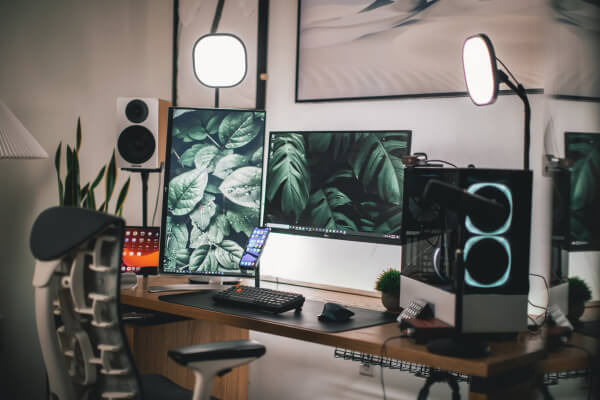
Building a Custom Gaming PC can feel like navigating a maze of options, especially when you’re just starting out. The good news is that with a clear budget plan, you can assemble a machine that delivers solid performance without breaking the bank. In this guide, we’ll walk through the essential steps for beginners, from setting a realistic budget to choosing components that offer the best value for money.
1. Define Your Gaming Goals and Budget Range
Before you even look at a single part, ask yourself what you want to achieve. Are you aiming for 1080p gaming at 60 fps, or do you want to push into 1440p or 4K? Your goals will dictate the level of performance you need and, consequently, the price point. A practical approach is to set a total budget and then allocate percentages to each component:
- CPU: 20–25%
- GPU: 35–40%
- Motherboard: 10–12%
- RAM: 8–10%
- Storage: 8–10%
- Power Supply & Cooling: 10–12%
- Case & Extras: 5–8%
These percentages are flexible; if you’re a casual gamer, you might shift more funds toward storage or cooling. The key is to keep the GPU budget in mind, as it typically consumes the largest portion of the cost.
2. Choose the Right CPU and Motherboard Combo
The CPU is the brain of your system, and pairing it with a compatible motherboard is essential for stability and future upgrades. For budget builds, AMD’s Ryzen 5 5600G or Intel’s Core i5‑12400 offer excellent performance per dollar. Both chips come with integrated graphics, which can be handy if you’re not ready to invest in a GPU yet.
When selecting a motherboard, look for the following features:
- Compatible socket (AM4 for Ryzen, LGA 1700 for Intel)
- Support for at least 16 GB of DDR4 RAM
- Multiple M.2 slots for SSD expansion
- USB‑C or at least one USB‑3.2 port for future peripherals
- BIOS update capability via USB
For example, the CPU and GPU Wikipedia pages provide detailed specs that help you compare performance and power consumption.
3. Pick a Value‑Focused GPU That Meets Your Resolution Needs
The GPU is the heart of any gaming rig. If you’re targeting 1080p, a mid‑range card like the NVIDIA GeForce RTX 3060 or AMD Radeon RX 6600 XT offers great performance without a steep price tag. For 1440p, consider the RTX 3060 Ti or RX 6700 XT. If you’re willing to stretch the budget a bit, the RTX 3070 or RX 6800 can deliver smooth 1440p and decent 4K performance.
When evaluating GPUs, pay attention to:
- Memory size (6–8 GB GDDR6 is common for mid‑range cards)
- Memory bandwidth and clock speeds
- Ray‑tracing support (if you plan to use it)
- Power draw (TDP) and cooling solution
For a deeper dive into GPU architecture, the Graphics Processing Unit Wikipedia article explains how memory and cores affect performance. NVIDIA’s official GPU page (NVIDIA GeForce) also offers benchmarks and driver updates.
4. Balance RAM, Storage, and Power Supply for Longevity
RAM is the short‑term memory that keeps your games and applications running smoothly. For most gamers, 16 GB of DDR4 at 3200 MHz is a sweet spot. If you plan to stream or run virtual machines, consider 32 GB.
Storage should combine speed and capacity. An NVMe SSD (e.g., 500 GB) for your operating system and favorite titles, paired with a larger SATA SSD or HDD for bulk storage, offers a good balance. NVMe drives can reach read/write speeds of 3500 MB/s, dramatically reducing load times.
The power supply unit (PSU) must provide enough wattage for all components, plus headroom for future upgrades. A 550 W to 650 W PSU from a reputable brand (80 + Gold certification is a good baseline) is typically sufficient for mid‑range builds. Don’t forget to check the Power Supply Unit Wikipedia entry for details on connectors and efficiency ratings.
5. Assemble, Test, and Optimize Your Build
Once you have all parts, the assembly process is straightforward but requires patience. Start by installing the CPU, then the cooler, followed by the RAM. Mount the motherboard into the case, connect the PSU, and install the GPU. Finally, attach storage drives and any additional cooling fans.
After assembly, power on the system and enter the BIOS to ensure all components are recognized. Update the BIOS if necessary, then install your operating system. After the OS is up, install the latest drivers from the GPU manufacturer’s website.
To optimize performance, tweak in‑game settings to match your resolution and desired frame rate. Use tools like TechRepublic’s PC Build Guide for benchmarking and fine‑tuning. If you notice thermal throttling, consider adding an aftermarket cooler or improving case airflow.
Conclusion: Build Smart, Play Hard
Planning a Custom Gaming PC on a budget doesn’t have to be overwhelming. By setting clear goals, allocating funds wisely, and choosing components that deliver the best performance per dollar, you can create a machine that feels like a high‑end rig without the premium price tag. Remember to keep an eye on future upgrades—investing in a solid motherboard and PSU now can save you money later.
Ready to start your build? Grab a reliable PSU, pick a GPU that fits your resolution, and let the gaming begin!
Frequently Asked Questions
Q1. How do I determine my budget for a custom gaming PC?
Start by defining your gaming goals—whether you want 1080p, 1440p, or 4K—and then set a total budget that reflects those goals. Allocate percentages to each component, such as 35–40% for the GPU and 20–25% for the CPU. Adjust the percentages based on your priorities, like more storage or better cooling, and keep the GPU budget in mind as it usually consumes the largest portion of the cost.
Q2. What is the most important component to prioritize in a budget build?
The GPU is typically the most critical component for gaming performance, especially at higher resolutions. A mid‑range card like the RTX 3060 or RX 6600 XT can deliver solid 1080p performance without breaking the bank. If you plan to play at 1440p, consider a slightly higher tier such as the RTX 3060 Ti or RX 6700 XT.
Q3. Can I use integrated graphics to save money?
Yes, many budget CPUs come with integrated graphics, which can be a good stopgap if you’re not ready to invest in a discrete GPU. However, integrated graphics are limited in performance and may struggle with newer titles at higher settings. They are best used for basic gaming or as a temporary solution while you save for a dedicated GPU.
Q4. How much RAM should I buy for gaming?
For most gamers, 16 GB of DDR4 RAM at 3200 MHz is the sweet spot, providing enough headroom for modern games and multitasking. If you plan to stream, run virtual machines, or use memory‑intensive applications, consider upgrading to 32 GB. RAM is relatively inexpensive, so it’s often worth investing a bit more for future‑proofing.
Q5. Should I invest in a higher wattage PSU now?
It’s wise to choose a PSU with enough headroom for future upgrades—typically 550 W to 650 W for mid‑range builds. A reputable brand with an 80 + Gold certification ensures efficiency and reliability. Investing in a solid PSU now can save you from costly replacements later when you add a more powerful GPU or additional components.